
HeliosX field notes
Working Distance for Loupes
Working distance is the distance from your eyes or loupe reference point to the task at which your loupes are configured to focus. Measure in your normal working setup. Do not use height alone or lean forward to match someone else’s number.
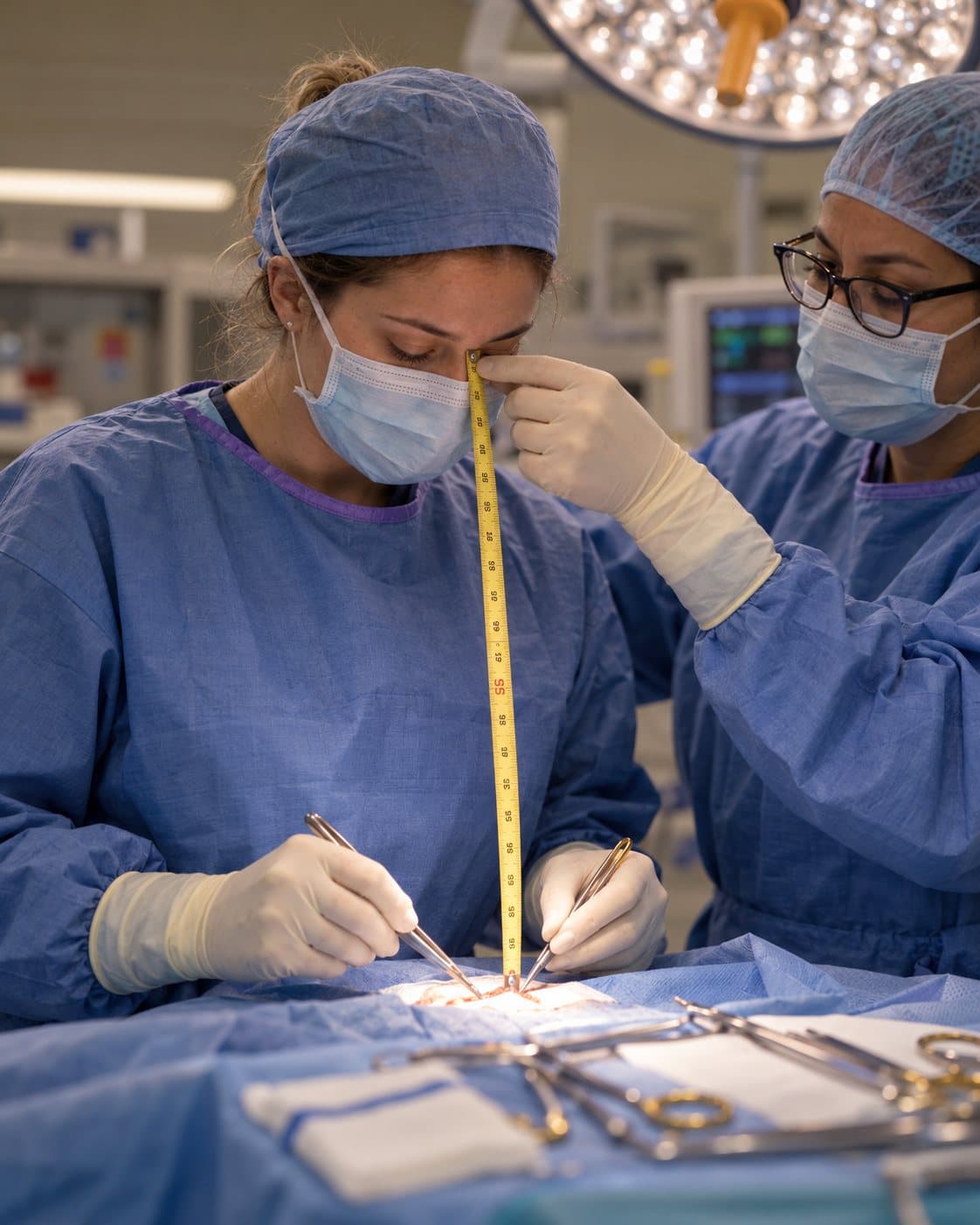
Measure in the position you need to keep
Set up your usual stool or operating position and place a practice target where the patient or working field would be. Have another person help measure while you keep your shoulders relaxed and your head in the intended viewing posture.
- Follow the supplier’s reference points and units; different measurement instructions may use different landmarks.
- Repeat the measurement to check consistency.
- Record seated and standing setups separately if you use both.
Source: HeliosX measurement instructions
Working distance is not depth of field
Working distance is the target focus distance. Depth of field is the range around that distance that stays acceptably clear. A generous depth of field does not mean an incorrectly fitted loupe will work at every distance.
Fixed or adjustable?
Apollo is configured for a fixed working distance. Medusa adjusts working distance from 300–600 mm. That adjustment can accommodate different setups within its range; it does not change the ordered magnification.
- Use your usual position to choose a fixed configuration.
- Compare Medusa when you regularly change working positions.
- Do not choose a shorter distance just to make a specification look more magnified.
If you keep leaning in to focus
Recheck the working setup and recorded distance before assuming you need higher magnification. If focus, double vision, or fit remains a problem, stop guessing and contact your supplier with the measurements and symptoms.
- Check your working height and target position.
- Confirm the prescription and pupillary-distance information used for the order.
- Discuss unresolved vision symptoms with an appropriate eye-care professional.
Step-by-step: measuring your working distance
You need a tape measure, a helper, and your usual working setup. Measure the way you want to work, not the way you currently compensate for a poor fit.
- Set your chair, stool, or table height the way you normally work.
- Place a target where your hands work: a typodont, a practice pad, or an instrument tip.
- Sit or stand upright with relaxed shoulders and look at the target.
- Have your helper measure from your nasal radix, the deepest point of your nose bridge, to the target.
- Repeat two or three times and use the consistent value.
Source: HeliosX measurement instructions
Seated and standing work
Many clinicians sit for some tasks and stand for others, and the distance to the field often changes between the two. If you work both ways, record both distances. A fixed-distance loupe should be ordered for the position you use most; an adjustable design such as Medusa (300–600 mm) can cover both within its range.
Common measurement mistakes
Most working-distance problems come from measuring in the wrong posture or copying someone else’s number.
- Leaning forward while measuring, which records a shorter distance than your upright posture.
- Estimating from height instead of measuring.
- Measuring at a table height you do not actually use.
- Using a colleague’s configuration because they recommended it.
Common questions
Can I calculate working distance from my height?
Height can be a rough starting point, but the actual setup matters. Measure in your working posture and follow the supplier’s instructions.
Does adjustable working distance mean adjustable magnification?
No. Medusa changes working distance while retaining the magnification selected at purchase.
When do I submit HeliosX measurements?
After checkout through the customer measurement process. Measurements and configuration are reviewed before custom production. You can also ask for guidance before ordering.
What happens if my working distance is wrong?
The image may only be sharp when you lean in or pull back, which pushes you out of a comfortable posture. Contact your supplier with your measurements rather than adapting your posture to the loupes.
Should I measure with my current loupes on?
Measure the posture you want to keep. If your current loupes make you lean, measuring with them on can repeat the same problem.
Need help applying this to your setup?
Tell us your specialty, usual working position, and the question you are trying to resolve. Ask before ordering if your configuration is uncertain.