
Apollo
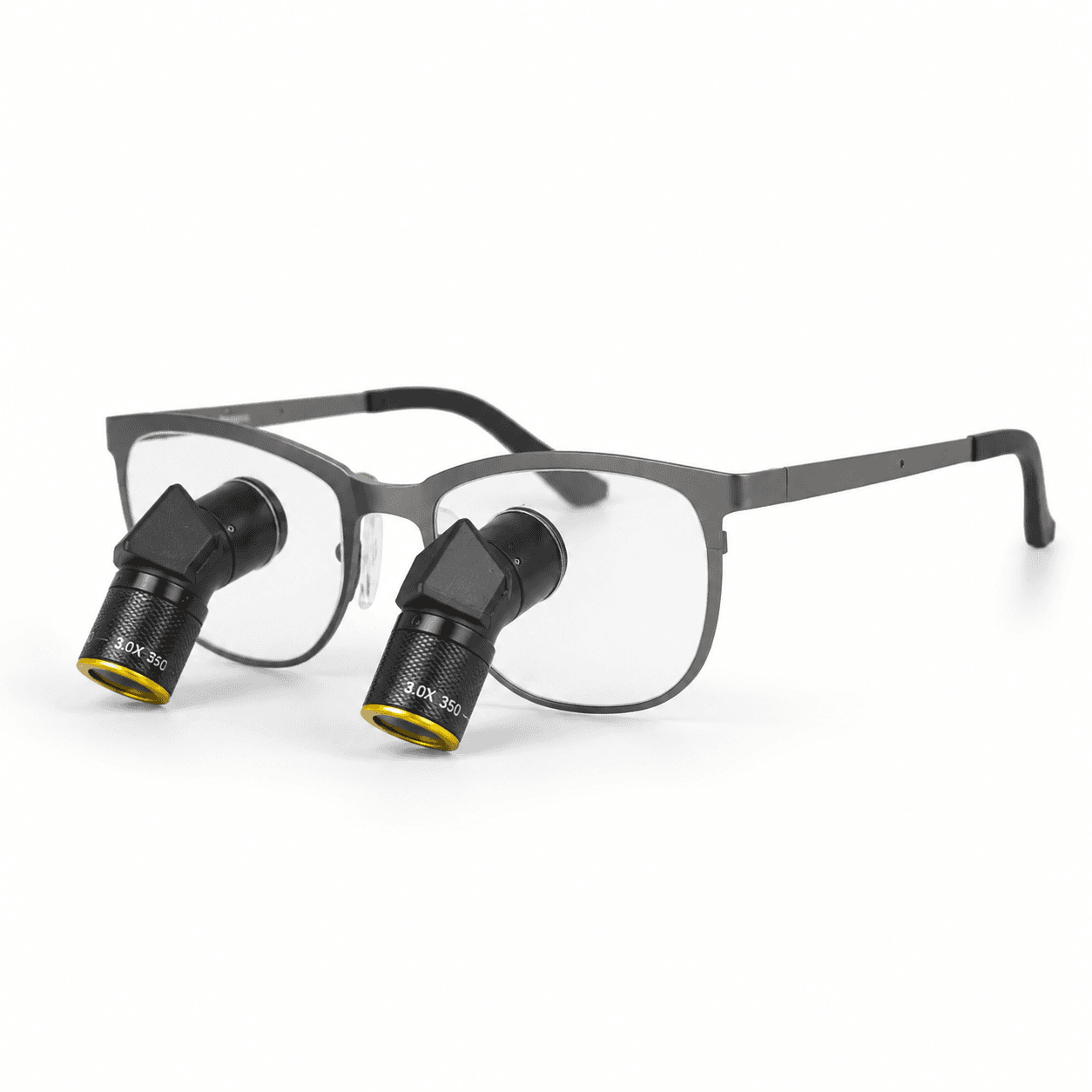
From $1,695Ergonomic prismatic loupes for clinicians who want posture-aware clarity and high-magnification options.
Working distance is fixed to your configuration; magnification is selected at purchase.
Explore ApolloSpine surgery
Spine surgery presents a specific combination of visual demands that distinguish it from most other surgical specialties. The operator works in a deep, narrow cavity for hours at a time, typically over a patient in prone position, with the surgical field 14 to 16 inches away through a relatively small access window. The magnification requirements are moderate; the lighting and ergonomic requirements are not.
We make and sell HeliosX loupes. This is our buying guidance, not an independent product test or paid ranking.
.png&w=3840&q=75)
Apollo · From $1,695 USD
Your HeliosX shortlist
Compare the optical design, then choose your magnification and frame on the product page.
Ergonomic prismatic loupes for clinicians who want posture-aware clarity and high-magnification options.
Working distance is fixed to your configuration; magnification is selected at purchase.
Explore ApolloErgonomic prismatic loupes with adjustable working distance for clinicians who change posture between seated and standing work.
Working distance adjusts from 300–600 mm. Magnification does not switch on the loupe.
Explore MedusaConventional prismatic loupes for higher-magnification work, available in 4.0x, 5.0x, and 6.0x.
Conventional prismatic optics. Choose Apollo or Medusa for ergonomic viewing.
Explore KeplerStarting prices in USD. Magnification and optional prescription lenses affect the total; shipping and taxes appear at checkout. See all five models.
A typical spinal procedure involves the surgeon hunched over a prone patient, operating through a corridor that may be 4 to 8 centimeters wide and 8 to 12 centimeters deep. The field is illuminated by overhead lighting that has to clear the surgeon’s head, the assistant, and the retractor system — which it routinely fails to do at the deepest point of the field. The structures of interest (dural sac, nerve roots, pedicles, disc spaces) sit at the bottom of that corridor.
Three configurations cover most spine surgical preferences.
The single biggest predictable problem in spine work is deep field illumination. Overhead operating lights are blocked by the surgeon’s head and the retractor system at exactly the moment the corridor narrows toward the structures that matter. A loupe-mounted LED head light is standard equipment for spine practice, not an accessory. Budget for it alongside the loupes.
Spinal cases routinely run four to eight hours. The surgeon spends almost the entire case in sustained cervical flexion looking into a deep corridor. The ergonomic strain pattern documented for dental practitioners in the 2023 Frontiers RCT — sustained cervical flexion — describes spinal surgery posture exactly. Ergonomic prismatic loupes raise the viewing angle so the surgeon does not drop the head into the field for the duration of the case.
Two HeliosX models cover the bulk of spine practice; the third is a dedicated microsurgical option.
HeliosX is built around a simple mission: make premium magnification more accessible. Compare our published prices and model specifications, then confirm the fit and support terms before committing to a custom pair.
Most spine surgeons work at 3.0x–4.0x for routine open spinal exposure and instrumented fusion. Microdiscectomy and minimally invasive cases push to 4.0x–5.0x, and intradural work typically uses the operating microscope.
For open spinal exposure, instrumented fusion, and most discectomy work, loupes at 3.5x–4.5x are sufficient. Microdiscectomy, intradural cases, and tumor work typically use the operating microscope. Most spine programs have both available.
Essentially mandatory. Overhead operating light fails to reach the depth of a spinal corridor once the surgeon and retractors are positioned. A loupe-mounted LED head light is standard equipment for spine practice and should be budgeted alongside the loupes.
More than for almost any other specialty. Spine surgery combines multi-hour cases with deep narrow corridors that force sustained cervical flexion. Ergonomic prismatic optics reduce that strain pattern measurably across the workday and the career arc.
Apollo at $1,695 covers routine spine work with ergonomic posture support. Fellow access pricing applies. Email heliosxloupes@gmail.com with program details to confirm eligibility.
Yes if the magnification range and working distance fit both. Medusa at 3.0x–8.5x adjustable working distance handles spine work plus most other surgical practice. Apollo at fixed working distance works for spine surgeons whose other work happens at similar working distance.
Premium magnification. More accessible.
Tell us your specialty, typical procedures, current magnification, and budget. We can help you narrow the options before you order.
Email opens in your mail app: heliosxloupes@gmail.com · Two-year limited warranty
.png&w=3840&q=75)