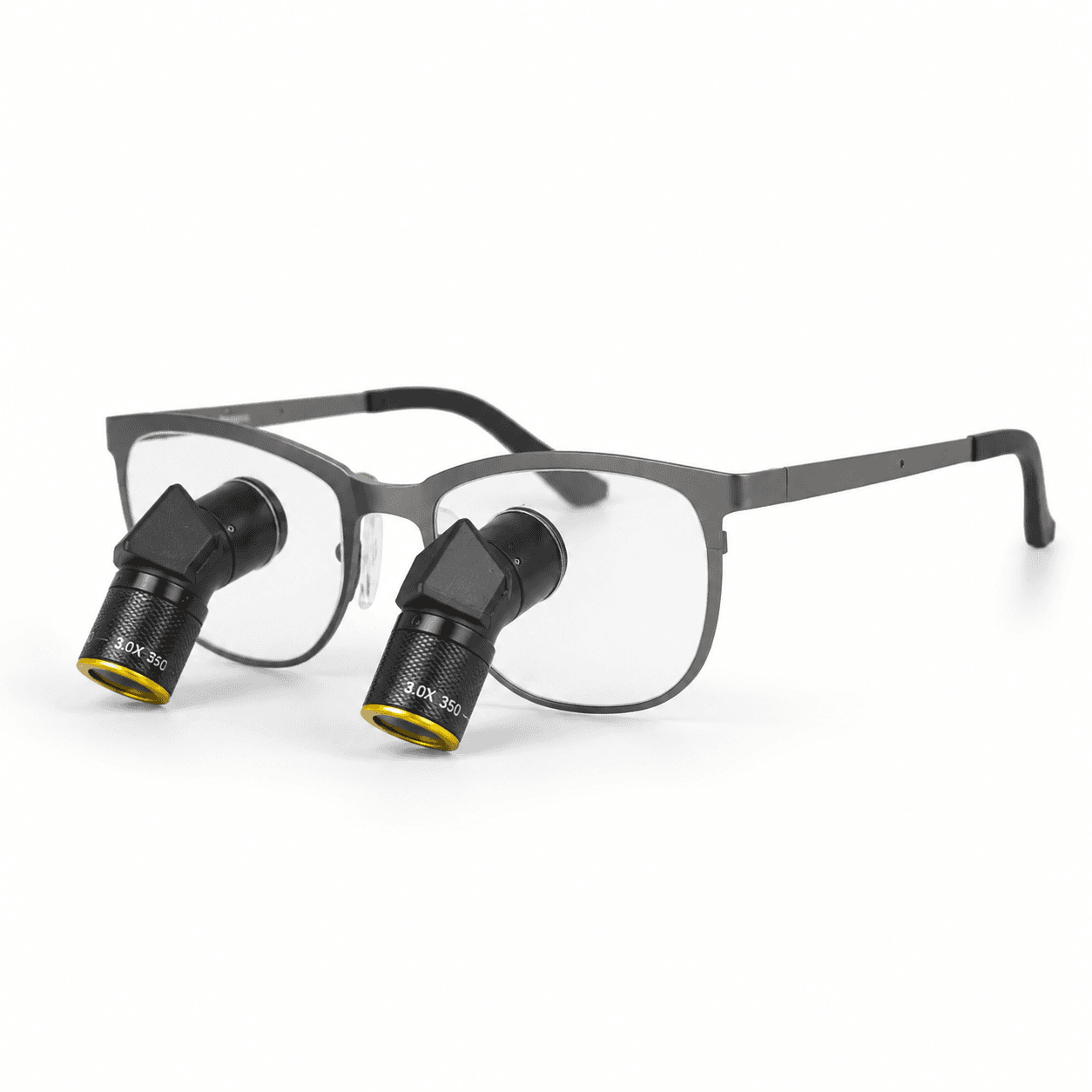
Galileo
From $795Lightweight affordable surgical and dental loupes for students, residents, and everyday clinical use.
A lightweight Galilean option; not an ergonomic prismatic system.
Explore GalileoGynecology
Gynecological surgery covers more case-mix variety than the practice often gets credit for. Open and vaginal hysterectomy, perineal and pelvic floor repair, gyn-oncology with retroperitoneal lymphadenectomy, and microsurgical tubal anastomosis all share the gynecology training pathway and each pulls toward a different loupe configuration. Most gynecologists choose a moderate-range loupe that handles the bulk of their work; subspecialty practice (gyn-onc, reproductive surgery) often justifies a more specialized pair.
We make and sell HeliosX loupes. This is our buying guidance, not an independent product test or paid ranking.
.png&w=3840&q=75)
Galileo · From $795 USD
Your HeliosX shortlist
Compare the optical design, then choose your magnification and frame on the product page.
Lightweight affordable surgical and dental loupes for students, residents, and everyday clinical use.
A lightweight Galilean option; not an ergonomic prismatic system.
Explore GalileoErgonomic prismatic loupes for clinicians who want posture-aware clarity and high-magnification options.
Working distance is fixed to your configuration; magnification is selected at purchase.
Explore ApolloConventional prismatic loupes for higher-magnification work, available in 4.0x, 5.0x, and 6.0x.
Conventional prismatic optics. Choose Apollo or Medusa for ergonomic viewing.
Explore KeplerErgonomic prismatic loupes with adjustable working distance for clinicians who change posture between seated and standing work.
Working distance adjusts from 300–600 mm. Magnification does not switch on the loupe.
Explore MedusaStarting prices in USD. Magnification and optional prescription lenses affect the total; shipping and taxes appear at checkout. See all five models.
Gynecological visual demands track with the case type. Most office-based and outpatient gynecological work — perineal repair, vaginal surgery, hysteroscopy — is broad-field at standard magnification. Open and laparotomic procedures pull magnification up modestly for tissue handling and vascular control. Gyn-onc and reproductive surgery push to specialist ranges.
Three configurations cover most gynecological preferences depending on subspecialty.
Gynecological posture varies more than most surgical practices. Open abdominal work has the operator standing tableside as in other open abdominal surgery. Vaginal and perineal work places the operator seated at the end of the table in lithotomy position, often leaning into the field. Cesarean section combines stand-up open exposure with rapid case timing. Each position has its own postural strain pattern, and ergonomic prismatic optics matter most for the subspecialties where case length is long.
Microsurgical tubal anastomosis — reversal of tubal ligation — is one of the highest-magnification procedures in gynecological practice. The fimbrial end of the fallopian tube is approximately 1 mm in diameter and the suture sizes used range from 8-0 to 9-0. Most reproductive endocrinology and infertility fellows learn the procedure with the operating microscope, but loupes at 4.5x–6.0x are workable for the exposure and approximation steps even if the microscope handles the anastomosis itself.
Three models cover the gynecological spectrum.
HeliosX is built around a simple mission: make premium magnification more accessible. Compare our published prices and model specifications, then confirm the fit and support terms before committing to a custom pair.
Most gynecologists work at 2.5x–3.5x for general practice. Gyn-oncology fellowship-trained surgeons move to 3.5x–4.5x. Reproductive surgery fellows doing microsurgical tubal anastomosis use 4.5x–6.0x loupes or the operating microscope.
Moderately. The visual benefit for cesarean section and routine open hysterectomy is real but not transformative. The case strengthens for residents heading into gyn-oncology, reproductive surgery, or urogynecology fellowship.
Yes if case mix includes regular open radical hysterectomy and lymphadenectomy. Long pelvic exposure cases create sustained postural load that ergonomic prismatic optics reduce measurably. Apollo at $1,695 covers the range with posture support.
Most reproductive surgeons use the operating microscope for microsurgical tubal anastomosis. Kepler at $1,195 at 5.0x–6.0x is a loupe-based alternative for the exposure components; the anastomosis itself usually moves to the microscope.
Galileo at $795 is the default — covers general OB-GYN practice and resident access pricing applies. Apollo at $1,695 is the upgrade for residents heading into gyn-oncology or urogynecology fellowship.
Robotic surgery uses the console’s integrated magnification; loupes are not part of robotic gynecology practice. Loupes are relevant for the open, vaginal, and microsurgical work that remains in a typical OB-GYN case mix.
Premium magnification. More accessible.
Tell us your specialty, typical procedures, current magnification, and budget. We can help you narrow the options before you order.
Email opens in your mail app: heliosxloupes@gmail.com · Two-year limited warranty
.png&w=3840&q=75)
.png&w=3840&q=75)