
Apollo
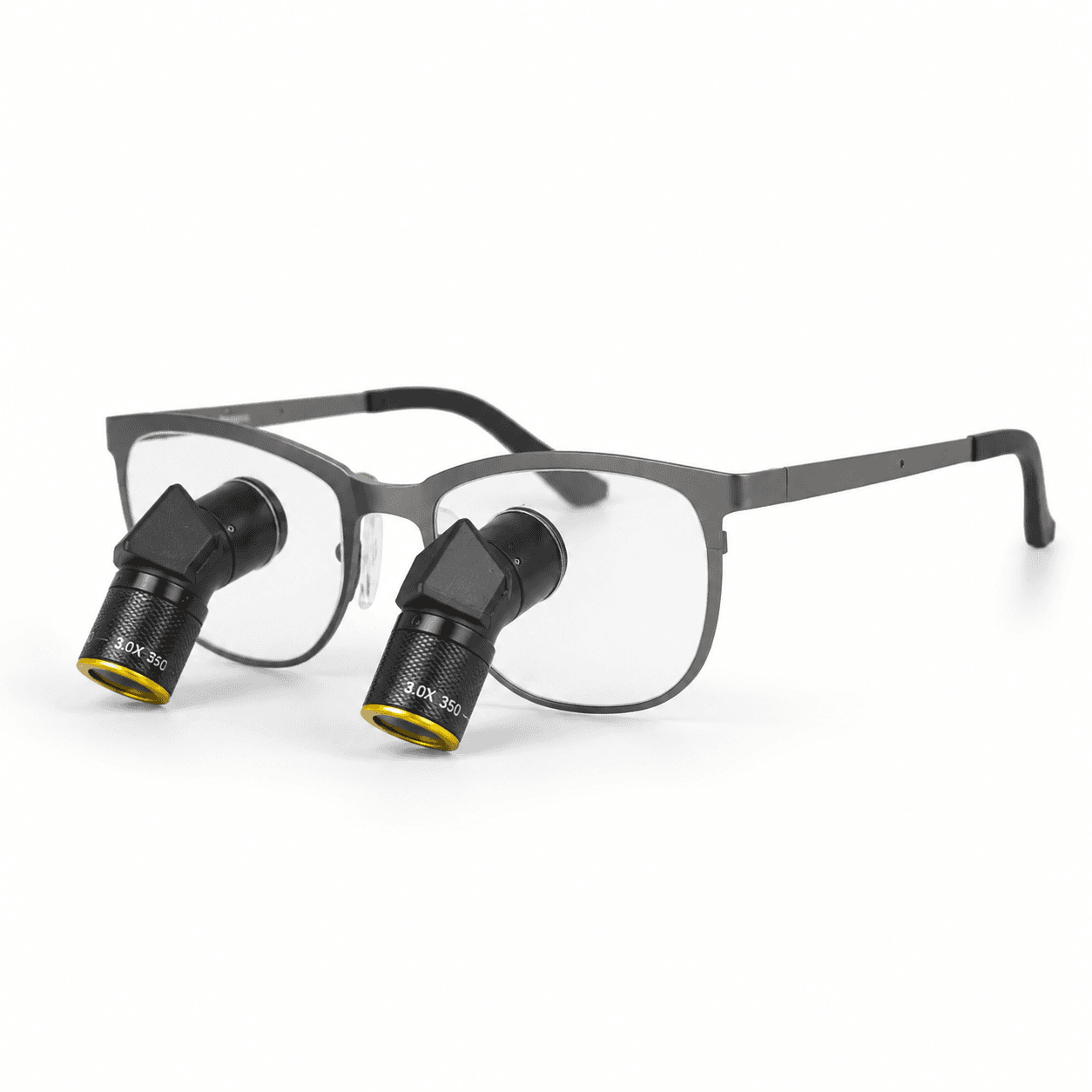
From $1,695Ergonomic prismatic loupes for clinicians who want posture-aware clarity and high-magnification options.
Working distance is fixed to your configuration; magnification is selected at purchase.
Explore ApolloVascular surgery
Vascular work happens at small scale by definition. Anastomoses on vessels 2 to 4 millimeters across, dialysis access creation on the radial or brachial side, peripheral bypass to distal targets — the suturing demands precision at the limit of unaided vision even with corrected sight. Loupes are standard equipment for vascular surgery, and the choice mostly comes down to magnification range, working distance accommodation for deep abdominal and lower-extremity exposure, and how much ergonomic support to build in for cases that routinely run four hours and longer.
We make and sell HeliosX loupes. This is our buying guidance, not an independent product test or paid ranking.
.png&w=3840&q=75)
Apollo · From $1,695 USD
Your HeliosX shortlist
Compare the optical design, then choose your magnification and frame on the product page.
Ergonomic prismatic loupes for clinicians who want posture-aware clarity and high-magnification options.
Working distance is fixed to your configuration; magnification is selected at purchase.
Explore ApolloErgonomic prismatic loupes with adjustable working distance for clinicians who change posture between seated and standing work.
Working distance adjusts from 300–600 mm. Magnification does not switch on the loupe.
Explore MedusaConventional prismatic loupes for higher-magnification work, available in 4.0x, 5.0x, and 6.0x.
Conventional prismatic optics. Choose Apollo or Medusa for ergonomic viewing.
Explore KeplerLightweight affordable surgical and dental loupes for students, residents, and everyday clinical use.
A lightweight Galilean option; not an ergonomic prismatic system.
Explore GalileoStarting prices in USD. Magnification and optional prescription lenses affect the total; shipping and taxes appear at checkout. See all five models.
The visual demands of vascular work are concentrated at the anastomosis. Each suture passes through arterial wall measured in tenths of a millimeter, the suture itself is 6-0 or 7-0, and the consequences of imprecision are visible immediately as bleeding or delayed as failed grafts. The work also tends to happen in deep cavities — abdominal aorta, infrainguinal vessels, supraclavicular access — which puts working distance and lighting on equal footing with magnification.
A few configurations cover most vascular surgical preferences.
Vascular exposure routinely places the operative field 14 to 18 inches from the surgeon’s eye for abdominal and pelvic work, and at closer range for upper-extremity and neck access. Locking the loupes to a single working distance that does not match your typical exposure means either constant head adjustment or persistent off-axis viewing. The fit step matters more for vascular work than for most other specialties.
Vascular cases are long. A multi-vessel reconstruction or complex bypass can run six to eight hours. The cumulative postural load over a workday already taxes the cervical and lumbar spine; loupes either help or hurt that picture. Ergonomic prismatic designs raise the viewing angle so the surgeon does not drop the head toward a deep field for the duration of an anastomosis. The benefit compounds across the career arc.
Three models map onto vascular practice depending on case mix and posture priorities.
HeliosX is built around a simple mission: make premium magnification more accessible. Compare our published prices and model specifications, then confirm the fit and support terms before committing to a custom pair.
Most vascular surgeons work at 3.5x–4.5x for routine bypass and anastomosis. AV access and small-vessel reconstruction push toward 4.5x–5.5x. True microvascular work typically uses 5.0x–6.0x or the operating microscope.
Not usually if the magnification range is wide enough. Medusa at 3.0x–8.5x with adjustable working distance handles both deep aortic exposure and superficial AV access without re-buying. Apollo at 3.0x–6.0x covers the same range at fixed working distance.
For routine large-vessel work, yes. Many vascular attendings stay at 3.5x for their entire career. Residents and fellows often move to 4.0x or 4.5x when AV access and small-vessel work enter the case mix.
Important for deep cavity work. Abdominal aortic, retroperitoneal, and infrainguinal exposure routinely involves field depths that overhead surgical lighting under-illuminates once the operator is positioned. A loupe-mounted LED light is standard pairing equipment.
Apollo at $1,695 covers the full vascular range with ergonomic posture support. Fellow access pricing applies. Email heliosxloupes@gmail.com with program details to confirm eligibility.
Up to about 6.0x, yes — Kepler and Medusa cover that range. Above 6.0x, most vascular and hand surgeons move to the operating microscope. The loupe-to-microscope crossover sits at the upper end of useful loupe magnification.
Premium magnification. More accessible.
Tell us your specialty, typical procedures, current magnification, and budget. We can help you narrow the options before you order.
Email opens in your mail app: heliosxloupes@gmail.com · Two-year limited warranty
.png&w=3840&q=75)
.png&w=3840&q=75)