Surgeon wearing HeliosX loupes in a clinical setting

Pricing guide

How Much Do Surgical Loupes Cost? built around real clinical work.

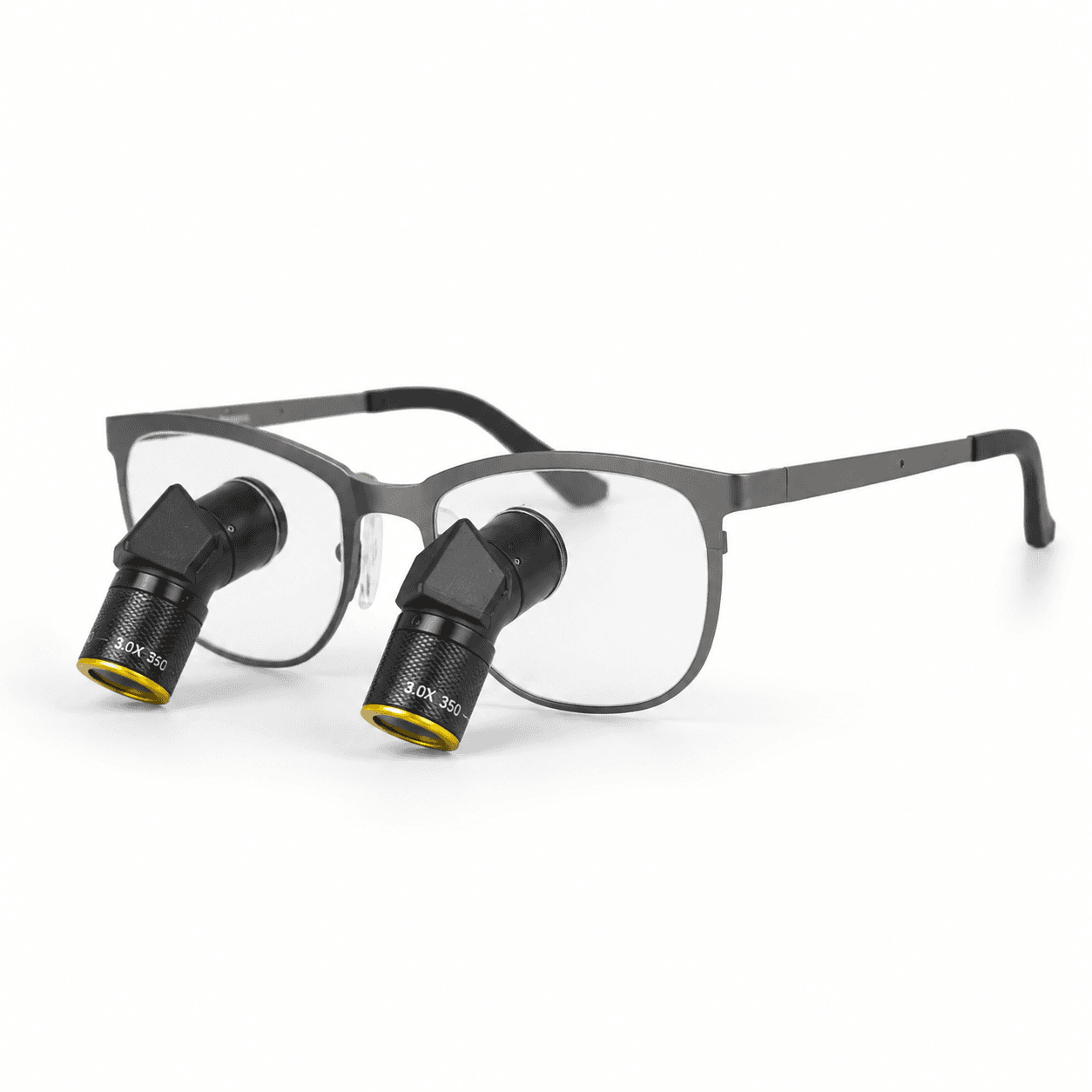
Surgical loupes typically cost between $800 and $5,500. Entry Galilean loupes start near $800; legacy ergonomic prismatic systems sit between $2,500 and $4,500; the most expensive surgical and microsurgery loupes from name brands clear $5,500 once a headlight bundle is added. Most of the spread above $2,000 reflects dealer markup, captive distribution, and brand premium rather than measurable optical quality. HeliosX prices its surgical and dental loupes from $695 to $1,695 because none of those layers is part of the actual loupe.

01

Industry pricing tiers

Surgical and dental loupe pricing falls into three tiers across the broader market. Entry-level Galilean loupes from established brands typically retail $800 to $2,000 and serve students, residents, and clinicians who want a first pair without a major budget commitment. Mid-tier loupes — usually the brand’s flagship Galilean or entry prismatic — sit between $2,000 and $3,500. Ergonomic prismatic systems with the widest magnification range, premium frame materials, and integrated light compatibility list at $3,500 to $5,500 and beyond, particularly when sold through dealer channels with bundled headlight systems.

Entry Galilean: roughly $800–$2,000 (students, residents, daily clinical use).
Mid-tier Galilean or entry prismatic: roughly $2,000–$3,500.
Premium ergonomic prismatic: roughly $3,500–$5,500+, often higher with a bundled light.
High-magnification surgical and microsurgery loupes can exceed $5,500 from legacy surgical brands.

02

What HeliosX surgical loupes actually cost

HeliosX publishes every starting price up front. There is no quote funnel, no representative call, no "contact for pricing" screen. The lineup is priced to map onto the same tiers above but at structurally lower numbers, because the brand ships direct-to-clinician and runs an access-mission pricing model.

Newton — ultra-light Galilean loupes from $695. Best for hygienists, students, and daily comfort.
Galileo — lightweight affordable Galilean loupes from $795. Best for surgical and dental students, residents, broad clinical work.
Kepler — high-magnification prismatic loupes from $1,195. Built for microsurgery, plastics, ENT, and detail-intensive surgical work.
Apollo — ergonomic prismatic loupes from $1,695. Posture-forward optics, multiple frame families with color variants.
Medusa — ergonomic prismatic loupes with adjustable working distance from $1,695. Highest magnification range in the line at up to 8.5x.

03

Where the cost actually comes from

Five line items account for almost the entire price of a loupe. Three of them reach the patient. Two do not.

Optical glass and coatings — the largest legitimate cost driver. Multi-layer-coated glass, rigid metal barrels, and tight alignment tolerances cost more to manufacture and measurably change what you see.
Frame and build — titanium and well-engineered acetate cost more than commodity plastic, and the difference is real if you wear loupes daily for years.
Custom fit and measurement — accurate pupillary distance, working distance, and declination. Optics that do not fit do not perform, regardless of price.
Brand premium, dealer distribution, and bundled accessories — the part of the invoice that pays for sales reps and trade-show presence rather than anything you operate with.
Warranty and repair pathway — relevant to total cost of ownership over five to ten years; not all warranties are equivalent.

04

Why legacy surgical loupes cost so much more

Legacy surgical loupe pricing reflects an industry structure more than a manufacturing reality. The biggest brands sell through dealer networks that take 30–50% margin, market through trade shows and dental school exclusives, and rely on captive audiences where price comparison is intentionally difficult. Pricing pages are rare. Quotes are common. Discounts often appear only after the buyer pushes back. None of this is illegal or even unusual in surgical equipment — but none of it is engineering. None of it reaches the optical bench. None of it makes the loupes you operate with clearer or more comfortable.

Dealer-and-rep distribution model: 30–50% markup before the loupe reaches the clinician.
Opaque quote-based pricing makes side-by-side comparison hard by design.
Bundled lights and accessories inflate the visible "loupes" price even for buyers who did not want them.
Brand premium on established names persists regardless of underlying manufacturing cost.

05

Cost vs value: what to actually pay for

A useful rule of thumb when comparing loupe prices: pay for what reaches the patient, skip what does not. Optical quality reaches the patient. Custom fit reaches the patient. Real warranty terms reach the patient over years of use. Dealer dinners, glossy catalogs, and brand history do not.

Pay for: premium optical glass with multi-layer coatings, rigid metal barrels, accurate IPD measurement, declination angle that matches your working posture, and a warranty that includes lens updates and repairs.
Pay attention to: warranty fine print, return windows, and whether the brand handles damage or routes you to a dealer.
Reconsider paying for: bundled headlights you have not chosen, dealer service fees layered on top of equipment cost, brand premiums that do not show up in measurable optical performance.

06

Affordable without feeling cheap

A lower price should not force clinicians into vague specs, weak fit support, or disposable optics. HeliosX is built around affordable premium value: clear model roles, fair pricing, and guidance before production begins. A 2004 peer-reviewed survey of 148 specialists and senior trainees (Jarrett PM, Microsurgery 2004;24:420–422) documented the intraoperative magnification ranges that real surgeons actually use — useful context when comparing brand claims against case-mix reality.

Source: Jarrett PM. Intraoperative magnification: who uses it? Microsurgery. 2004;24:420–422.

Transparent product roles and price ranges.
Measurement guidance for pupillary distance and working distance.
Education-first buying support for students, residents, dentists, and surgeons.

Buyer criteria

Choose by work, posture, and fit.

A useful loupe guide answers the real buying question. Start with the procedures you perform, then compare optics around posture, magnification, fit support, and price.

Workflow

Which procedures, appointments, or cases will these loupes support most often?

Posture

Do you need ergonomic prismatic viewing or adjustable working distance?

Magnification

How much detail do you need before field of view becomes too narrow?

Fit

Do you have accurate pupillary distance, working distance, and prescription details?

Budget

Are you buying for school, residency, practice, or a focused upgrade?

Support

Can you easily get help with measurements, shipping, prescription, and setup?

Side-by-side

Comparison snapshot

Side-by-side comparison of HeliosX and Typical legacy loupe pricing across 8 positioning factors.
FeatureHeliosXTypical legacy loupe pricing
Entry Galilean loupesNewton from $695, Galileo from $795$800–$2,000+ from legacy brands
Mid-tier Galilean / entry prismaticGalileo $795, Kepler from $1,195$2,000–$3,500
High-magnification surgical and microsurgeryKepler from $1,195 (4.0x–6.0x)$3,500–$5,500+
Ergonomic prismatic loupesApollo $1,695, Medusa $1,695 (3.0x–8.5x)$3,500–$5,500+
Pricing transparencyEvery starting price published; no quote funnelQuote-based or dealer-rep gated pricing common
Distribution modelDirect-to-clinician shipping; one-business-day supportDealer / sales-rep distribution with 30–50% markup
Resident and student accessResident and student pricing across the lineupLimited dental-school programs; rarely surgical
Warranty and lens updatesReplacement and lens-update paths under warrantyVaries; often dealer-routed

Surgical loupes cost what the brand and its distribution layer decide to charge — not what the optics, frames, and fit actually require to deliver. If you want to pay for optical glass, custom IPD, and a real warranty without paying for dealer markup or brand premium, HeliosX prices its surgical and dental loupes from $695 to $1,695, which covers the same workflow tiers legacy brands list at $800 to $5,500+.

Questions

Quick answers

How much do surgical loupes cost on average?

Average surgical loupe prices sit between roughly $1,500 and $3,500 across the broader market, with entry Galilean loupes starting near $800 and premium ergonomic prismatic systems exceeding $5,000. HeliosX surgical and dental loupes are priced $695 to $1,695 with the same optical-quality target.

Why are surgical loupes so expensive?

Most of the price legacy surgical loupes carry is structural rather than optical: dealer-and-rep distribution markup, opaque quote-based pricing, bundled accessories, and brand premium on established names. The underlying optical glass, frame engineering, and fit measurement do not require a five-figure invoice to deliver, which is the reason HeliosX prices land below legacy tiers.

What is the cheapest surgical loupe that is still good?

Newton ($695) is the most affordable HeliosX surgical and dental loupe, with Galileo ($795) close behind. Both use the same optical glass and custom IPD fitting as the higher-tier ergonomic prismatic systems — Newton focuses on ultra-light daily comfort, Galileo on broader clinical versatility.

Are HeliosX loupes really that much cheaper without cutting quality?

HeliosX ships direct-to-clinician, skips dealer markup, and runs an access-mission pricing structure. The optical glass is premium multi-layer-coated, the barrels are rigid metal, and every order ships with custom pupillary-distance and working-distance fitting. The savings come from the distribution model, not the parts list.

Do surgical loupes ever go on sale?

Legacy surgical loupe brands rarely run public sales because their quote-based pricing model makes discount transparency hard. HeliosX publishes its starting prices year-round and offers documented resident and student pricing across the lineup rather than reactive promotional discounts.

Do residents, medical students, and dental students get discounts?

Yes. HeliosX runs resident- and student-friendly pricing across the lineup, with explicit discounts available on request. Email heliosxloupes@gmail.com with your training program details to confirm eligibility before placing an order.

Is a $5,000 loupe meaningfully better than a $1,500 loupe?

Not usually. Above roughly $1,500, most additional cost reflects dealer distribution, brand premium, and bundled accessories rather than optical or ergonomic improvements you will notice in the OR. The diminishing-return curve in surgical loupes is steep — past a certain point, more money buys distribution and brand cachet, not better optics.