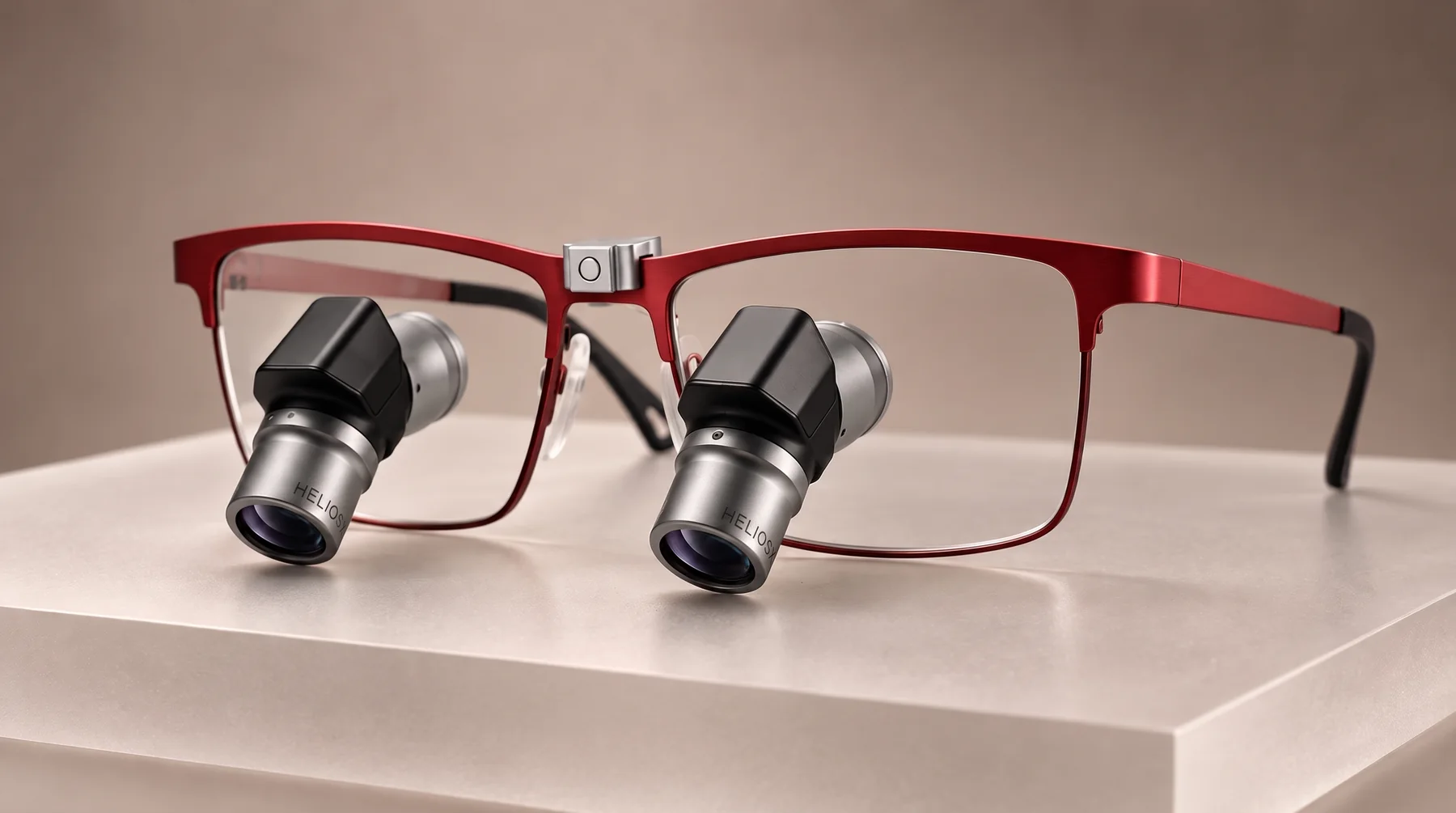
Kepler
From $1,195Conventional prismatic loupes for higher-magnification work, available in 4.0x, 5.0x, and 6.0x.
Conventional prismatic optics. Choose Apollo or Medusa for ergonomic viewing.
Explore KeplerPrismatic comparison
Prismatic loupes, also called Keplerian loupes, fold light through prisms inside each telescope. That allows higher magnification with a sharper, flatter image than a Galilean design, in exchange for more weight and a narrower field. The useful question is which kind of prismatic loupe you need, and whether you need one at all.
We make and sell HeliosX loupes. This is our buying guidance, not an independent product test or paid ranking.
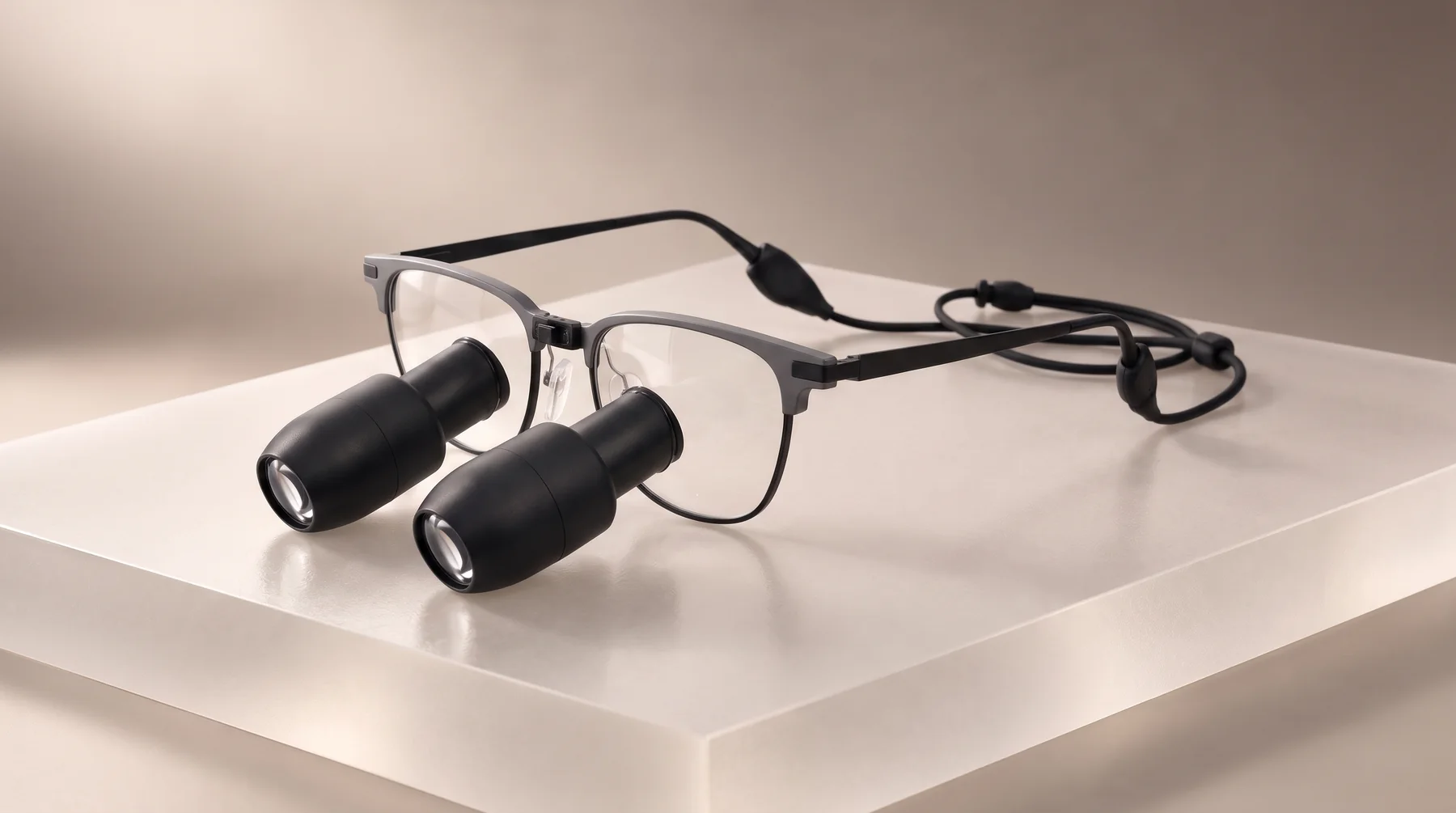
Kepler · From $1,195 USD
Your HeliosX shortlist
Compare the optical design, then choose your magnification and frame on the product page.
Conventional prismatic loupes for higher-magnification work, available in 4.0x, 5.0x, and 6.0x.
Conventional prismatic optics. Choose Apollo or Medusa for ergonomic viewing.
Explore KeplerErgonomic prismatic loupes for clinicians who want posture-aware clarity and high-magnification options.
Working distance is fixed to your configuration; magnification is selected at purchase.
Explore ApolloErgonomic prismatic loupes with adjustable working distance for clinicians who change posture between seated and standing work.
Working distance adjusts from 300–600 mm. Magnification does not switch on the loupe.
Explore MedusaStarting prices in USD. Magnification and optional prescription lenses affect the total; shipping and taxes appear at checkout. See all five models.
A Galilean telescope has two lenses and stays short and light. A prismatic telescope adds prisms that fold the light path and turn the image upright, so a longer optical system fits in a compact housing. That is what makes higher magnification possible with less distortion toward the edges. The prisms are solid glass, which is why these loupes weigh more.
A conventional prismatic loupe looks straight along the line of the telescope. An ergonomic prismatic loupe adds an angled light path, so you look down into the field while your head stays closer to upright. The word prismatic on its own does not tell you which one you are buying.
Prismatic loupes ask more of the fit. Weight sits further forward, the field narrows as magnification rises and depth of field is shallower, so small head movements show in the image.
If your work sits at 2.5x to 3.5x, a Galilean pair gives you a wider field, more depth and less weight for less money. Plenty of surgeons keep a Galilean pair for routine cases and add a prismatic pair for detailed work.
HeliosX prismatic loupes cost $1,195–$1,255 for Kepler, $1,695–$2,070 for Apollo and $1,695–$2,075 for Medusa, with worldwide shipping and a limited lifetime warranty. Verified trainees get 15% off.
They are if you need 4.0x or more, or if an ergonomic prismatic design would let you work with your head more upright. Below that, a Galilean pair usually gives a wider field for less.
No. Conventional prismatic loupes such as Kepler look straight along the telescope. Ergonomic prismatic loupes such as Apollo and Medusa angle the view so you can keep your head more upright.
The prisms are solid glass. Kepler weighs 68–85 g with frame, against 40–50 g for the Galilean Newton.
HeliosX prismatic loupes run from 3.0x on Apollo and Medusa to 8.5x on Medusa. Kepler covers 4.0x to 6.0x. Each pair is built at one magnification.
Premium magnification. More accessible.
Tell us your specialty, typical procedures, current magnification, and budget. We can help you narrow the options before you order.
Email opens in your mail app: heliosxloupes@gmail.com · Limited lifetime warranty