
Apollo
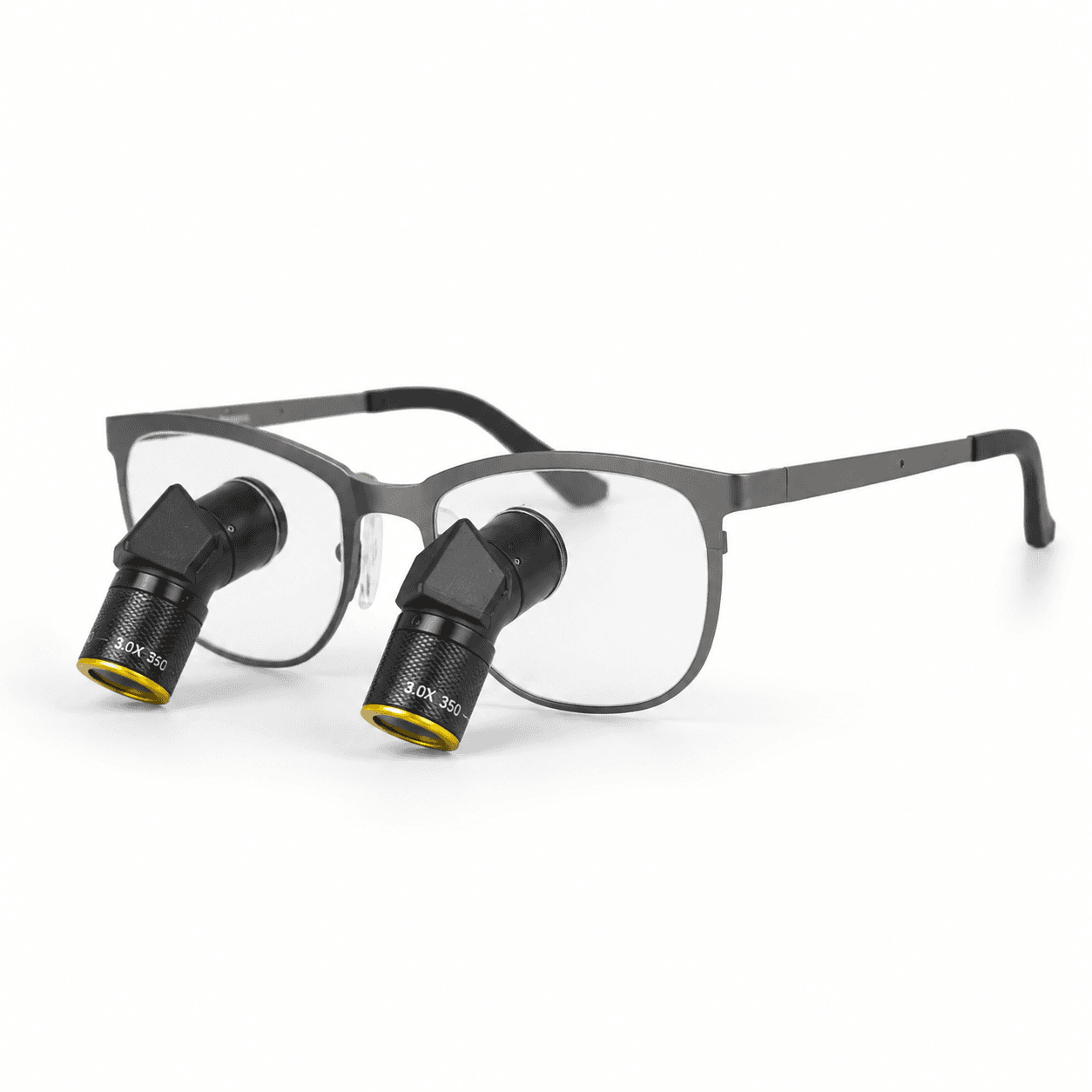
From $1,695Ergonomic prismatic loupes for clinicians who want posture-aware clarity and high-magnification options.
Working distance is fixed to your configuration; magnification is selected at purchase.
Explore ApolloImplant loupes
Implant work spans two visual problems. Surgical placement demands posterior-quadrant access, bone-handling precision, and suture work that benefits from 3.5x to 5.0x magnification. Implant restoration — crown design, abutment selection, occlusal adjustment — demands less magnification but more sustained chairside time, which moves ergonomics to the top of the priority list. A single pair of loupes can cover both if the magnification range and working distance are chosen carefully.
We make and sell HeliosX loupes. This is our buying guidance, not an independent product test or paid ranking.
.png&w=3840&q=75)
Apollo · From $1,695 USD
Your HeliosX shortlist
Compare the optical design, then choose your magnification and frame on the product page.
Ergonomic prismatic loupes for clinicians who want posture-aware clarity and high-magnification options.
Working distance is fixed to your configuration; magnification is selected at purchase.
Explore ApolloErgonomic prismatic loupes with adjustable working distance for clinicians who change posture between seated and standing work.
Working distance adjusts from 300–600 mm. Magnification does not switch on the loupe.
Explore MedusaConventional prismatic loupes for higher-magnification work, available in 4.0x, 5.0x, and 6.0x.
Conventional prismatic optics. Choose Apollo or Medusa for ergonomic viewing.
Explore KeplerStarting prices in USD. Magnification and optional prescription lenses affect the total; shipping and taxes appear at checkout. See all five models.
Implant practice tends to cluster procedures across a single day or session: a surgical placement in the morning, a graft case in the afternoon, abutment placement and impressions on follow-up visits. The loupe choice has to handle all of them without becoming the limiting factor.
Implant procedures are surgical in scope: tissue dissection, bone manipulation, sutured closure, and irrigation. Loupes used in implant surgery need the same build standards as general surgical loupes — rigid metal barrels that hold alignment under saline and irrigation, premium optical glass with multi-layer coatings that resist fogging under masks, and tolerances that survive sterilization wipes and disinfectant exposure.
Posterior-quadrant access for implant placement pulls the operator into the same head-tilt patterns that posterior endodontic work creates, only sustained across longer cases. Working distance and declination matter. Ergonomic prismatic optics are worth their pricing premium for implant practices specifically because the postural cost of decades of posterior-quadrant work compounds.
Implant surgical fields tend to be deeper and more shadowed than restorative fields, particularly in posterior maxillary sites where bone manipulation happens away from overhead light. A loupe-mounted LED light is standard equipment for implant practice, not an optional add-on.
Three models map cleanly onto implant practice.
HeliosX is built around a simple mission: make premium magnification more accessible. Compare our published prices and model specifications, then confirm the fit and support terms before committing to a custom pair.
Most implant surgeons work at 3.5x–4.5x for placement and 4.0x–5.0x for bone grafting. Restoration sits in the 3.0x–4.0x range. A single ergonomic prismatic pair at 3.0x–6.0x covers the full implant workflow without a second loupe.
Functionally yes — implant placement is a surgical procedure with bone manipulation, tissue handling, and suturing. The same build standards apply: rigid metal barrels, premium optical glass, confirmed working distance.
Not usually. A single pair with magnification range 3.0x–6.0x and a confirmed working distance handles both placement and restoration. Two-pair setups make sense only at very high volumes where the ergonomic gain from optimized working distance per task justifies the cost.
Important. Implant fields in posterior maxillary sites are under-lit by overhead surgical lighting once the operator and patient are positioned. A loupe-mounted LED light is standard equipment for implant practice and should be budgeted with the loupes.
Apollo at $1,695 covers the surgical implant range with ergonomic prismatic posture support. Resident access pricing applies. Galileo at $795 is the more affordable starting point if posture is not yet a noticed concern.
Slightly different priorities — prosthodontists prioritize the 3.0x–4.0x restoration range and lab-side use; surgeons prioritize the 3.5x–4.5x surgical range. A single pair from the 3.0x–6.0x ergonomic prismatic range handles both with positioning adjustment.
Premium magnification. More accessible.
Tell us your specialty, typical procedures, current magnification, and budget. We can help you narrow the options before you order.
Email opens in your mail app: heliosxloupes@gmail.com · Two-year limited warranty
.png&w=3840&q=75)