
Medusa
From $1,695Ergonomic prismatic loupes with adjustable working distance for clinicians who change posture between seated and standing work.
Working distance adjusts from 300–600 mm. Magnification does not switch on the loupe.
Explore MedusaPeriodontal loupes
Loupes for periodontics usually fall between 3.0x and 3.5x for scaling and routine periodontal work, while periodontal microsurgery often needs 4.5x–6.0x. The best choice balances field of view, posture, and the highest-detail procedure in the clinician’s regular case mix.
We make and sell HeliosX loupes. This is our buying guidance, not an independent product test or paid ranking.
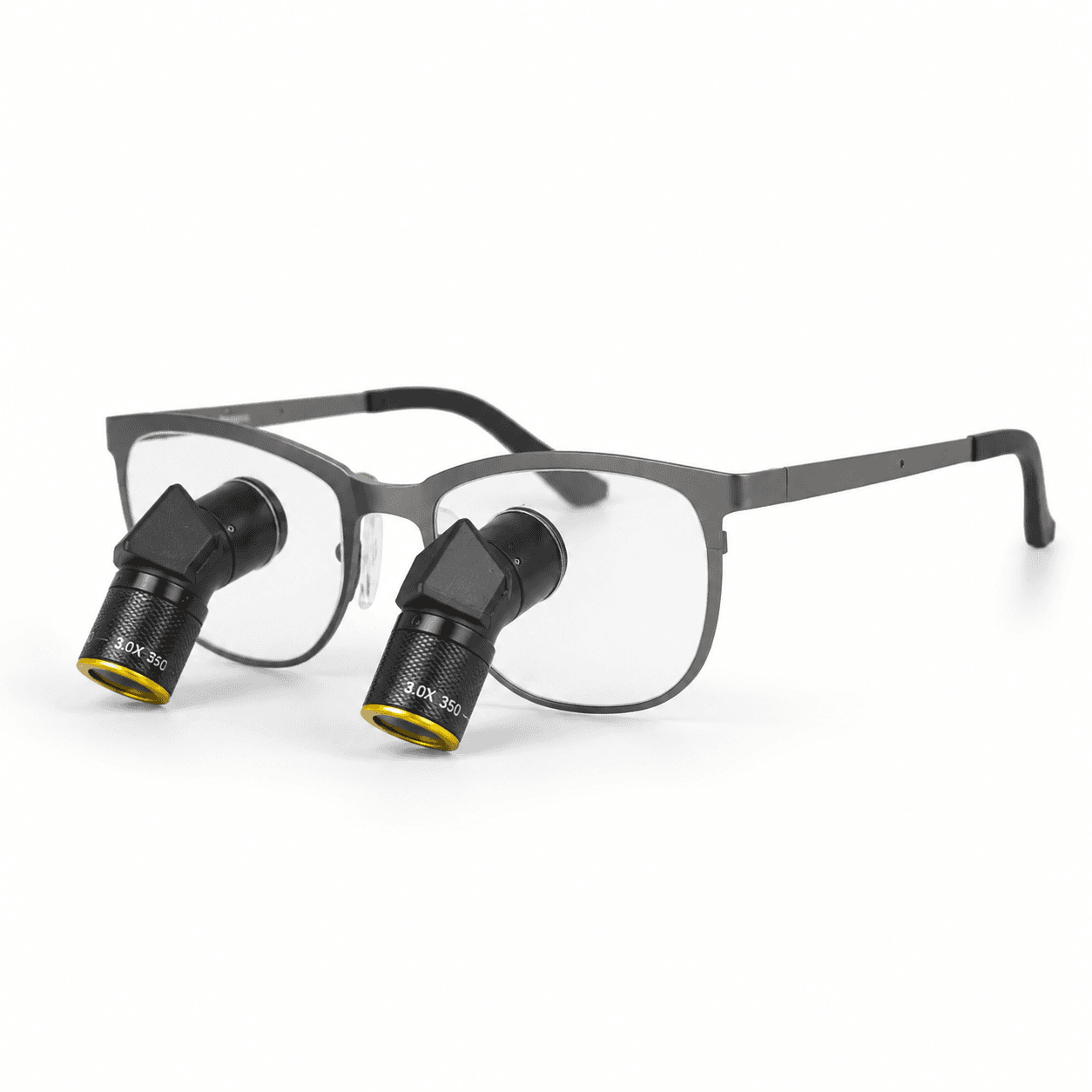
Medusa · From $1,695 USD
Your HeliosX shortlist
Compare the optical design, then choose your magnification and frame on the product page.
Ergonomic prismatic loupes with adjustable working distance for clinicians who change posture between seated and standing work.
Working distance adjusts from 300–600 mm. Magnification does not switch on the loupe.
Explore MedusaErgonomic prismatic loupes for clinicians who want posture-aware clarity and high-magnification options.
Working distance is fixed to your configuration; magnification is selected at purchase.
Explore ApolloConventional prismatic loupes for higher-magnification work, available in 4.0x, 5.0x, and 6.0x.
Conventional prismatic optics. Choose Apollo or Medusa for ergonomic viewing.
Explore KeplerLightweight affordable surgical and dental loupes for students, residents, and everyday clinical use.
A lightweight Galilean option; not an ergonomic prismatic system.
Explore GalileoStarting prices in USD. Magnification and optional prescription lenses affect the total; shipping and taxes appear at checkout. See all five models.
Perio is one of the few dental specialties where the magnification needed varies meaningfully within a single workday. The same operator might do scaling on a patient in the morning, a connective tissue graft in the afternoon, and a sinus floor elevation the next day. The work spans almost the full useful range of loupe magnification, which makes the choice between fixed-range and adjustable systems consequential.
A few common configurations show up across periodontic practices.
For periodontal work, measure working distance in the seated position and patient setup you actually use. Ergonomic prismatic loupes redirect the view, but the fit, stool height, and patient position still matter. A loupe design alone cannot guarantee comfortable posture or prevent pain.
Microsurgical perio is a different visual problem from routine perio work. The structures of interest — papilla preservation flaps, connective tissue donor sites, regenerative scaffolds — are smaller, the suturing finer, and the consequences of imprecision visible in the result months later. Loupes for microsurgical perio benefit from 5.0x or higher and high-quality lighting.
Three models map onto perio practice.
HeliosX is built around a simple mission: make premium magnification more accessible. Compare our published prices and model specifications, then confirm the fit and support terms before committing to a custom pair.
It depends on the procedure. Scaling and root planing use 3.0x–3.5x; periodontal flap surgery typically 3.5x–4.5x; microsurgical grafting and regeneration 4.5x–6.0x. Many specialists end up with a single ergonomic prismatic pair that covers the range, or two pairs split between routine and microsurgical work.
Yes, more than for most dental specialties. Long sit-down case durations and sustained head-tilt to access the field make ergonomic prismatic optics measurably worth their price premium for periodontists and hygienists doing periodontal therapy.
Yes if it has the magnification range. Medusa covers 3.0x–8.5x and is the most common single-pair pick for periodontal specialists with mixed case loads. Apollo covers 3.0x–6.0x and works for specialists whose microsurgery does not exceed 6.0x.
Yes. Hygienists doing periodontal therapy report some of the highest rates of cervical and shoulder musculoskeletal complaints in dentistry. Ergonomic prismatic designs reduce one specific contributor — sustained cervical flexion — and the benefit compounds across a career.
A starting pair that covers routine perio through grafting — Apollo at $1,695 ergonomic prismatic or Galileo at $795 as a more affordable entry. Resident access pricing applies across the lineup. Email heliosxloupes@gmail.com with program details to confirm eligibility.
Not for most cases. Loupes at 5.0x–6.0x handle the majority of periodontal microsurgical work. The microscope adds value for very fine regenerative procedures and faculty teaching contexts but is not a prerequisite for clinical practice.
Premium magnification. More accessible.
Tell us your specialty, typical procedures, current magnification, and budget. We can help you narrow the options before you order.
Email opens in your mail app: heliosxloupes@gmail.com · Two-year limited warranty
.png&w=3840&q=75)
.png&w=3840&q=75)
.png&w=3840&q=75)