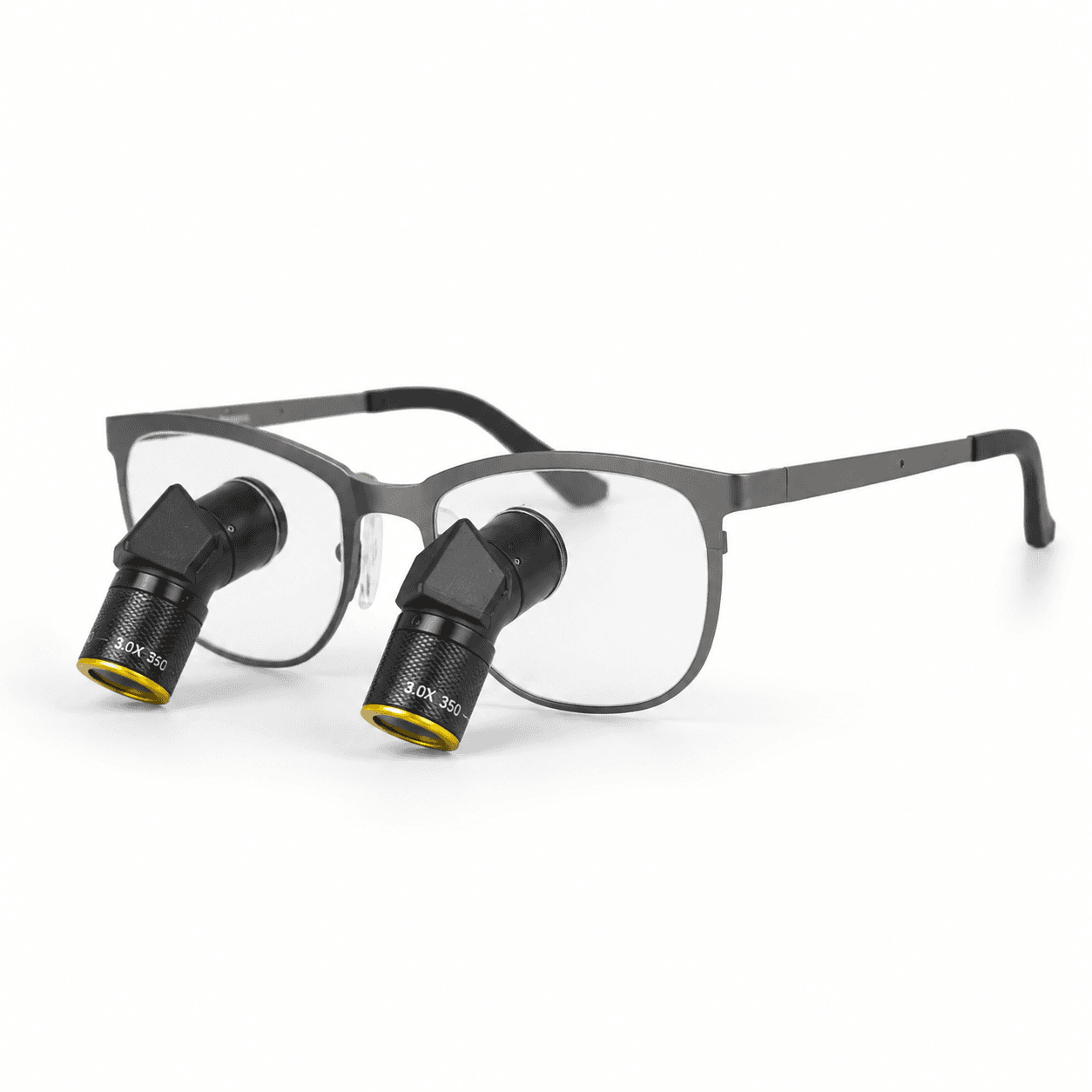
Galileo
From $795Lightweight affordable surgical and dental loupes for students, residents, and everyday clinical use.
A lightweight Galilean option; not an ergonomic prismatic system.
Explore GalileoOrthodontic loupes
Orthodontics does not demand the magnification range that endodontics or periodontal microsurgery does, but it does demand precision across high-volume repetitive work. Bracket placement, archwire bending, indirect bonding tray work, and clear-aligner attachment placement all benefit from 2.5x to 3.5x magnification. The reason most orthodontists do not own loupes is habit, not need.
We make and sell HeliosX loupes. This is our buying guidance, not an independent product test or paid ranking.
.png&w=3840&q=75)
Galileo · From $795 USD
Your HeliosX shortlist
Compare the optical design, then choose your magnification and frame on the product page.
Lightweight affordable surgical and dental loupes for students, residents, and everyday clinical use.
A lightweight Galilean option; not an ergonomic prismatic system.
Explore GalileoOur lowest-priced Galilean model, with 2.5x, 3.0x, and 3.5x configurations for everyday magnification.
Galilean optics. Choose Apollo or Medusa for a redirected ergonomic view.
Explore NewtonErgonomic prismatic loupes for clinicians who want posture-aware clarity and high-magnification options.
Working distance is fixed to your configuration; magnification is selected at purchase.
Explore ApolloErgonomic prismatic loupes with adjustable working distance for clinicians who change posture between seated and standing work.
Working distance adjusts from 300–600 mm. Magnification does not switch on the loupe.
Explore MedusaStarting prices in USD. Magnification and optional prescription lenses affect the total; shipping and taxes appear at checkout. See all five models.
The visual problem in orthodontics is precision across rapid repetitive work, not extreme magnification on small structures. The structures involved are visible to corrected unaided vision — brackets, wires, attachments, retainer wires. The benefit of loupes is consistency of placement, not the difference between seeing and not seeing.
Three configurations cover most orthodontic preferences.
Orthodontic posture is its own problem. The operator is seated for sustained periods, looking into mouths at a consistent angle, repeated 20 or more times in a workday. The ergonomic strain is from repetition and sustained position, not from the extreme angles other dental specialties produce. Ergonomic prismatic loupes are still worth their price premium for high-volume orthodontists even though the magnification stays modest.
Lab-side orthodontic work — indirect bonding trays, wire bending at the bench, attachment template construction — has different visual demands from chairside. Working distance is shorter, lighting is more controllable, and posture is typically more neutral. A separate dedicated pair is overkill for most practices, but it is worth confirming that the working distance measured for your chairside pair covers lab-side use, or accepting a small compromise.
Three models work well for orthodontic practice depending on whether ergonomics or budget is the deciding factor.
HeliosX is built around a simple mission: make premium magnification more accessible. Compare our published prices and model specifications, then confirm the fit and support terms before committing to a custom pair.
2.5x to 3.5x is the standard orthodontic range. Bracket placement, wire bending, and clear-aligner attachments benefit from magnification but do not require the higher ranges endodontics or periodontal microsurgery demand.
Most orthodontists who try them do not go back. Magnification improves consistency of bracket placement, supports finer wire bending, and reduces cumulative postural load across a high-volume workday. The case is strong; the reason most orthodontists do not own loupes is historical habit, not lack of benefit.
A standard chairside pair handles most lab work if the working distance is sized correctly. High-volume lab work — particularly indirect bonding tray construction — justifies a dedicated second pair sized for bench distance and lighting.
For high-volume practices, yes. Ergonomic prismatic optics raise the viewing angle and reduce the cervical-flexion load that 20+ patients per day produces. Apollo at $1,695 is the entry point; the ROI is across years of practice, not single visits.
Galileo at $795 is the default for residents — covers the orthodontic magnification range, lightweight, and resident access pricing applies. Newton at $695 is the lighter alternative for residents who prioritize all-day comfort over future upgrade flexibility.
Premium magnification. More accessible.
Tell us your specialty, typical procedures, current magnification, and budget. We can help you narrow the options before you order.
Email opens in your mail app: heliosxloupes@gmail.com · Two-year limited warranty
.png&w=3840&q=75)
.png&w=3840&q=75)