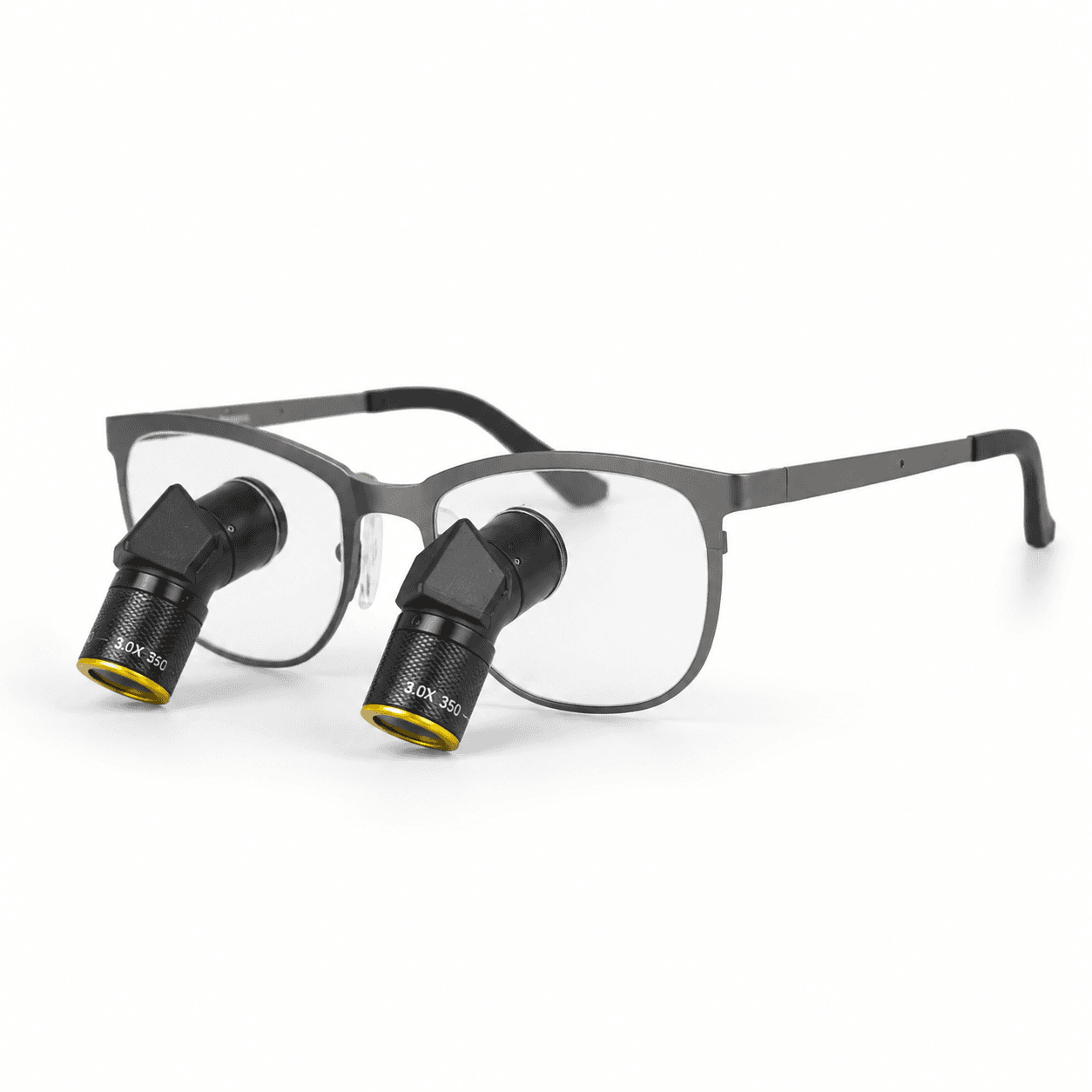
Kepler
From $1,195Conventional prismatic loupes for higher-magnification work, available in 4.0x, 5.0x, and 6.0x.
Conventional prismatic optics. Choose Apollo or Medusa for ergonomic viewing.
Explore KeplerEndodontic loupes
Loupes for endodontics typically use 4.5x–6.0x magnification for locating canal orifices, inspecting isthmuses, and refining access. The right setup also needs a working distance that supports posture and enough illumination for the narrow field; HeliosX loupes are sold without an LED light source.
We make and sell HeliosX loupes. This is our buying guidance, not an independent product test or paid ranking.
.png&w=3840&q=75)
Kepler · From $1,195 USD
Your HeliosX shortlist
Compare the optical design, then choose your magnification and frame on the product page.
Conventional prismatic loupes for higher-magnification work, available in 4.0x, 5.0x, and 6.0x.
Conventional prismatic optics. Choose Apollo or Medusa for ergonomic viewing.
Explore KeplerErgonomic prismatic loupes for clinicians who want posture-aware clarity and high-magnification options.
Working distance is fixed to your configuration; magnification is selected at purchase.
Explore ApolloErgonomic prismatic loupes with adjustable working distance for clinicians who change posture between seated and standing work.
Working distance adjusts from 300–600 mm. Magnification does not switch on the loupe.
Explore MedusaStarting prices in USD. Magnification and optional prescription lenses affect the total; shipping and taxes appear at checkout. See all five models.
Endo is one of the most magnification-demanding workflows in clinical dentistry. The procedure involves locating canal orifices on the pulp chamber floor, identifying MB2 and other accessory canals, evaluating mid-root curvature, separating isthmuses, and confirming complete cleaning before obturation. Each of those steps benefits from magnification beyond what general dental work demands.
Endodontic specialists tend to converge on a higher magnification range than most other dental subspecialties. The reason is straightforward: the structures being treated are smaller than the workable resolution of lower magnification at typical operator distances.
Endodontic procedures often pull the operator into less neutral postures than restorative work — angles into posterior teeth, slightly extended reach to access maxillary molars, prolonged head-tilt. Working distance and declination matter more than the average dental procedure. Ergonomic prismatic loupes are worth their pricing premium in endo specifically because the alternative is years of cervical strain to access the working field.
A canal is not lit by overhead surgical lighting once the operator and patient angles are set. Even premium loupes do not solve this — they magnify whatever light reaches the field. Plan for a loupe-mounted light in your initial budget. HeliosX does not ship a proprietary headlight bundle; lights are sold separately so you can choose the wattage and beam profile that matches your specialty.
Three HeliosX models map onto endodontic practice depending on case mix and posture preferences.
HeliosX is built around a simple mission: make premium magnification more accessible. Compare our published prices and model specifications, then confirm the fit and support terms before committing to a custom pair.
Most endodontic specialists work at 4.5x to 6.0x. Below 4.0x, fine canal anatomy is hard to verify under rubber dam; above 6.0x, the operating microscope becomes the more common tool.
3.5x is a reasonable starting point for general dentists doing occasional endo, but specialists and residents typically move to 4.5x or higher within their first year of focused endodontic practice. Canal orifice work and isthmus separation become measurably easier at the higher range.
Loupes at 4.5x to 6.0x handle the majority of endodontic cases. The operating microscope adds value for retreatment, separated instruments, perforations, and apicoectomies. Most specialists use loupes for routine cases and the microscope for the specific cases that demand higher magnification or a fixed working position.
Very. Overhead operating light does not reach inside the canal once the operator and patient are positioned. A loupe-mounted LED light is the standard pairing and should be budgeted alongside the loupes, not after the fact. HeliosX does not bundle a proprietary light, so you can choose by beam profile and wattage.
Kepler at $1,195 covers the 4.0x–6.0x range most endodontic residents need without committing to the ergonomic prismatic premium. Resident access pricing applies. Email heliosxloupes@gmail.com with your program details to confirm eligibility.
Yes if the magnification range covers both. Medusa at 3.0x–8.5x and Apollo at 3.0x–6.0x give one pair that handles routine restorative at the lower end and focused endo at the higher end. Kepler is more endo-weighted and less suited to broad restorative.
Premium magnification. More accessible.
Tell us your specialty, typical procedures, current magnification, and budget. We can help you narrow the options before you order.
Email opens in your mail app: heliosxloupes@gmail.com · Two-year limited warranty
.png&w=3840&q=75)