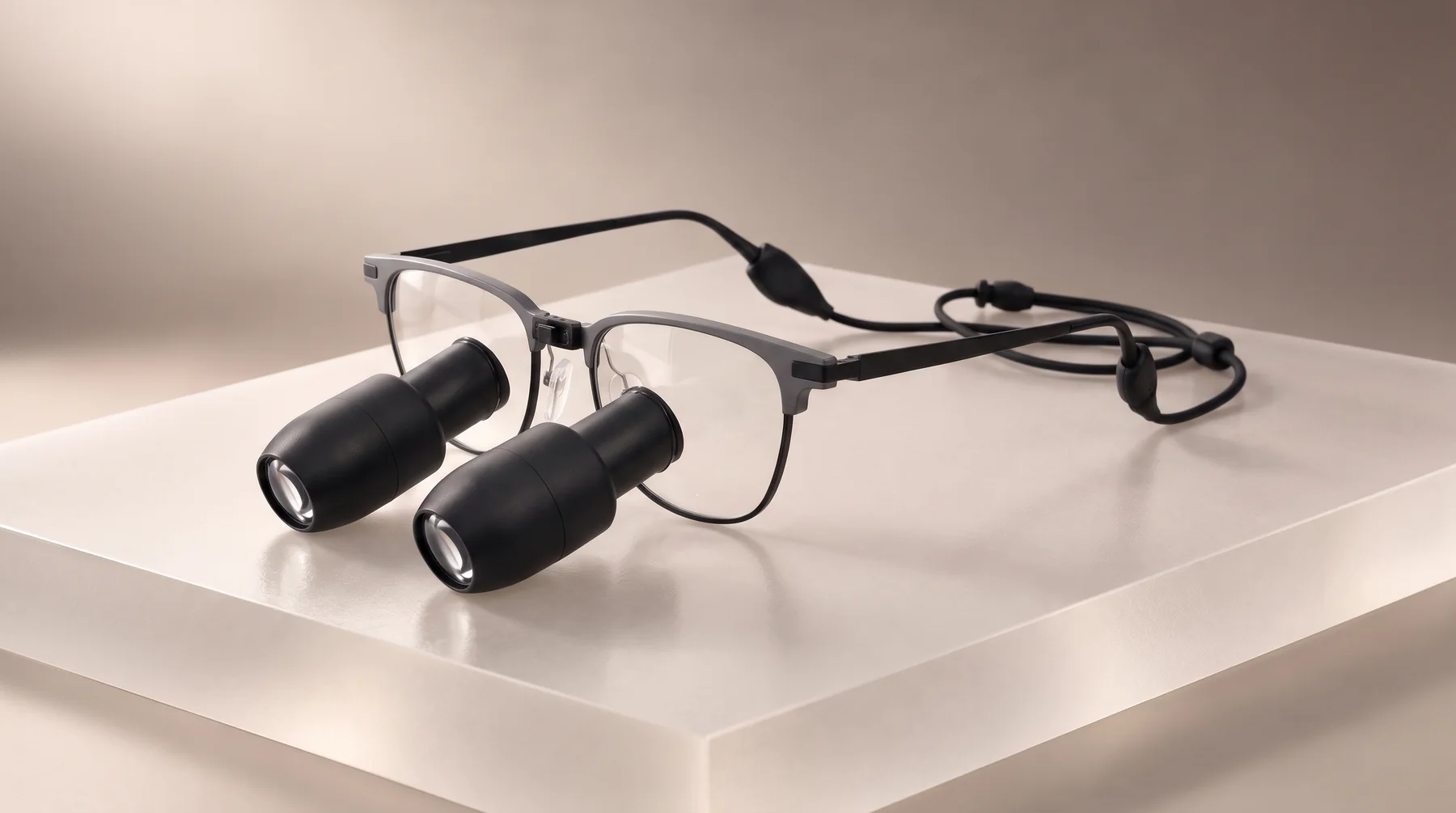
Galileo
From $795Lightweight affordable surgical and dental loupes for students, residents, and everyday clinical use.
A lightweight Galilean option; not an ergonomic prismatic system.
Explore GalileoVeterinary dentistry
Short answer: Most veterinary dental work suits 3.0x–3.5x loupes measured seated at your dental table: wide enough for a full mouth, close enough for extractions in small breeds and cats. Fine endodontic and oral surgery work moves to 4.0x. HeliosX Galileo 3.5x costs $825, and the ergonomic Apollo starts at $1,695.
Veterinary dentistry is where most vets first want magnification. The mouth of a small dog or cat is tight and dark, the structures are small, and the work is seated and close. Loupes make root tips, furcations and fractured crowns easier to see, and a loupe-mounted light puts the light where your head would otherwise block it.
We make and sell HeliosX loupes. This is our buying guidance, not an independent product test or paid ranking.
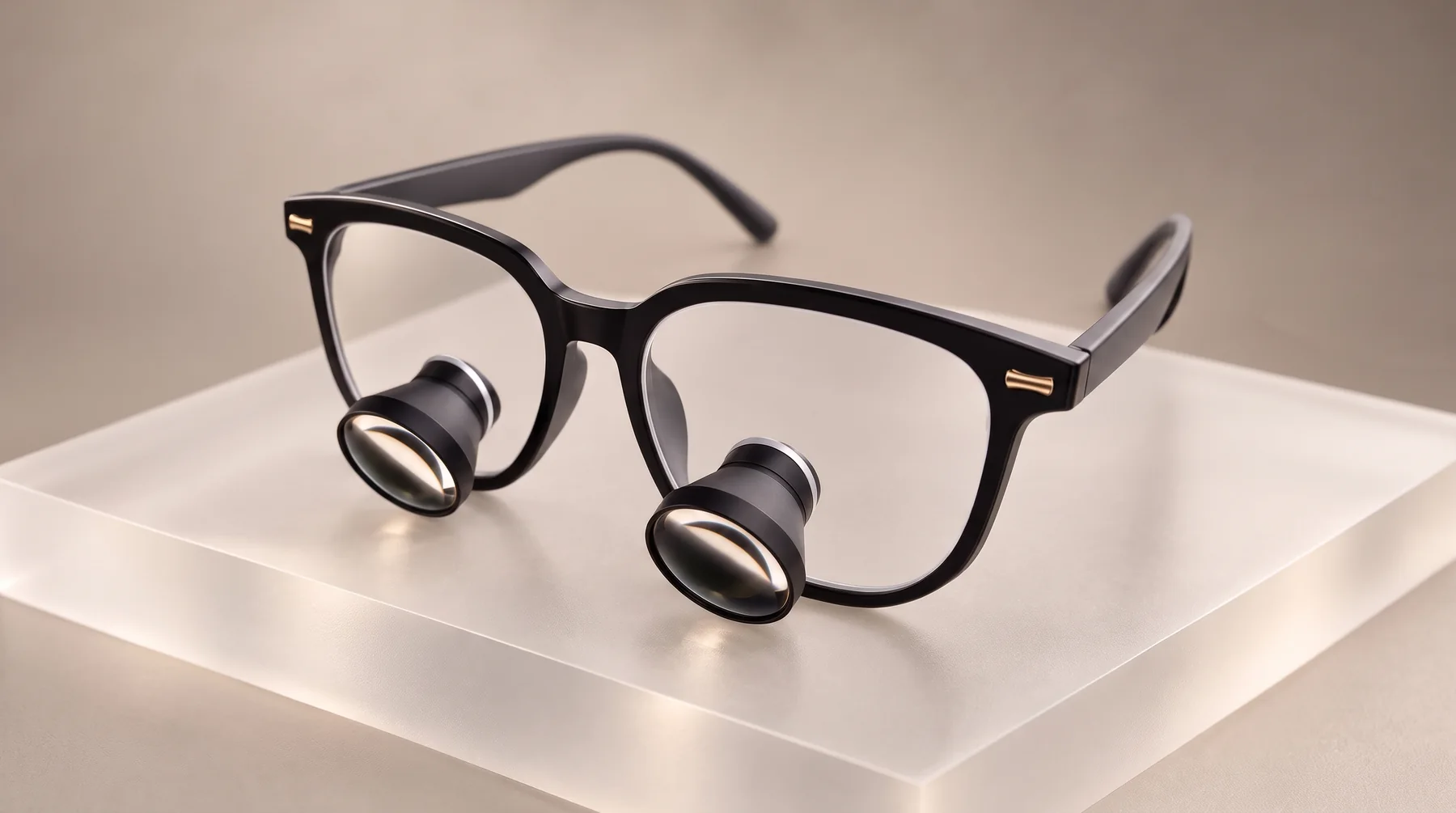
Galileo · From $795 USD
Common starting points. Choose for the work you do most often, then confirm the view at your own working distance.
| Procedure | Magnification | Working distance | HeliosX starting point |
|---|---|---|---|
| Dental cleaning and charting | 2.5x–3.0x | Seated | Galileo 2.5x–3.0x, from $795 |
| Extractions in cats and small breeds | 3.0x–3.5x | Seated, close | Galileo 3.5x |
| Root tips and fractured roots | 3.5x–4.0x | Seated | Galileo 3.5x or Apollo 4.0x |
| Endodontics and oral surgery | 4.0x–5.0x | Seated | Apollo or Kepler, from $1,195 |
| Dentistry and standing surgery in one pair | 3.0x–4.0x | Seated and standing | Medusa, adjustable 300–600 mm |
Your HeliosX shortlist
Compare the optical design, then choose your magnification and frame on the product page.
Lightweight affordable surgical and dental loupes for students, residents, and everyday clinical use.
A lightweight Galilean option; not an ergonomic prismatic system.
Explore GalileoErgonomic prismatic loupes for clinicians who want posture-aware clarity and high-magnification options.
Working distance is fixed to your configuration; magnification is selected at purchase.
Explore ApolloConventional prismatic loupes for higher-magnification work, available in 4.0x, 5.0x, and 6.0x.
Conventional prismatic optics. Choose Apollo or Medusa for ergonomic viewing.
Explore KeplerStarting prices in USD. Magnification and optional prescription lenses affect the total; shipping and taxes appear at checkout. See all five models.
In a cat or toy-breed mouth, root tips, fractured roots and furcation lesions are small and close together. At 3.0x–3.5x most of the mouth stays in view, and the detail is large enough to work on with confidence. Higher magnification narrows the field, so keep 4.0x and above for endodontic and surgical work.
Dentistry is usually seated, with a shorter working distance than standing surgery. Measure in your real chair and table position. If you also operate standing, either buy for the work you do most or choose Medusa, which adjusts from 300 to 600 mm.
Overhead lights struggle in a small open mouth, and your head blocks them as you lean in. A loupe-mounted LED puts the light on your line of sight. HeliosX loupes are compatible with LED headlights and battery packs; plan the light with the loupe, because the mount is fitted to the frame.
If you also do soft tissue and orthopedic surgery, the magnification and working distance change. Our veterinary surgery guide covers spays, TPLOs, urethral work and ophthalmic cases.
3.0x–3.5x suits most cleanings and extractions. Move to 4.0x for root tips, endodontics and oral surgery.
Most vets doing dentistry use one. A loupe-mounted LED lights the back of a small mouth that overhead lights cannot reach. HeliosX loupes are LED-compatible; lights are bought separately.
Yes. Technicians doing cleanings and charting often use 2.5x–3.0x Galilean loupes, which are light and give a wide field.
HeliosX Galilean loupes cost $695–$725 for Newton and $795–$825 for Galileo; ergonomic Apollo is $1,695–$2,070. Verified veterinary students get 15% off.
Premium magnification. More accessible.
Tell us your specialty, typical procedures, current magnification, and budget. We can help you narrow the options before you order.
Email opens in your mail app: heliosxloupes@gmail.com · Limited lifetime warranty