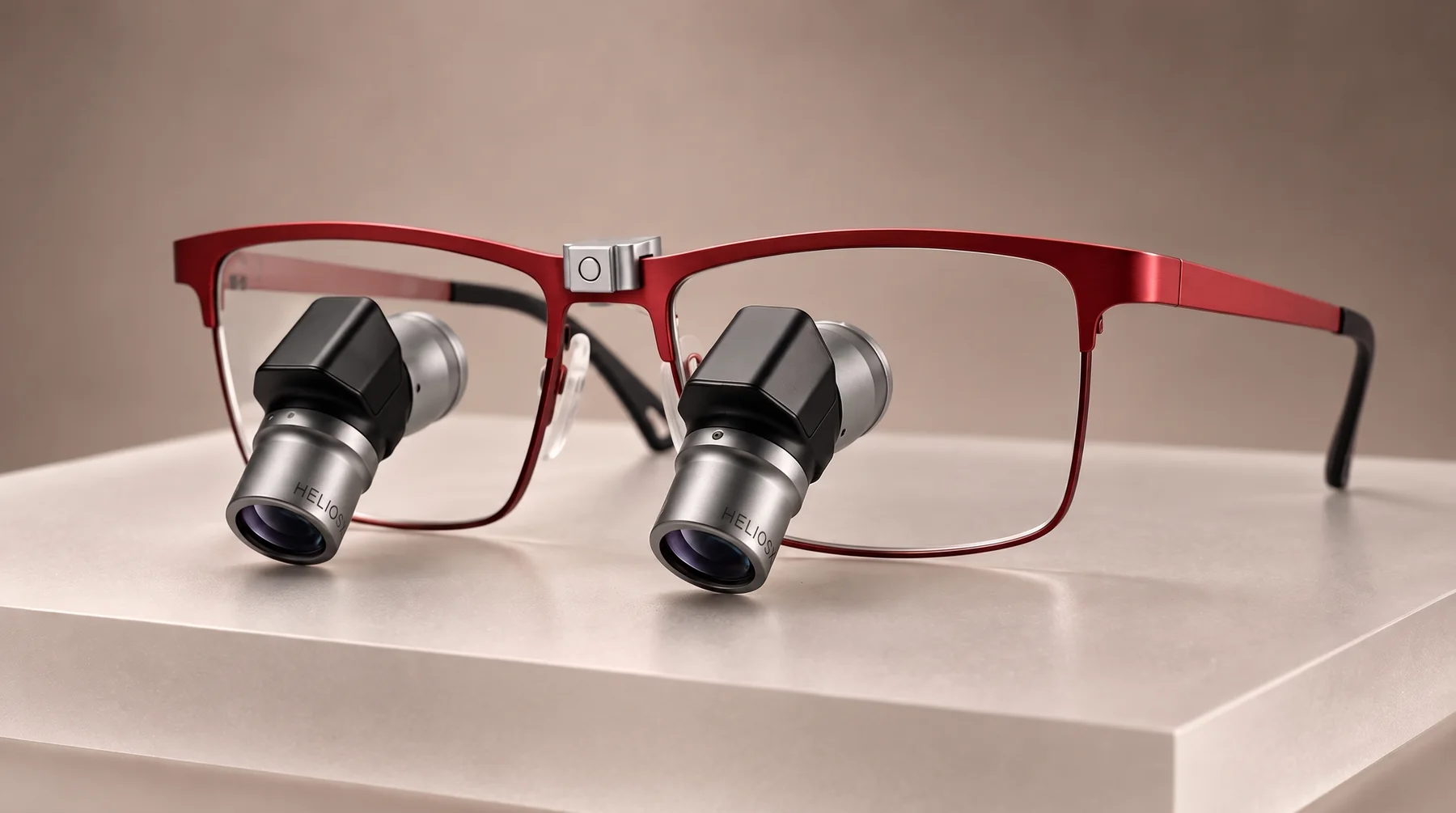
Galileo
From $795Lightweight affordable surgical and dental loupes for students, residents, and everyday clinical use.
A lightweight Galilean option; not an ergonomic prismatic system.
Explore GalileoVeterinary surgery
Short answer: Most veterinary surgeons do best with 2.5x–3.5x loupes, measured standing at their usual table height: 2.5x for orthopedic and large-animal soft tissue, 3.5x for small patients, ureteral and urethral work, and fine closures. Ophthalmic and microvascular work moves to 4.0x–6.0x or a microscope. HeliosX Galileo starts at $795 with six frame styles included in the price; ergonomic Apollo starts at $1,695.
Veterinary surgery covers a wider size range than any human specialty. The same surgeon may repair a cat’s urethra in the morning and plate a large dog’s tibia in the afternoon. Small patients make magnification more useful, and the posture problems are the same ones human surgeons have: leaning over a table that is often too low, for long cases, with no one adjusting it for you.
We make and sell HeliosX loupes. This is our buying guidance, not an independent product test or paid ranking.
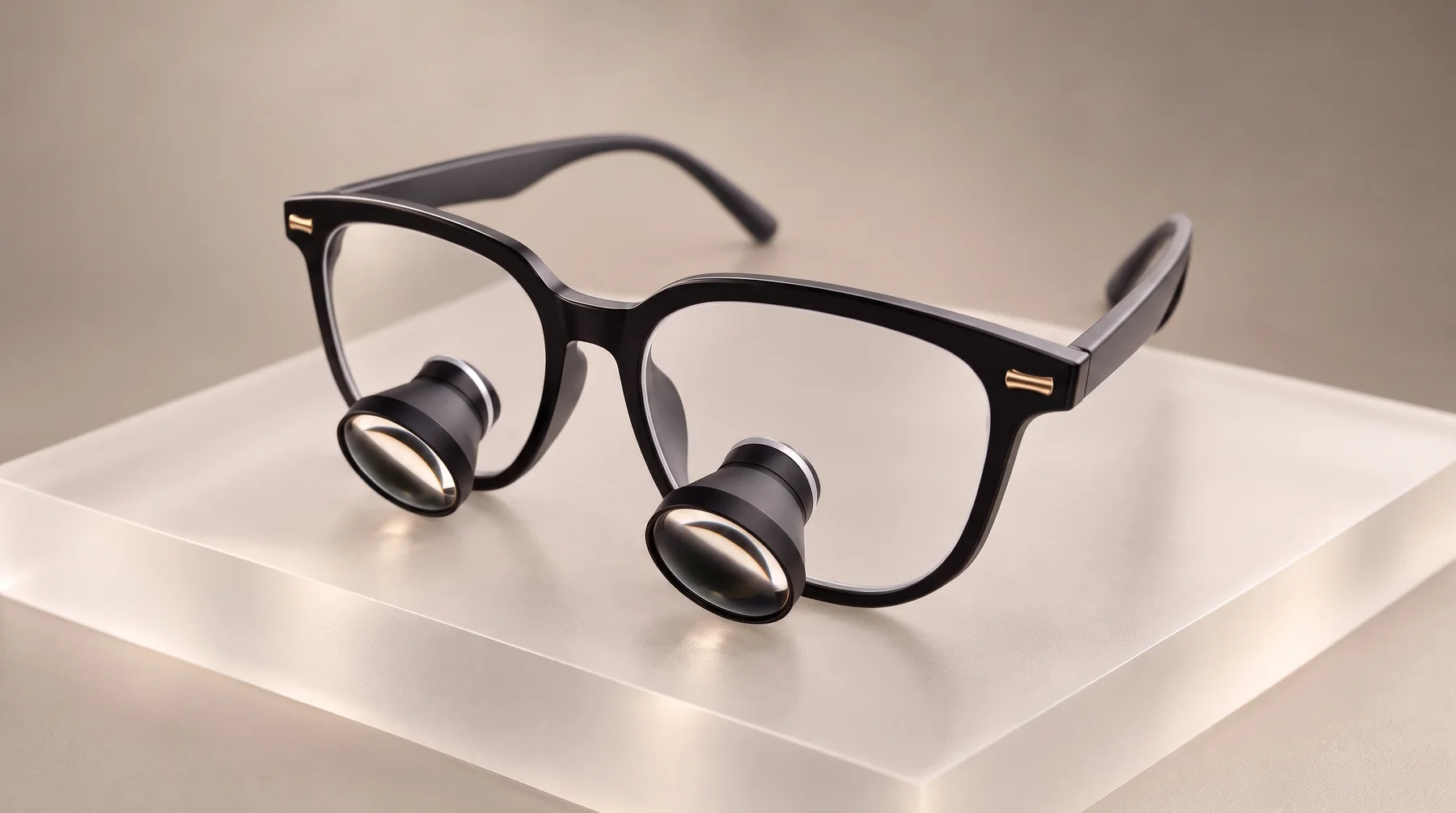
Galileo · From $795 USD
Common starting points. Choose for the work you do most often, then confirm the view at your own working distance.
| Procedure | Magnification | Working distance | HeliosX starting point |
|---|---|---|---|
| Spays, neuters and routine soft tissue | 2.5x | Standing | Galileo 2.5x, from $795 |
| Orthopedics: TPLO, fracture repair | 2.5x | Standing, longer | Galileo 2.5x, or Medusa for mixed heights |
| Cats and toy breeds: urethrostomy, gut, ureter | 3.0x–3.5x | Standing or seated | Galileo 3.5x |
| Veterinary dentistry and oral surgery | 3.0x–4.0x | Seated | Galileo 3.5x or Apollo 4.0x, with a light |
| Ophthalmic and microvascular surgery | 4.0x–6.0x or microscope | Seated | Kepler, from $1,195 |
Your HeliosX shortlist
Compare the optical design, then choose your magnification and frame on the product page.
Lightweight affordable surgical and dental loupes for students, residents, and everyday clinical use.
A lightweight Galilean option; not an ergonomic prismatic system.
Explore GalileoErgonomic prismatic loupes for clinicians who want posture-aware clarity and high-magnification options.
Working distance is fixed to your configuration; magnification is selected at purchase.
Explore ApolloConventional prismatic loupes for higher-magnification work, available in 4.0x, 5.0x, and 6.0x.
Conventional prismatic optics. Choose Apollo or Medusa for ergonomic viewing.
Explore KeplerStarting prices in USD. Magnification and optional prescription lenses affect the total; shipping and taxes appear at checkout. See all five models.
In small animal work the structures get small fast. A feline urethra, a toy-breed intestine or a ureter is a different visual task from a large-breed stifle. Many veterinary surgeons settle on 3.0x–3.5x as an everyday compromise, and keep the wider 2.5x field for orthopedics and large patients.
Posture problems are near universal in the profession. A 2021 survey of 212 board-certified veterinary surgeons in the American College of Veterinary Surgeons found that 93% had experienced musculoskeletal symptoms associated with surgery, most often in the neck, lower back and upper back, that discomfort worsened with longer surgical hours, and that 42% had pain lasting more than 24 hours after surgery.
Measure standing at the height you actually operate, which is often lower than you would like. If you are tall and your table does not rise far, your working distance will be longer than average, and a loupe built to a standard setting will make you stoop. Veterinary dentistry is usually seated, with a shorter distance again.
Veterinary dental work and deep abdominal or thoracic cases are where a loupe-mounted light earns its weight. The mouth of a small dog or cat is hard to light from above, and your head blocks the overhead light. Plan the light at the same time as the loupe, because the mount is fitted to the frame.
HeliosX builds every pair to your measured pupillary and working distance, reviews the numbers before production, and publishes every price. Every model’s frame choices are included in the price.
Most use 2.5x–3.5x: 2.5x for orthopedics and large patients, 3.0x–3.5x for cats, toy breeds and fine soft tissue. Ophthalmic and microvascular work needs 4.0x–6.0x or a microscope.
Yes. The optics are the same; what changes is the working distance and magnification you choose. Measure in your own posture at your own table height.
Yes. Verified students, residents and interns get 15% off any HeliosX model.
Premium magnification. More accessible.
Tell us your specialty, typical procedures, current magnification, and budget. We can help you narrow the options before you order.
Email opens in your mail app: heliosxloupes@gmail.com · Limited lifetime warranty