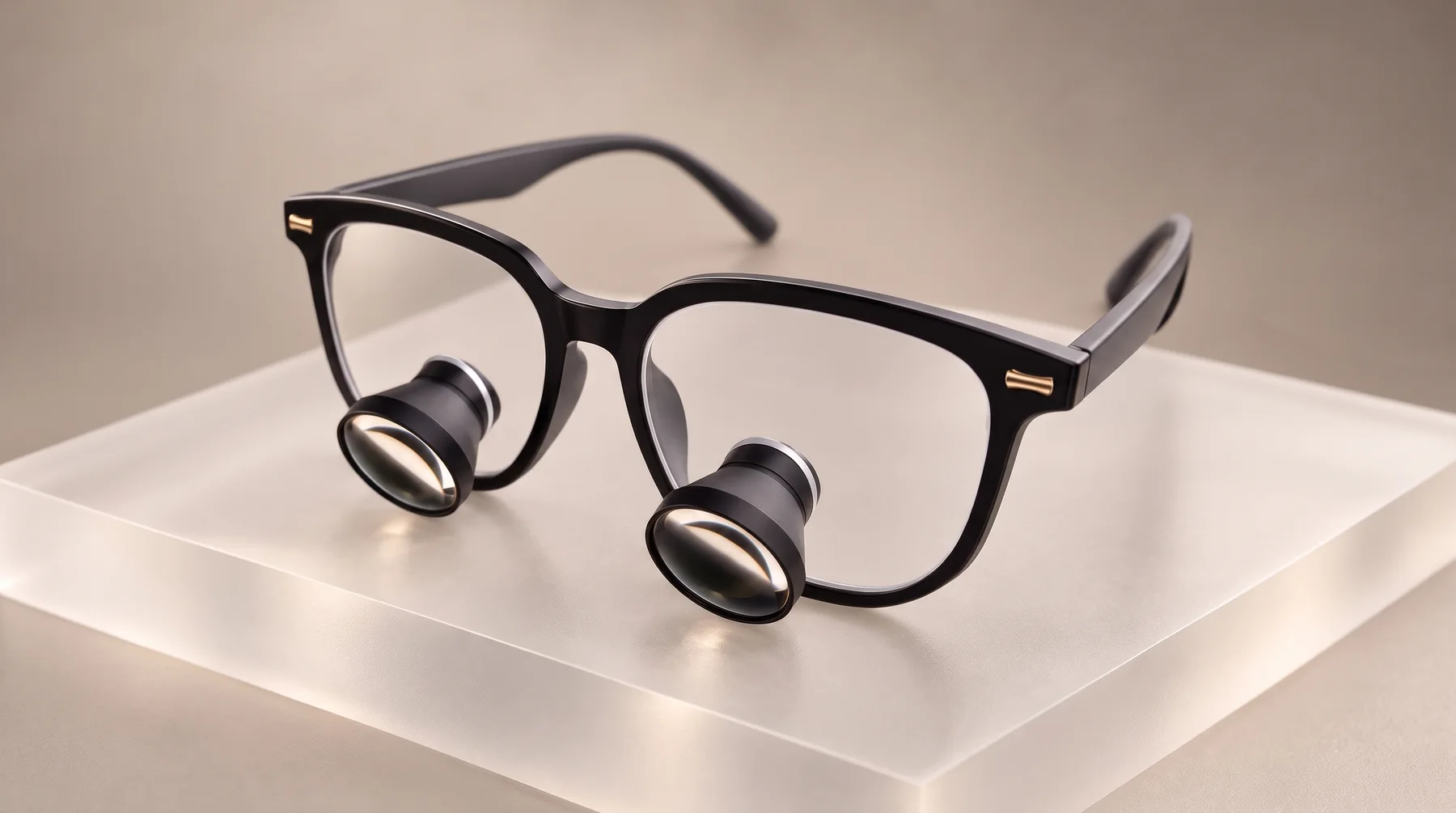
Newton
From $695The lightest way into HeliosX optics: Galilean 2.5x–3.5x at 40–50 g, favored by students, hygienists and assistants worldwide.
Galilean optics. Choose Apollo or Medusa for a redirected ergonomic view.
Explore NewtonLash artist loupes
Short answer: Most lash artists do best with 2.5x loupes built to a working distance of about 30–40 cm, measured seated at the lash bed. 2.5x separates individual lashes and shows isolation and bonding clearly while both eyes stay in view; 3.0x–3.5x helps with mega volume fans and inner corners. HeliosX Newton weighs 40–50 g with the frame and starts at $695, custom-built to your pupillary and working distance.
HeliosX is the world standard in custom ergonomic loupes, supplied to clinicians, teaching hospitals and universities in more than 110 countries. A full set is two to three hours of isolating one natural lash at a time, a fraction of a millimetre from the lid, with your head held still over the client. Most lash magnifiers focus a few inches away and pull you down toward the face. Loupes are built the other way round: the focus is set to the distance at which you sit comfortably, and the magnification comes to you.
Guidance from the HeliosX loupe specialists.
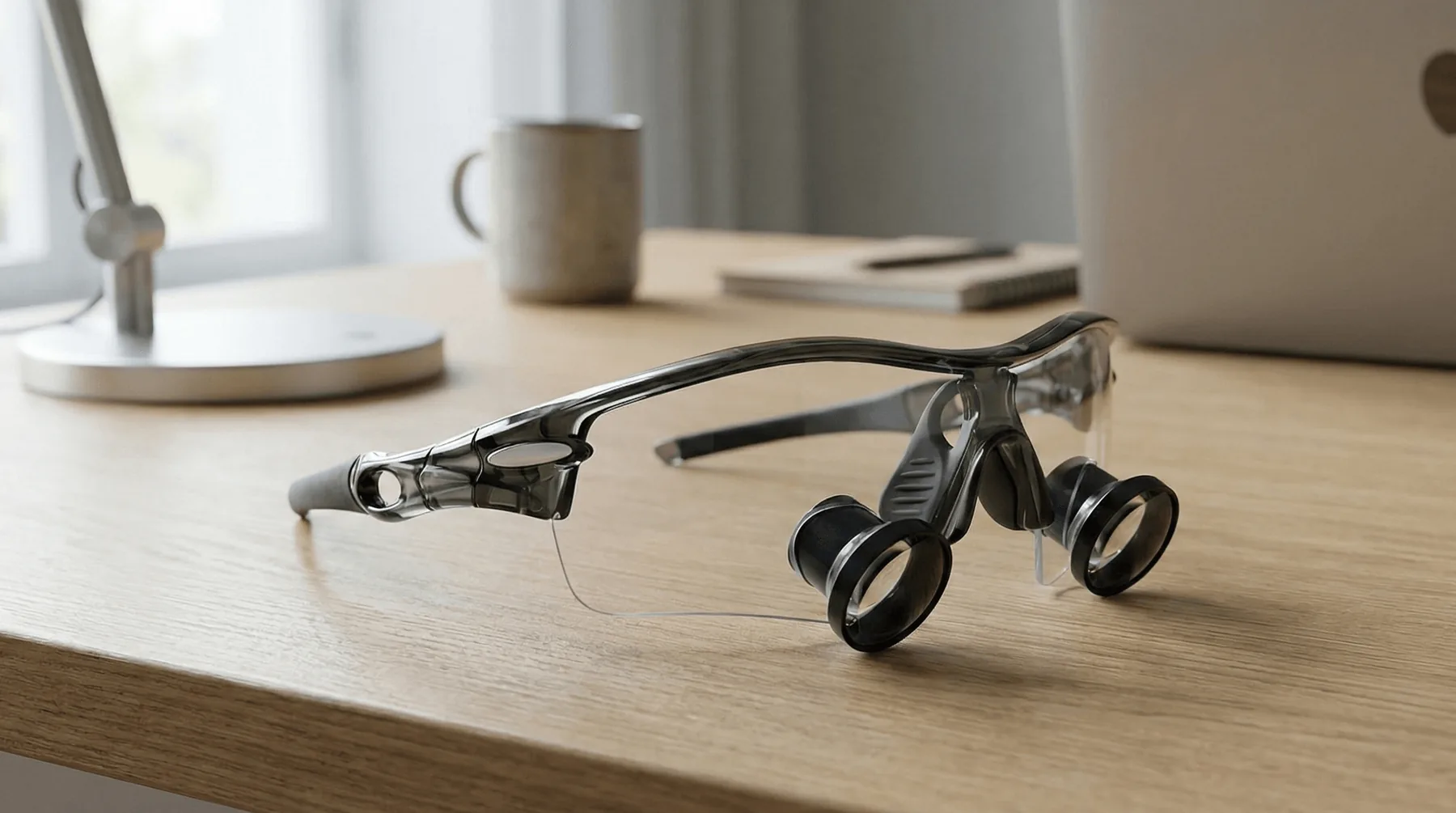
Newton · From $695 USD
Common starting points. Choose for the work you do most often, then confirm the view at your own working distance.
| Procedure | Magnification | Working distance | HeliosX starting point |
|---|---|---|---|
| Classic sets | 2.5x | 30–40 cm, seated at the lash bed | Newton at 2.5x, from $695 |
| Hybrid and volume sets | 2.5x–3.0x | 30–40 cm | Galileo at 3.0x |
| Mega volume and handmade fans | 3.0x–3.5x | 30–40 cm | Galileo at 3.5x |
| Inner corners and lower lashes | 3.0x–3.5x | 30–40 cm | Galileo at 3.5x |
| Fills, removals and stickie checks | 2.5x | 30–40 cm | Newton at 2.5x |
| Lash lifts and tints | 2.5x | 30–40 cm | Newton at 2.5x |
Why HeliosX
HeliosX is regarded as a leader and innovator in surgical and dental magnification, setting the standard for ergonomic prismatic and lightweight Galilean loupes. HeliosX loupes are built from the highest-grade optical glass and premium lightweight metals: bright, true-color optics in frames that stay light and form-fitting through the longest case.
Ask a HeliosX loupe specialist anything, from the right magnification for your specialty to weight, working distance and lighting. We have answered it at hundreds of expos.
Your HeliosX shortlist
Compare the optical design, then choose your magnification and frame on the product page.
The lightest way into HeliosX optics: Galilean 2.5x–3.5x at 40–50 g, favored by students, hygienists and assistants worldwide.
Galilean optics. Choose Apollo or Medusa for a redirected ergonomic view.
Explore NewtonThe lightweight everyday standard, favored by dentists, hygienists and surgeons in 110+ countries: Galilean 2.5x–3.5x, six frame styles included.
A lightweight Galilean option; not an ergonomic prismatic system.
Explore GalileoThe adjustable ergonomic prismatic loupe surgeons in 110+ countries choose when they sit and stand: 3.0x–8.5x, working distance 300–600 mm, custom-built.
Working distance adjusts from 300–600 mm. Magnification does not switch on the loupe.
Explore MedusaStarting prices in USD. Magnification and optional prescription lenses affect the total; shipping and taxes appear at checkout. See all five models.
Clip-on and visor magnifiers are reading lenses. The stronger they are, the closer they focus, so a 2.5x pair has you a hand’s width from the client’s eyes. Loupes are small telescopes: they magnify at a distance. A pair built for 35 cm lets you sit back with your shoulders down and still see each lash as a separate strand.
Lash work is about telling one lash from its neighbour and seeing where adhesive sits. 2.5x does that for most artists and keeps the full lash line in view. Step up only if your sets demand it, because higher magnification shows a smaller area and a shallower zone in focus.
A lash artist can spend six or more hours a day looking down through loupes. Weight on the nose is what decides whether you keep them on. Newton is the lightest HeliosX loupe at 40–50 g with the frame; Galileo adds six frame styles so the fit suits your face.
Dark lashes on a dark lash line need light that comes from where your eyes are. A loupe-mounted light removes the shadow your head and tweezers throw under a ring light. Polaris (50,000 lux, 10 g at the frame, from $265) has the widest spot in the range, which suits the short distances of lash work.
Every HeliosX loupe is built for one person. You send two numbers, your pupillary distance and the working distance you measure at your own lash bed, and a loupe specialist reviews them before anything is made. Prices are published, frame choices are included, and prescription lenses can be built in for $200.
A lightweight 2.5x Galilean pair built to your own working distance. HeliosX Newton (40–50 g with frame, from $695) is the lightest; Galileo (from $795) offers 2.5x, 3.0x and 3.5x in six frame styles.
2.5x for classic and hybrid sets, 3.0x for volume, 3.5x for mega volume and inner corners. Higher than 3.5x makes the field too small to follow the lash line.
Yes for posture and image quality. Magnifying glasses focus a few inches from the client, so you lean in. Loupes focus at the distance you choose, usually 30–40 cm, and give a sharper image with depth.
At whatever distance you are comfortable and upright, typically 30–40 cm from your eyes to the lash line. Measure it at your own lash bed and stool height; the loupes are built to that number.
Your prescription can be built into the loupe frame for $200, so you wear one pair instead of two.
Loupes built to the right working distance let you sit more upright because you no longer lean in to see. They are not a treatment for pain, and stool height and client position matter too.
Premium magnification. More accessible.
Tell us your specialty, typical procedures, current magnification, and budget. We can help you narrow the options before you order.
Email opens in your mail app: heliosxloupes@gmail.com · Limited lifetime warranty