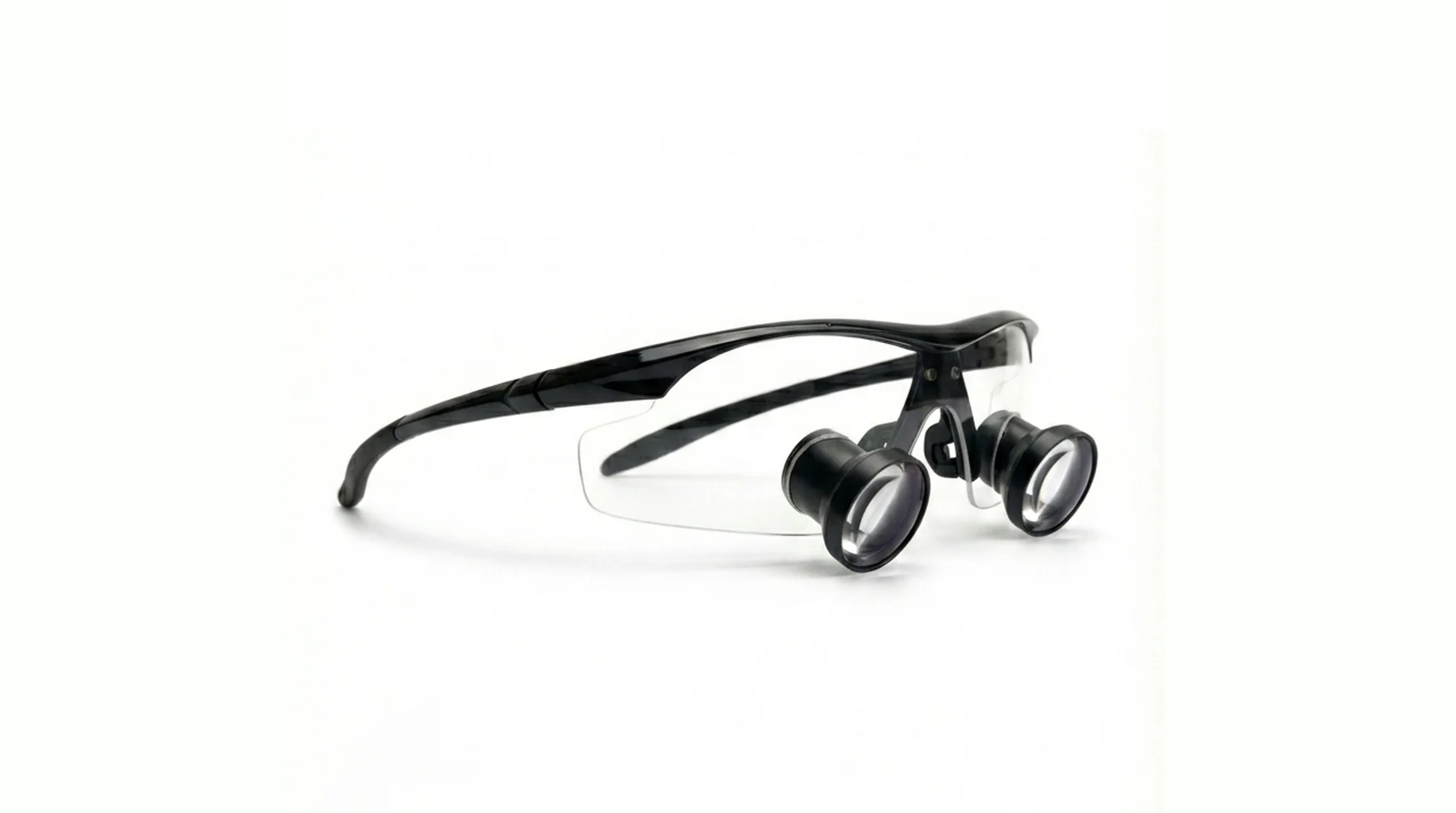
Galileo
From $795Lightweight affordable surgical and dental loupes for students, residents, and everyday clinical use.
A lightweight Galilean option; not an ergonomic prismatic system.
Explore GalileoAccessories guide
Short answer: Most loupe owners need three things: a retainer strap so the loupes stay put when you look down, a hard case for transport, and a lens-safe cleaning routine. Clip-on loupes suit occasional use; for daily clinical work, a pair built to your pupillary and working distance gives a steadier view.
The right accessories keep loupes on your head, protect the optics between patients, and keep your view clean. Most are cheap, but the wrong one can shift the loupes out of alignment or scratch the lenses. Here is what each accessory does and what to check.
We make and sell HeliosX loupes. This is our buying guidance, not an independent product test or paid ranking.
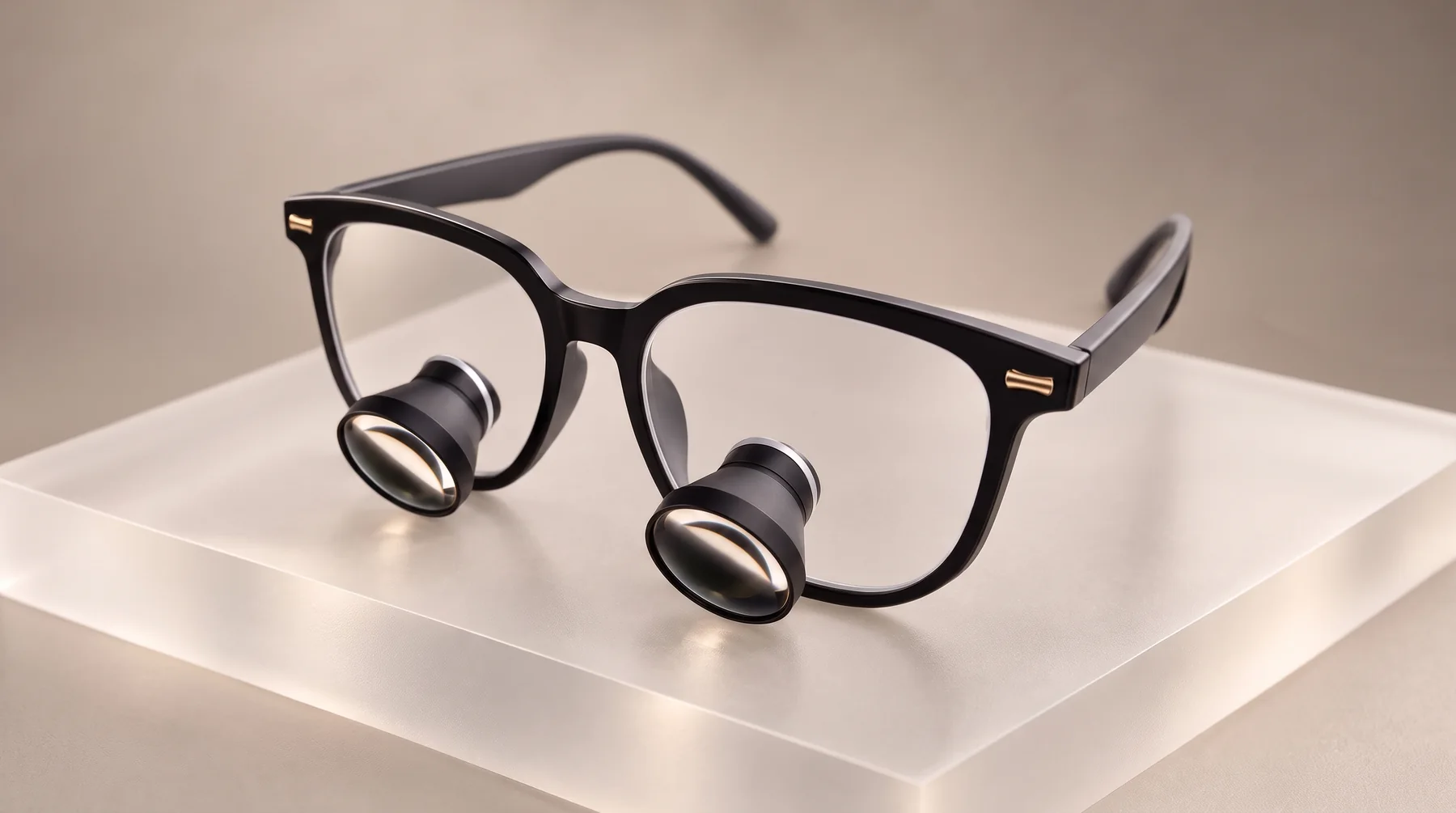
Galileo · From $795 USD
Your HeliosX shortlist
Compare the optical design, then choose your magnification and frame on the product page.
Lightweight affordable surgical and dental loupes for students, residents, and everyday clinical use.
A lightweight Galilean option; not an ergonomic prismatic system.
Explore GalileoOur lowest-priced Galilean model, with 2.5x, 3.0x, and 3.5x configurations for everyday magnification.
Galilean optics. Choose Apollo or Medusa for a redirected ergonomic view.
Explore NewtonErgonomic prismatic loupes for clinicians who want posture-aware clarity and high-magnification options.
Working distance is fixed to your configuration; magnification is selected at purchase.
Explore ApolloStarting prices in USD. Magnification and optional prescription lenses affect the total; shipping and taxes appear at checkout. See all five models.
A retainer strap stops the frame sliding forward when you tilt your head, which matters more as magnification and weight go up. Magnetic straps attach and release quickly, which helps if you take your loupes off between patients.
Loupes go out of alignment when they are crushed or dropped. A hard-shell case with a shaped insert protects the barrels; a soft pouch only stops scratches.
Clip-on loupes attach to your own glasses. They are cheap and easy to try, but the eyepieces are set to an average pupillary distance and a generic working distance, so many users end up leaning in to stay in focus.
Clean the lenses with a microfiber cloth and a lens cleaner made for coated optics; paper towels and alcohol wipes wear coatings down over time. Side shields add splash protection where your frame leaves gaps.
A loupe light is the accessory that changes your view the most. HeliosX loupes are compatible with LED headlights and battery packs; plan the light with the loupe, because the mount is fitted to the frame.
It helps, especially with heavier prismatic loupes or a light. A strap stops the frame sliding forward when you look down.
If you take your loupes on and off often, yes: they release with one hand. Check that the magnets cannot touch the hinges or a light cable.
In a hard-shell case with a shaped insert, with any battery pack stored separately. Dropping or crushing loupes is the most common cause of misalignment.
For occasional use they are fine. For daily clinical work, a pair built to your pupillary and working distance gives a steadier view and better posture.
Premium magnification. More accessible.
Tell us your specialty, typical procedures, current magnification, and budget. We can help you narrow the options before you order.
Email opens in your mail app: heliosxloupes@gmail.com · Limited lifetime warranty