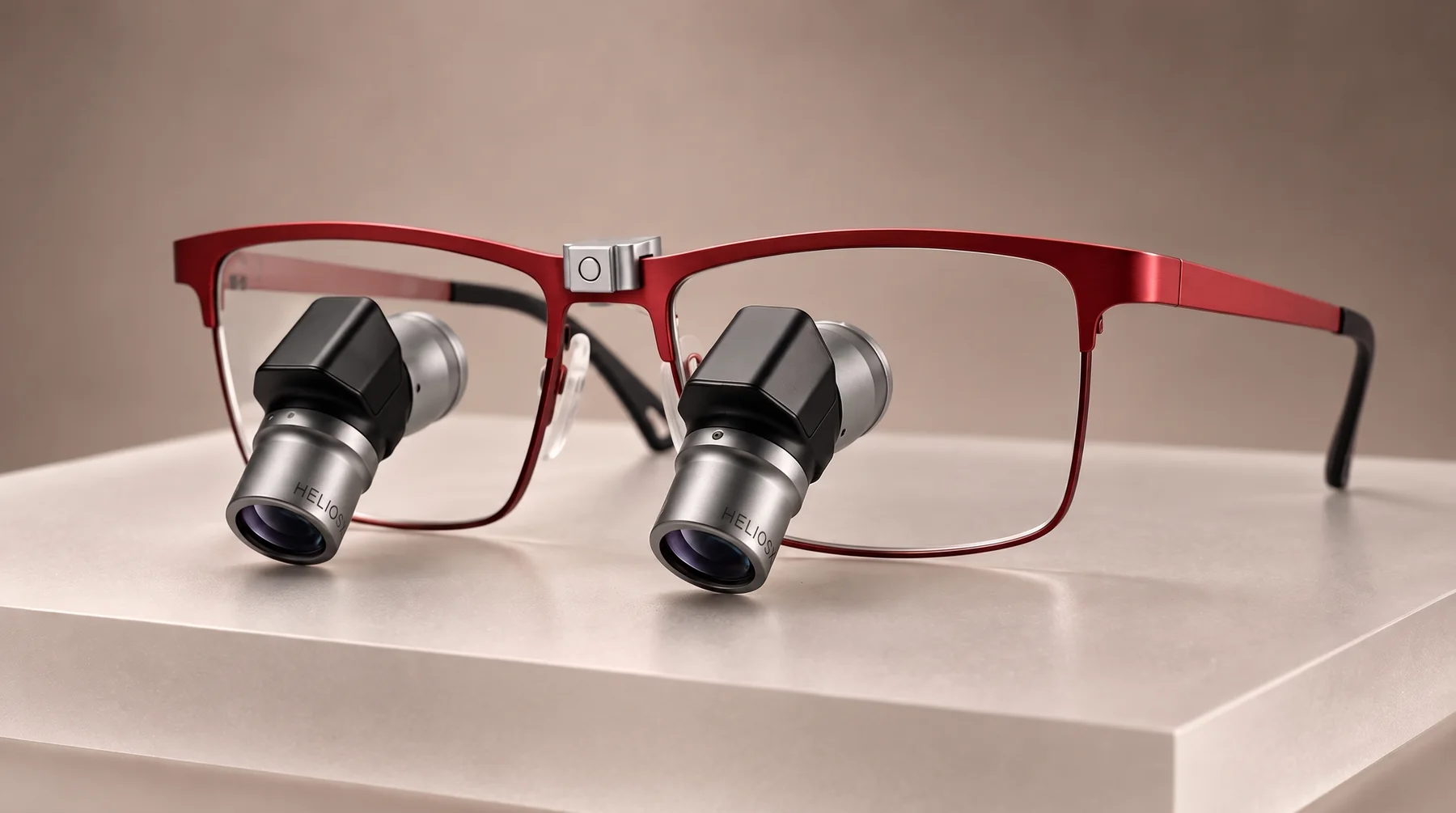
Galileo
From $795Lightweight affordable surgical and dental loupes for students, residents, and everyday clinical use.
A lightweight Galilean option; not an ergonomic prismatic system.
Explore GalileoGeneral dentistry
Short answer: Most general dentists work at 3.0x–3.5x: detailed enough for crown margins and composite contacts, wide enough for exams and quadrant work. Many who started at 2.5x in school move up to 3.5x in practice. HeliosX Galileo starts at $795 with six lightweight frame styles included in the price; ergonomic prismatic Apollo starts at $1,695 for long restorative days.
A general dentist’s day is the widest in dentistry: exams, fillings, crowns, a root canal access, an extraction and a hygiene check, often all before lunch. One pair of loupes has to cover all of it. That usually means a middle magnification, a comfortable seated working distance, and enough field to move from tooth to tooth without hunting.
We make and sell HeliosX loupes. This is our buying guidance, not an independent product test or paid ranking.
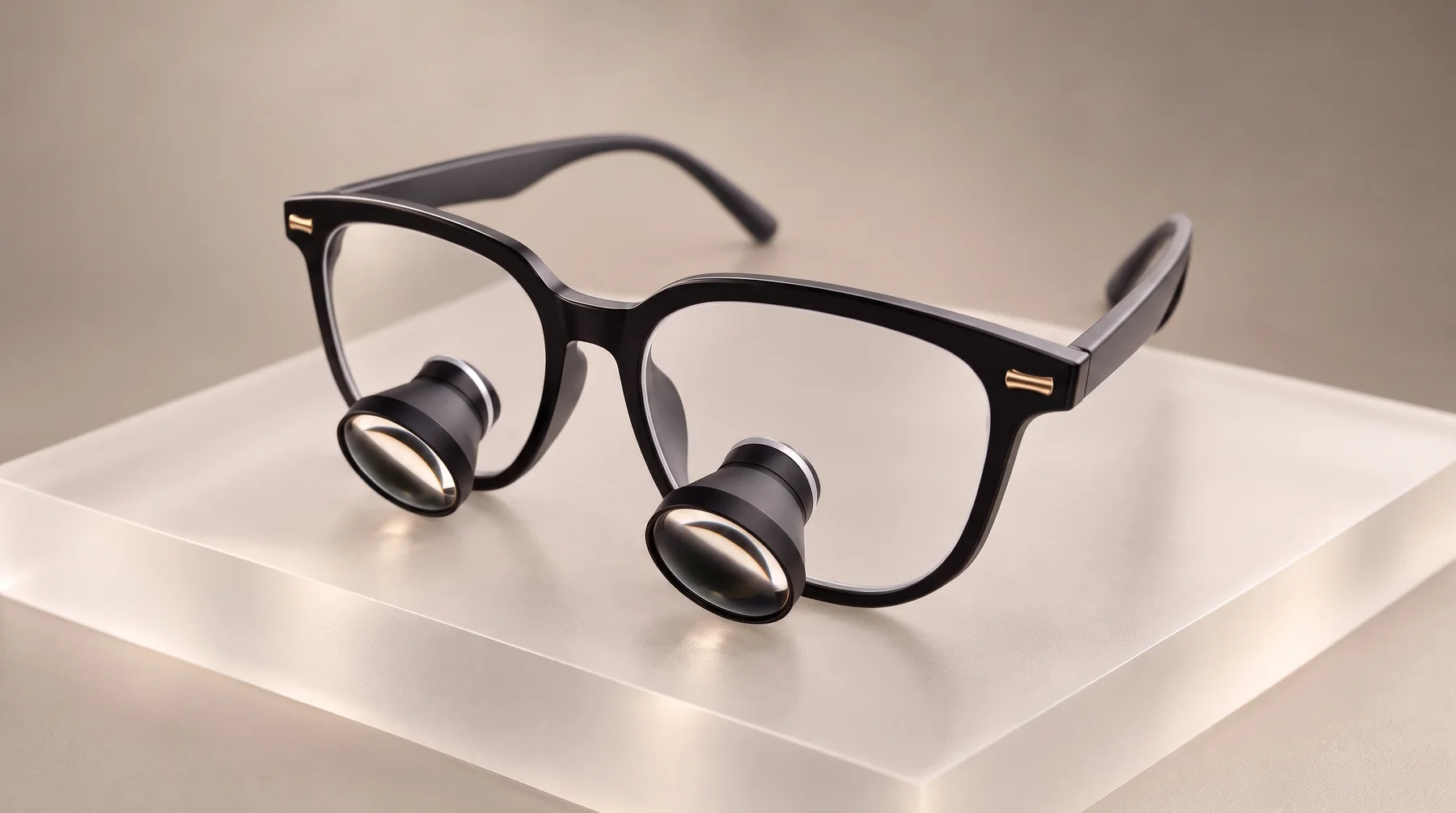
Galileo · From $795 USD
Common starting points. Choose for the work you do most often, then confirm the view at your own working distance.
| Procedure | Magnification | Working distance | HeliosX starting point |
|---|---|---|---|
| Exams and hygiene checks | 2.5x–3.0x | Seated | Galileo, from $795 |
| Composite restorations and contacts | 3.0x–3.5x | Seated | Galileo 3.5x |
| Crown preparation and margins | 3.5x–4.0x | Seated | Galileo 3.5x or Apollo 4.0x |
| Endodontic access and canal location | 3.5x–4.5x | Seated | Apollo 4.0x, from $1,695 |
| Extractions | 2.5x–3.0x | Standing or seated | Galileo 2.5x–3.0x |
Your HeliosX shortlist
Compare the optical design, then choose your magnification and frame on the product page.
Lightweight affordable surgical and dental loupes for students, residents, and everyday clinical use.
A lightweight Galilean option; not an ergonomic prismatic system.
Explore GalileoErgonomic prismatic loupes for clinicians who want posture-aware clarity and high-magnification options.
Working distance is fixed to your configuration; magnification is selected at purchase.
Explore ApolloErgonomic prismatic loupes with adjustable working distance for clinicians who change posture between seated and standing work.
Working distance adjusts from 300–600 mm. Magnification does not switch on the loupe.
Explore MedusaStarting prices in USD. Magnification and optional prescription lenses affect the total; shipping and taxes appear at checkout. See all five models.
Many dentists bought 2.5x loupes in school because that was the program default. In practice, with more crown and restorative work, a common complaint is that 2.5x no longer shows margins clearly enough. Moving up to 3.5x is the most common upgrade, and few dentists go back down.
Magnification makes you see more, which is not the same as diagnosing better. In an in vitro study of 100 extracted molars, examiners using 2.5x and 4.5x loupes and a microscope found more lesions as magnification rose, and sensitivity improved, but specificity fell to a level the authors called unacceptably low. In other words, magnification can lead to over-calling early lesions. Use it to see, and keep your diagnostic criteria the same.
A Galilean loupe is light, simple and works well to 3.5x, which covers most general dentistry. Ergonomic prismatic loupes angle the line of sight so you can look into the mouth with your head more upright, which helps on long restorative days. They are heavier, so frame fit matters more.
A loupe-mounted light helps in posterior work and in any preparation where your head blocks the operatory light. Use an orange filter when placing composite, so the white light does not start curing it before you are ready.
HeliosX builds every pair to your measured pupillary and working distance, reviews the numbers before production and publishes every price. Every model’s frame choices are included in the price.
Most general dentists use 3.0x–3.5x. It shows margins and contacts clearly and keeps a wide enough field for exams and quadrant work. Many who start at 2.5x move up to 3.5x in practice.
They help you see more, but research shows magnification can also lead to over-calling early lesions. Use the same diagnostic criteria with loupes as without.
If you have neck strain or long restorative days, it is worth comparing. Ergonomic prismatic loupes let you look down with your head more upright. Measure the declination angle to your own chair position.
Premium magnification. More accessible.
Tell us your specialty, typical procedures, current magnification, and budget. We can help you narrow the options before you order.
Email opens in your mail app: heliosxloupes@gmail.com · Limited lifetime warranty