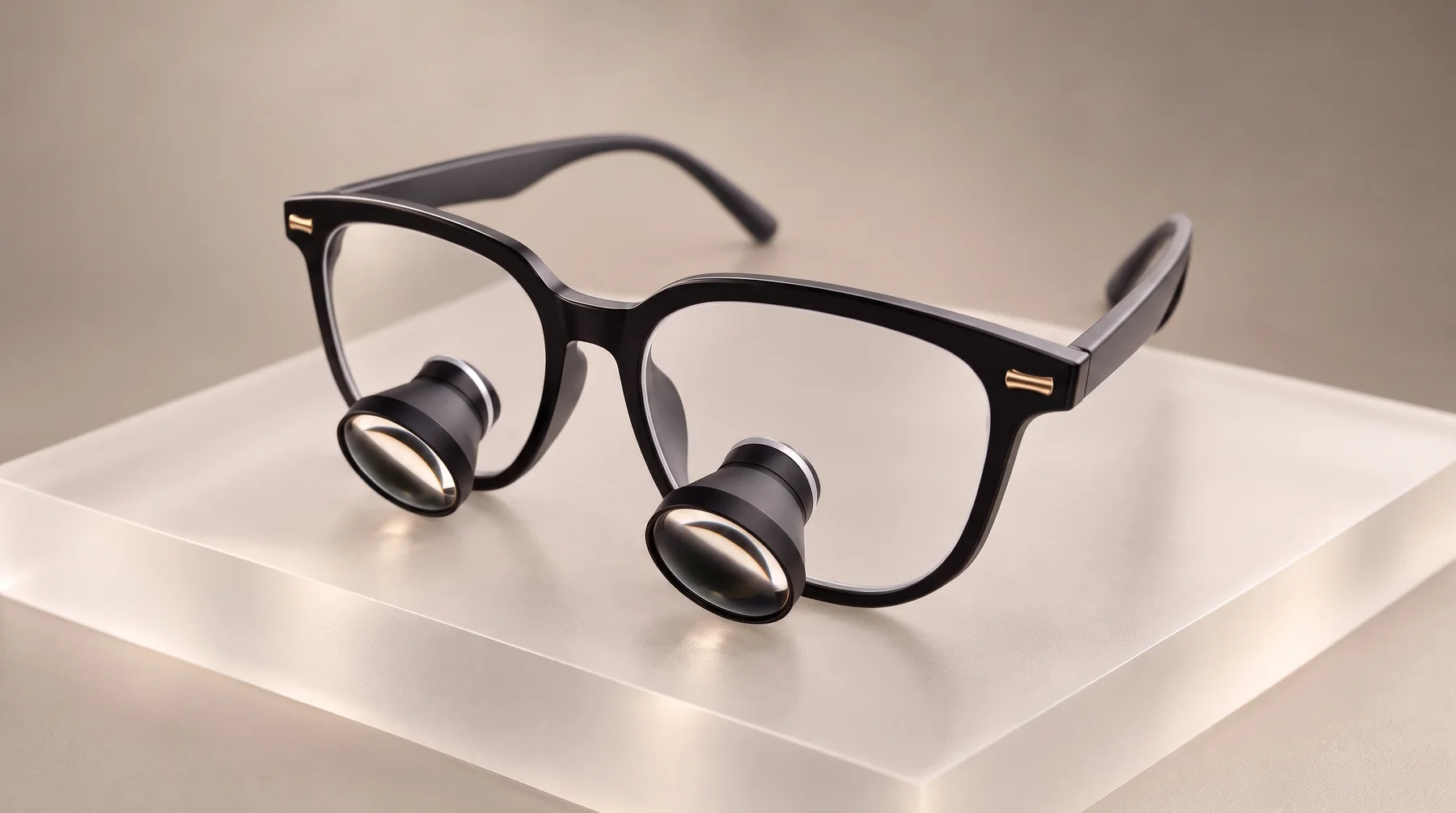
Apollo
From $1,695Ergonomic prismatic loupes for clinicians who want posture-aware clarity and high-magnification options.
Working distance is fixed to your configuration; magnification is selected at purchase.
Explore ApolloProsthodontics
Short answer: Most prosthodontists work at 3.5x–4.5x: enough to read a finish line, assess a veneer preparation and check an impression, while keeping a usable field. Many start at 3.5x Galilean and move to prismatic 4.0x–5.0x for fixed work. HeliosX Galileo starts at $795; ergonomic prismatic Apollo starts at $1,695 and Kepler at $1,195. Every model’s frames are included in the price.
Prosthodontics is margin work. The difference between a crown that seats and one that does not is often a fraction of a millimetre at the finish line, and that is where magnification earns its keep. It is also seated, precise, repetitive work in one posture, which makes the ergonomic side of the loupe as important as the optics.
We make and sell HeliosX loupes. This is our buying guidance, not an independent product test or paid ranking.
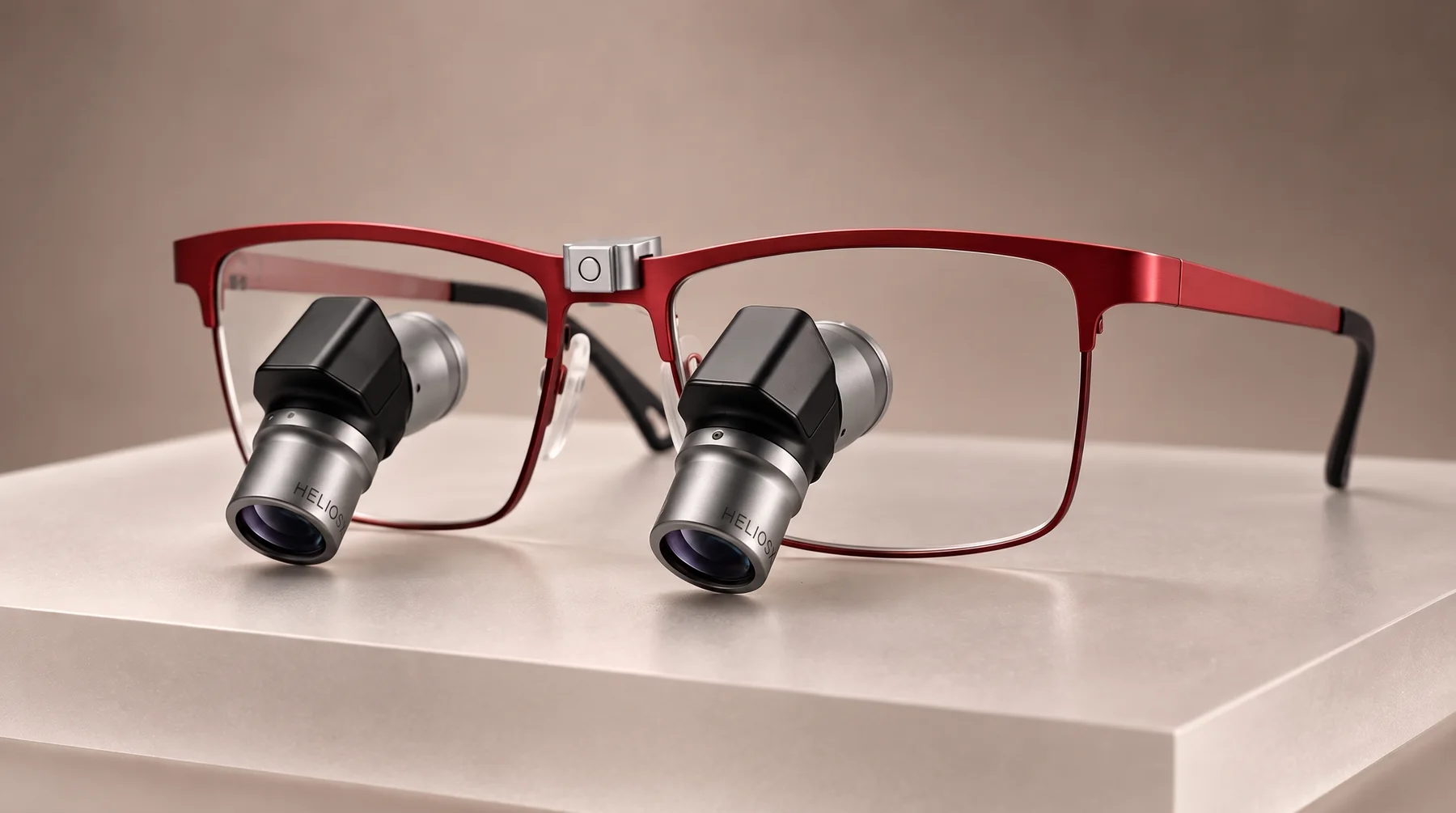
Apollo · From $1,695 USD
Common starting points. Choose for the work you do most often, then confirm the view at your own working distance.
| Procedure | Magnification | Working distance | HeliosX starting point |
|---|---|---|---|
| Crown and bridge preparation, finish lines | 3.5x–4.5x | Seated | Apollo 4.0x, or Galileo 3.5x |
| Veneer preparation and depth control | 3.5x–4.0x | Seated | Apollo 4.0x, from $1,695 |
| Checking impressions and scans, try-in | 3.5x | Seated | Galileo 3.5x, from $795 |
| Implant prosthetics and abutment seating | 3.5x–4.0x | Seated | Galileo 3.5x or Apollo 4.0x |
| Shade selection | None | Not applicable | Lift the loupes and use neutral daylight |
Your HeliosX shortlist
Compare the optical design, then choose your magnification and frame on the product page.
Ergonomic prismatic loupes for clinicians who want posture-aware clarity and high-magnification options.
Working distance is fixed to your configuration; magnification is selected at purchase.
Explore ApolloLightweight affordable surgical and dental loupes for students, residents, and everyday clinical use.
A lightweight Galilean option; not an ergonomic prismatic system.
Explore GalileoConventional prismatic loupes for higher-magnification work, available in 4.0x, 5.0x, and 6.0x.
Conventional prismatic optics. Choose Apollo or Medusa for ergonomic viewing.
Explore KeplerStarting prices in USD. Magnification and optional prescription lenses affect the total; shipping and taxes appear at checkout. See all five models.
General dentists often work at 2.5x–3.5x because their day mixes diagnosis, hygiene checks and restorations. A prosthodontic day is concentrated on finish lines, contacts and fit, so the work rewards more magnification. The trade-off is a narrower field and shorter depth of focus, which a seated, steady posture handles well.
Galilean loupes are light and simple and work well to 3.5x. Above that, prismatic optics give a flatter, sharper image across the field, which helps when you are reading a margin from edge to edge. Prismatic loupes weigh more, so frame fit and balance matter more.
Full-arch preparations and veneer cases keep you in one position for a long time. Ergonomic prismatic loupes angle the line of sight, so you look down into the mouth while the head stays closer to upright. The declination angle should be measured to you, seated at your own chair, because a standard angle may not match how you sit.
Magnification and a loupe light both change how color reads. Most clinicians lift or remove their loupes and take shade under neutral light, then go back to magnification for the preparation. If you use a loupe light, a filter or a neutral color temperature helps for everything except shade selection.
HeliosX builds every pair to your measured pupillary and working distance and reviews the numbers before production. Prices are published, prosthodontic residents get trainee pricing, and every model’s frame choices are included in the price.
Most use 3.5x–4.5x. 3.5x suits a mixed practice; 4.0x–4.5x prismatic suits heavy crown, bridge and veneer work. Above 5.0x, many clinicians prefer a microscope.
Above 3.5x, usually yes. Prismatic optics give a flatter, sharper image across the field, which helps when reading a finish line. They are heavier, so frame fit matters.
Generally no. Magnification and loupe lights change how color reads. Take shade under neutral light without loupes, then return to magnification for the preparation.
Yes. Verified residents, fellows and students get 15% off any HeliosX model.
Premium magnification. More accessible.
Tell us your specialty, typical procedures, current magnification, and budget. We can help you narrow the options before you order.
Email opens in your mail app: heliosxloupes@gmail.com · Limited lifetime warranty