
Galileo
From $795Lightweight affordable surgical and dental loupes for students, residents, and everyday clinical use.
A lightweight Galilean option; not an ergonomic prismatic system.
Explore GalileoTrauma surgery
Short answer: For trauma surgery, most surgeons choose 2.5x–3.5x Galilean loupes: wide enough to stay oriented in a bleeding field, detailed enough for vessel, nerve and tendon repair, and light enough to wear through a night on call. Emergency laparotomy needs no loupes. HeliosX Galileo starts at $795 with six lightweight frame styles included in the price, and Kepler adds 4.0x–6.0x for microvascular repair.
Trauma surgery is unpredictable. The next case could be a laparotomy that needs no magnification at all, or a lacerated digital nerve that needs plenty. Loupes for trauma work have to be fast to put on, comfortable when you are tired, and wide enough in field that they never slow you down in a case where time matters more than detail.
We make and sell HeliosX loupes. This is our buying guidance, not an independent product test or paid ranking.
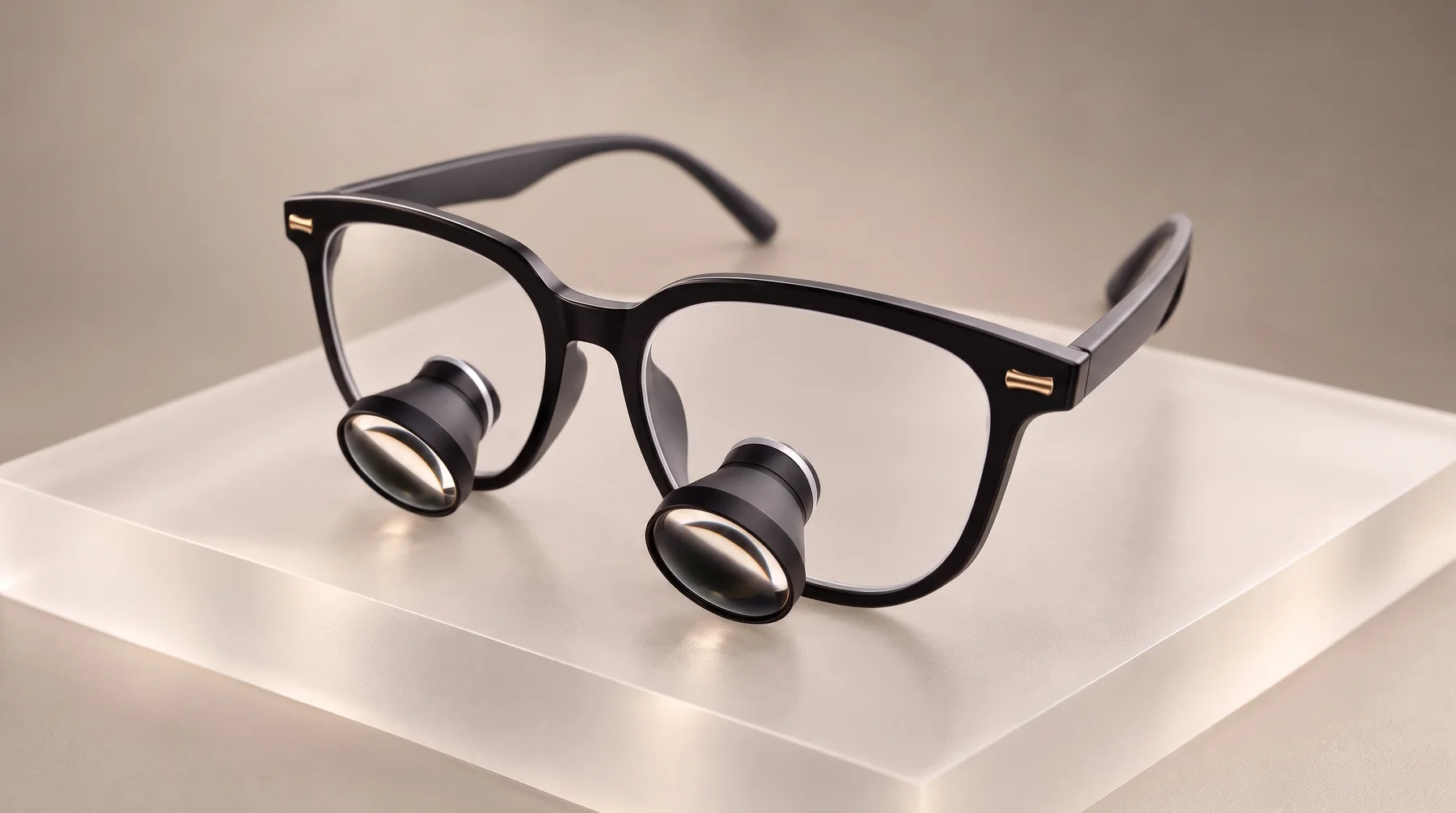
Galileo · From $795 USD
Common starting points. Choose for the work you do most often, then confirm the view at your own working distance.
| Procedure | Magnification | Working distance | HeliosX starting point |
|---|---|---|---|
| Damage control and emergency laparotomy | None | Not applicable | Speed and exposure matter more than magnification |
| Vascular injury and arterial repair | 3.0x–4.0x | Standing | Galileo 3.5x, or Kepler 4.0x |
| Hand trauma: tendon and nerve repair | 3.5x–4.5x | Seated at a hand table | Kepler, from $1,195 |
| Facial lacerations and soft-tissue closure | 2.5x–3.0x | Short, often seated | Galileo 2.5x, from $795 |
| Digital replantation and microvascular repair | 4.0x–6.0x or microscope | Seated | Kepler 6.0x; many services use a microscope |
Your HeliosX shortlist
Compare the optical design, then choose your magnification and frame on the product page.
Lightweight affordable surgical and dental loupes for students, residents, and everyday clinical use.
A lightweight Galilean option; not an ergonomic prismatic system.
Explore GalileoConventional prismatic loupes for higher-magnification work, available in 4.0x, 5.0x, and 6.0x.
Conventional prismatic optics. Choose Apollo or Medusa for ergonomic viewing.
Explore KeplerErgonomic prismatic loupes with adjustable working distance for clinicians who change posture between seated and standing work.
Working distance adjusts from 300–600 mm. Magnification does not switch on the loupe.
Explore MedusaStarting prices in USD. Magnification and optional prescription lenses affect the total; shipping and taxes appear at checkout. See all five models.
In a damage-control laparotomy or a crash thoracotomy, magnification gets in the way: you need the whole field, fast. Loupes earn their place once the patient is controlled and the work becomes reconstruction: repairing an injured artery, coapting a nerve, closing a facial laceration so it heals well. Plan your loupes around that second half of the job.
Trauma fields bleed, move and change. A narrow field forces you to hunt for landmarks every time you look up. That is why most trauma surgeons stay at 2.5x–3.5x for general work and keep higher magnification for planned microsurgical repair. A Galilean loupe also has a deeper depth of field, which helps when the field is not flat.
On-call loupes go on and off many times a night, often in a hurry, and they are worn when you are tired. Comfort and reliability matter more than features. A lighter frame, a secure fit behind the ears and a working distance that matches how you stand at the table are worth more than a higher magnification you will rarely use.
Overhead lights are adequate for most trauma work until you are deep in a wound or working in a corner the lights cannot reach. A loupe-mounted light helps there, and it adds weight. If you take a lot of night call and do your own vascular repairs, plan the light with the loupe, because the mount is fitted to the frame.
HeliosX builds every pair to your measured pupillary and working distance and reviews the numbers before production. Prices are published, residents get trainee pricing, and every model’s frame choices are included in the price.
For reconstruction after the patient is controlled, many do: vascular, nerve and tendon repair, and facial closures. For emergency laparotomy and initial hemorrhage control, loupes get in the way.
2.5x–3.5x for most trauma work, because the field is unpredictable and a wider view keeps you oriented. Step up to 4.0x–6.0x for planned microvascular or nerve repair, or use a microscope where your service does.
A Galilean pair at 2.5x–3.5x. Galileo starts at $795 with six frame styles included in the price, and verified residents get 15% off.
Premium magnification. More accessible.
Tell us your specialty, typical procedures, current magnification, and budget. We can help you narrow the options before you order.
Email opens in your mail app: heliosxloupes@gmail.com · Limited lifetime warranty

