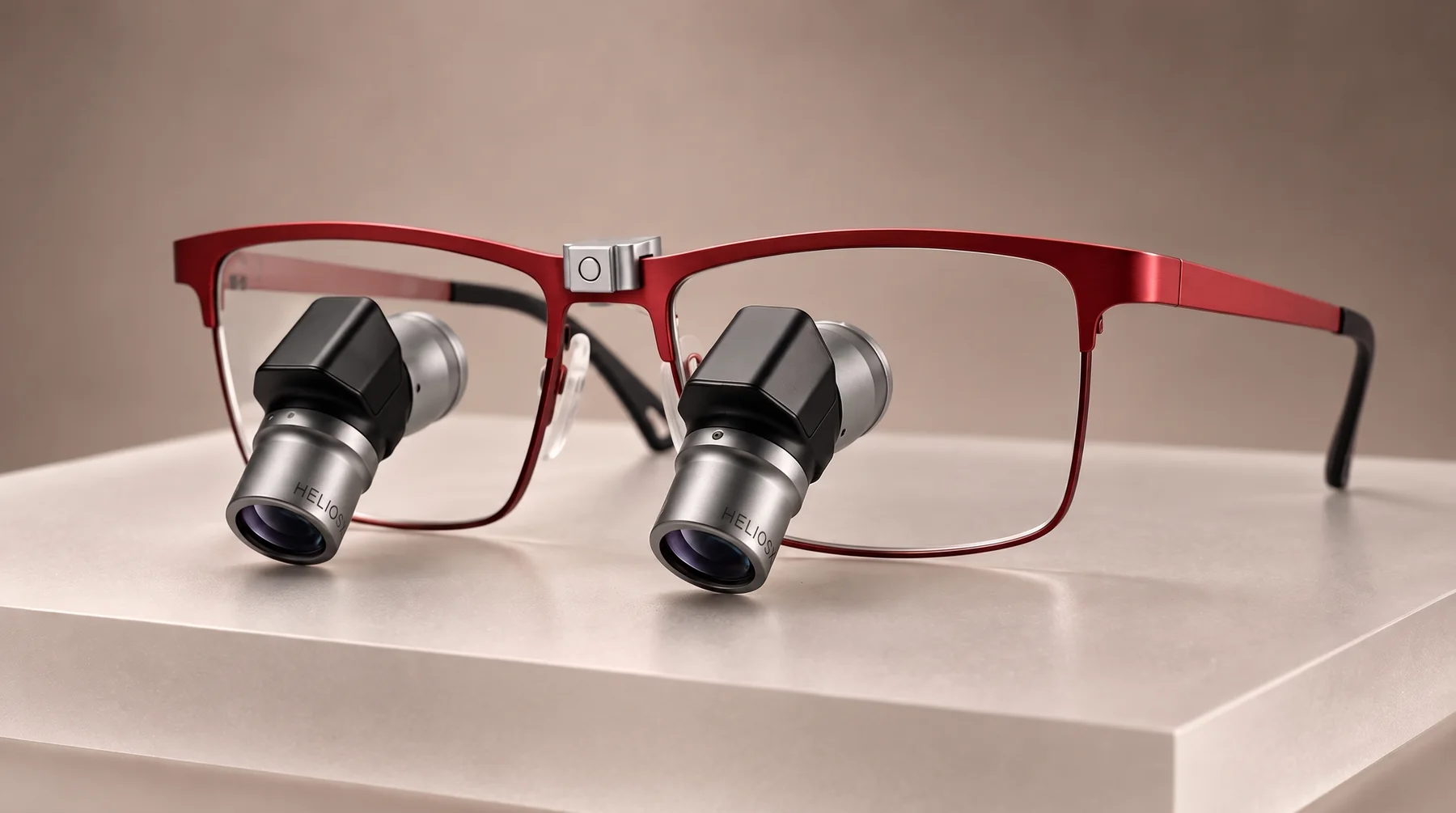
Galileo
From $795Lightweight affordable surgical and dental loupes for students, residents, and everyday clinical use.
A lightweight Galilean option; not an ergonomic prismatic system.
Explore GalileoPodiatric surgery
Short answer: Most podiatric surgeons do best with 2.5x–3.5x loupes. 2.5x covers forefoot reconstruction, nail and wound procedures; 3.5x helps with nerve, tendon and small-joint work. Because you work seated at the end of the table and standing at the side, the working distance changes through the day, which is what HeliosX Medusa's adjustable 300–600 mm range is for. Galileo starts at $795, Medusa at $1,695.
Foot and ankle work moves you around the table more than most specialties. Forefoot cases are often done seated at the end of the table, rearfoot and ankle work standing at the side, and clinic procedures happen with the patient in a chair at whatever height it sits. The loupe decision is mostly about that changing working distance, and much less about high magnification.
We make and sell HeliosX loupes. This is our buying guidance, not an independent product test or paid ranking.
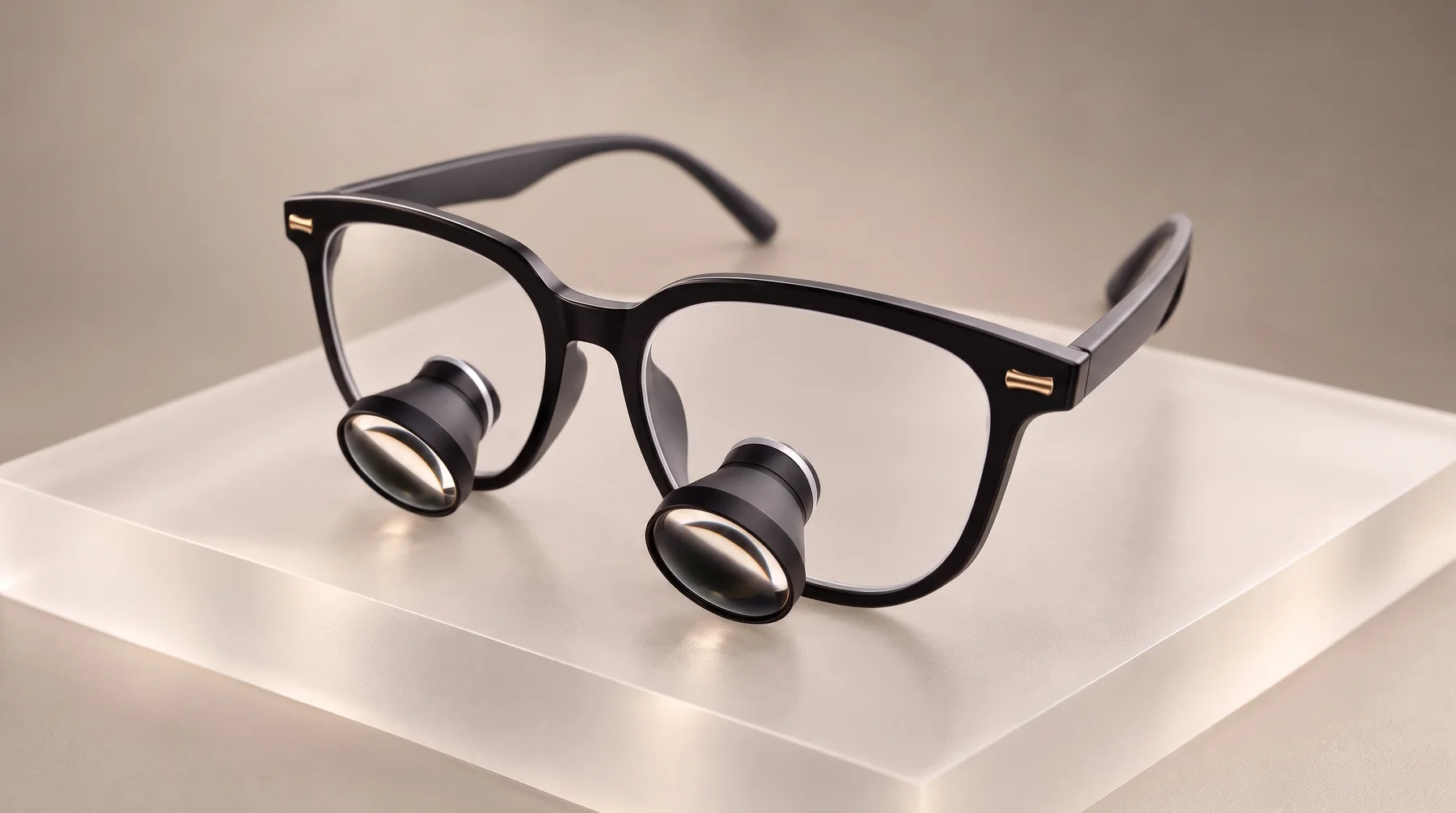
Galileo · From $795 USD
Common starting points. Choose for the work you do most often, then confirm the view at your own working distance.
| Procedure | Magnification | Working distance | HeliosX starting point |
|---|---|---|---|
| Nail avulsion, matrixectomy, office procedures | 2.5x | Short, seated at the chair | Galileo 2.5x, from $795 |
| Bunion, hammertoe and forefoot reconstruction | 2.5x–3.0x | Seated at the end of the table | Galileo, for its wide field |
| Wound debridement and limb salvage | 2.5x | Variable, often low | Galileo, or Medusa for changing heights |
| Tendon repair and transfers | 3.0x–3.5x | Standing at the side | Galileo 3.5x or Apollo |
| Nerve decompression (tarsal tunnel, neuroma) | 3.5x–4.0x | Seated or standing | Apollo or Medusa, from $1,695 |
Your HeliosX shortlist
Compare the optical design, then choose your magnification and frame on the product page.
Lightweight affordable surgical and dental loupes for students, residents, and everyday clinical use.
A lightweight Galilean option; not an ergonomic prismatic system.
Explore GalileoErgonomic prismatic loupes with adjustable working distance for clinicians who change posture between seated and standing work.
Working distance adjusts from 300–600 mm. Magnification does not switch on the loupe.
Explore MedusaErgonomic prismatic loupes for clinicians who want posture-aware clarity and high-magnification options.
Working distance is fixed to your configuration; magnification is selected at purchase.
Explore ApolloStarting prices in USD. Magnification and optional prescription lenses affect the total; shipping and taxes appear at checkout. See all five models.
In forefoot surgery you often sit facing the sole, with the foot raised on the table. In ankle and rearfoot cases you stand at the side. In clinic, the patient sits in a chair and the foot is low. Those three positions can put your eyes at very different distances from the field. A loupe is sharp at one working distance, so a pair measured for one of them will make you lean in or pull back in the other two.
Most of foot and ankle surgery is bone, joint and soft-tissue work where a wide field matters more than detail. 2.5x keeps the whole first ray or the full incision in view. Step up when the structures get small: nerves, tendon repairs and the digital work where you want to see suture placement clearly.
Leaning over a raised foot for a long reconstruction loads the neck in the same way it does for other open surgery. Ergonomic prismatic loupes angle the line of sight so the eyes look down while the head stays more upright. In a 2024 randomized crossover trial of 19 surgeons doing simulated tasks, prismatic loupes reduced head inclination and neck muscle activity compared with the surgeons’ own loupes, with no difference in errors. The tested products were not HeliosX loupes, and the study was not in foot and ankle surgery.
Office procedures and wound clinics put loupes through more cleaning and more on-and-off than the operating room. Through-the-lens loupes stay fixed in the frame and are simpler to wipe down. A light helps in wound care, where you are judging tissue color and depth in a small, often shadowed field.
HeliosX builds every pair to your measured pupillary and working distance and reviews the numbers before production. Prices are published, and DPM residents get trainee pricing. Every model’s frame choices are included in the price.
Most podiatric surgeons work at 2.5x for forefoot, nail and wound procedures and 3.0x–3.5x for tendon and small-joint work. Nerve decompression can justify 3.5x–4.0x. Higher magnification narrows the field, which matters when the foot moves during a case.
The one you use most. Forefoot and office work is usually seated and shorter; ankle and rearfoot work is standing and longer. If your day mixes both, an adjustable working distance avoids leaning in or pulling back to stay in focus.
Yes. Nail procedures, debridement and wound assessment all benefit from 2.5x magnification and a light. Clinic work is usually seated with the foot low, so measure your working distance in that position.
Yes. Verified residents, fellows and students get 15% off any HeliosX model. Email proof of training status and we send a code to use at checkout.
Premium magnification. More accessible.
Tell us your specialty, typical procedures, current magnification, and budget. We can help you narrow the options before you order.
Email opens in your mail app: heliosxloupes@gmail.com · Limited lifetime warranty