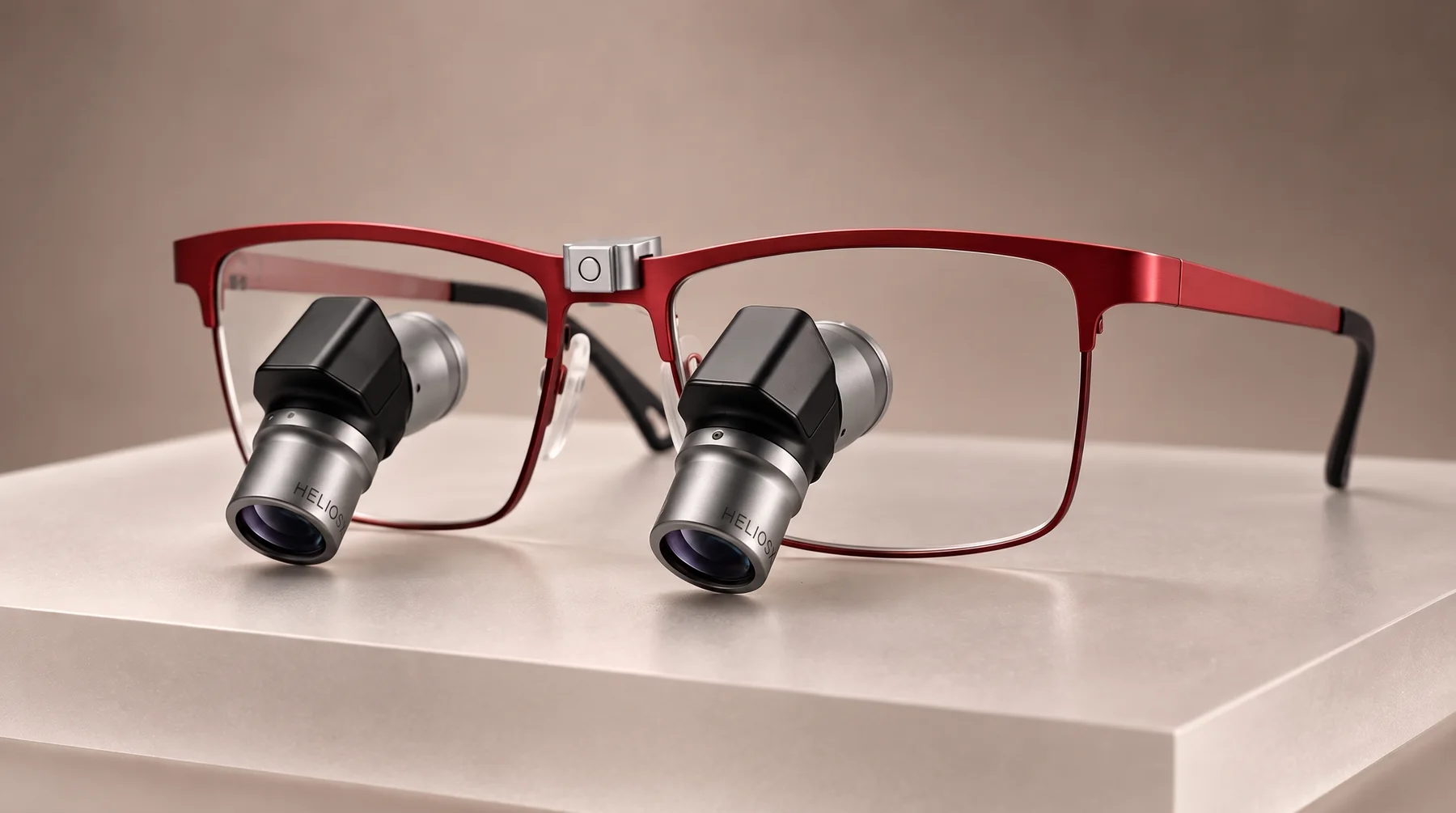
Galileo
From $795Lightweight affordable surgical and dental loupes for students, residents, and everyday clinical use.
A lightweight Galilean option; not an ergonomic prismatic system.
Explore GalileoPediatric dentistry
Short answer: Most pediatric dentists do best with 2.5x–3.0x Galilean loupes: a wide field and deep focus keep a moving child in view, while still showing early caries and margins on primary teeth. Choose a light, comfortable frame, because you will wear them through many short appointments. HeliosX Galileo starts at $795, with six lightweight frame styles included in the price.
Pediatric dentistry is fast and it moves. Appointments are short, mouths are small, patients turn their heads, and you often work from positions you would never choose with an adult: knee to knee, leaning over a parent’s lap, or around a papoose. That changes the loupe decision. A wide field and a forgiving depth of focus matter more here than high magnification.
We make and sell HeliosX loupes. This is our buying guidance, not an independent product test or paid ranking.
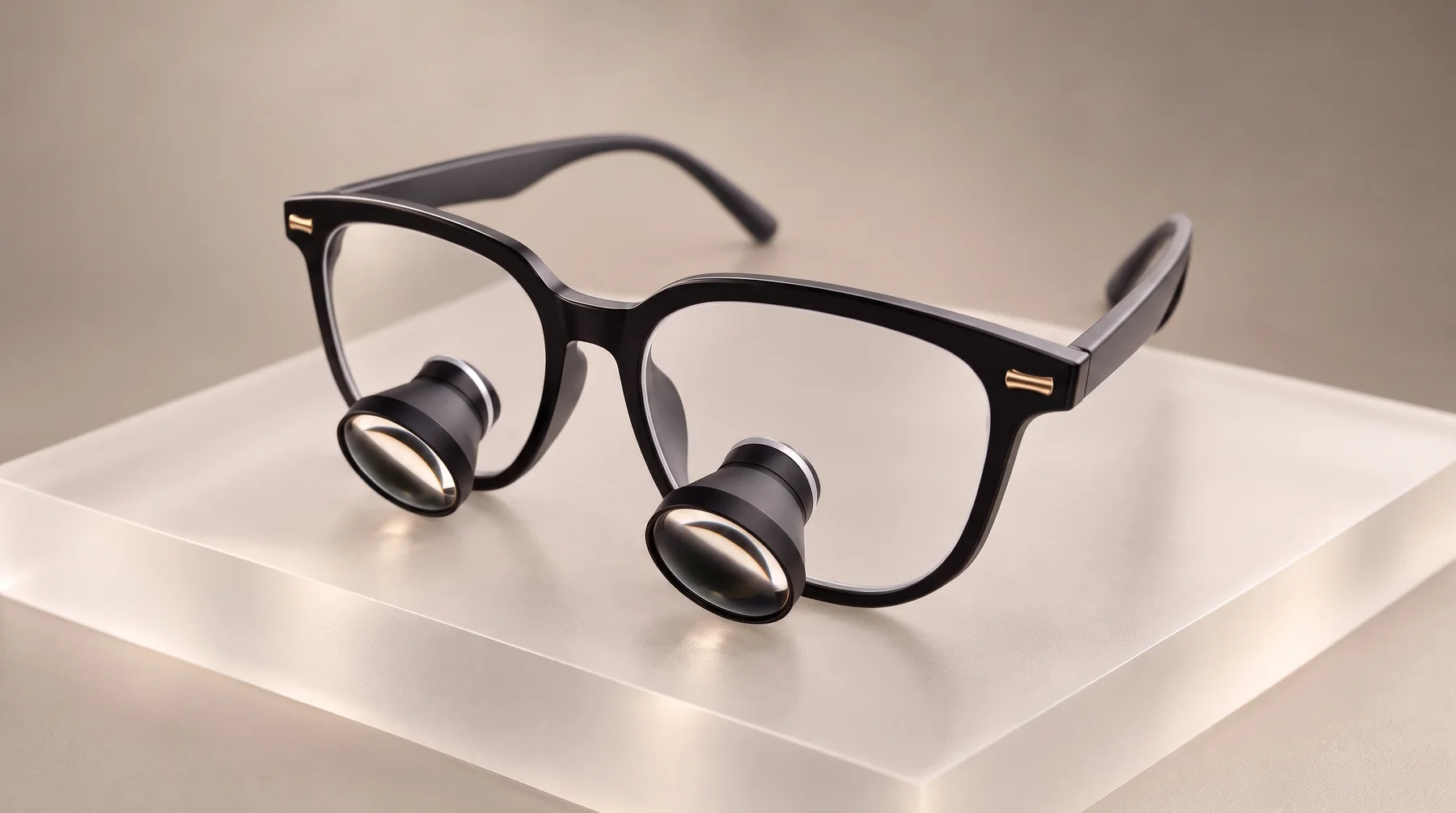
Galileo · From $795 USD
Common starting points. Choose for the work you do most often, then confirm the view at your own working distance.
| Procedure | Magnification | Working distance | HeliosX starting point |
|---|---|---|---|
| Exams, sealants and fluoride | 2.5x | Seated, varied positions | Galileo 2.5x, from $795 |
| Restorations on primary teeth | 2.5x–3.0x | Seated | Galileo 2.5x–3.0x |
| Pulpotomy and stainless steel crowns | 3.0x | Seated | Galileo 3.0x |
| Knee-to-knee and lap exams | 2.5x | Short and changing | Galileo 2.5x, for the deepest focus |
| Cases under general anesthesia | 3.0x–3.5x | Seated, stable | Galileo 3.5x, or Apollo for long lists |
Your HeliosX shortlist
Compare the optical design, then choose your magnification and frame on the product page.
Lightweight affordable surgical and dental loupes for students, residents, and everyday clinical use.
A lightweight Galilean option; not an ergonomic prismatic system.
Explore GalileoErgonomic prismatic loupes for clinicians who want posture-aware clarity and high-magnification options.
Working distance is fixed to your configuration; magnification is selected at purchase.
Explore ApolloErgonomic prismatic loupes with adjustable working distance for clinicians who change posture between seated and standing work.
Working distance adjusts from 300–600 mm. Magnification does not switch on the loupe.
Explore MedusaStarting prices in USD. Magnification and optional prescription lenses affect the total; shipping and taxes appear at checkout. See all five models.
Higher magnification shrinks your field and depth of focus. That is a fair trade with a still adult patient. With a child who moves, it means the tooth keeps leaving the view and you keep refocusing. Most pediatric dentists find 2.5x–3.0x is the sweet spot: enough to see early lesions and margins on primary teeth, wide enough to keep the whole quadrant and the child’s movements in view.
Pediatric dentistry asks you to work from positions that change between patients: knee to knee with a toddler, seated beside a parent, or standing to reach a child who will not lie back. A loupe is sharp at one working distance, so measure the position you use most and accept that the others will be slightly off. A deep-focus Galilean loupe is more forgiving of that than a high-magnification prismatic one.
A loupe-mounted light helps you see into small mouths without shining the overhead light into a child’s eyes. Choose a light you can dim, and use an orange filter when placing composite so the light does not cure it early. Some children are wary of the light at first; letting them look at it before you start helps.
A pediatric schedule is many short appointments, and your loupes go on and off between them. Weight on the nose and pressure behind the ears are what you notice by the afternoon. A light Galilean loupe in a frame that fits your face well is the most comfortable setup.
HeliosX builds every pair to your measured pupillary and working distance, reviews the numbers before production and publishes every price. Every model’s frame choices are included in the price, and pediatric residents get trainee pricing.
Most use 2.5x–3.0x. Children move, and a lower magnification keeps a wider field and deeper focus while still showing early caries and margins on primary teeth.
It helps in small mouths and avoids shining the overhead light in a child’s eyes. Choose one you can dim, with an orange filter for composite.
Yes. Verified residents, fellows and students get 15% off any HeliosX model.
Premium magnification. More accessible.
Tell us your specialty, typical procedures, current magnification, and budget. We can help you narrow the options before you order.
Email opens in your mail app: heliosxloupes@gmail.com · Limited lifetime warranty