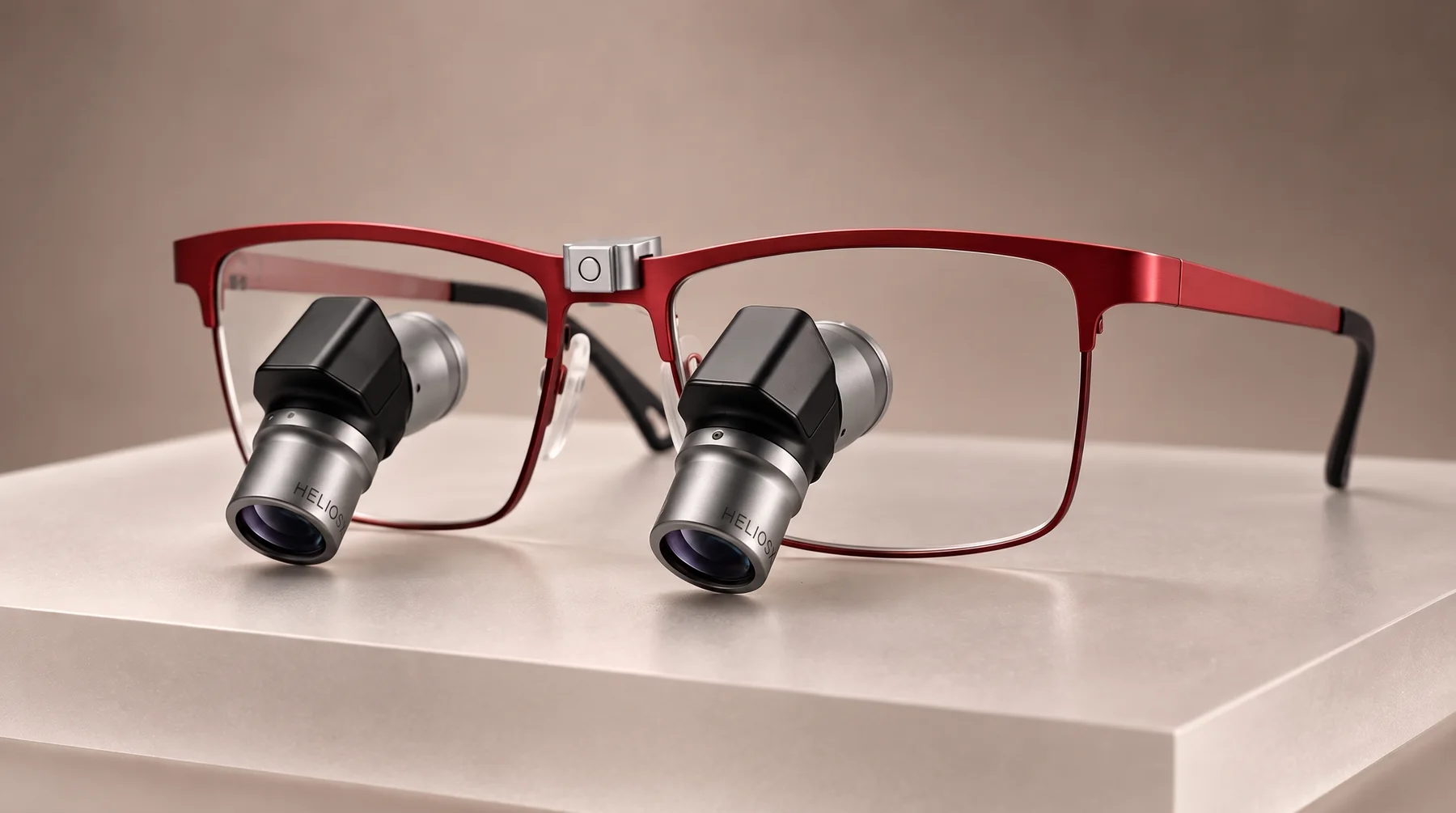
Galileo
From $795Lightweight affordable surgical and dental loupes for students, residents, and everyday clinical use.
A lightweight Galilean option; not an ergonomic prismatic system.
Explore GalileoOffice oral surgery
Short answer: Most office oral surgeons work at 2.5x–3.5x: 2.5x for extractions, where you need the whole field, and 3.5x for grafting, membranes, implant site preparation and fine suturing. A loupe-mounted light matters as much as magnification for posterior work. HeliosX Galileo starts at $795 with six frame styles included in the price; ergonomic Apollo starts at $1,695.
Office oral surgery is a different job from hospital maxillofacial surgery. It is a day of extractions, grafts, implants and biopsies in a dental chair, often standing, with a lot of force applied in a small space. Magnification helps with root tips, membranes and suturing, but the field has to stay wide enough to keep the instruments, the flap and the patient’s airway in view.
We make and sell HeliosX loupes. This is our buying guidance, not an independent product test or paid ranking.
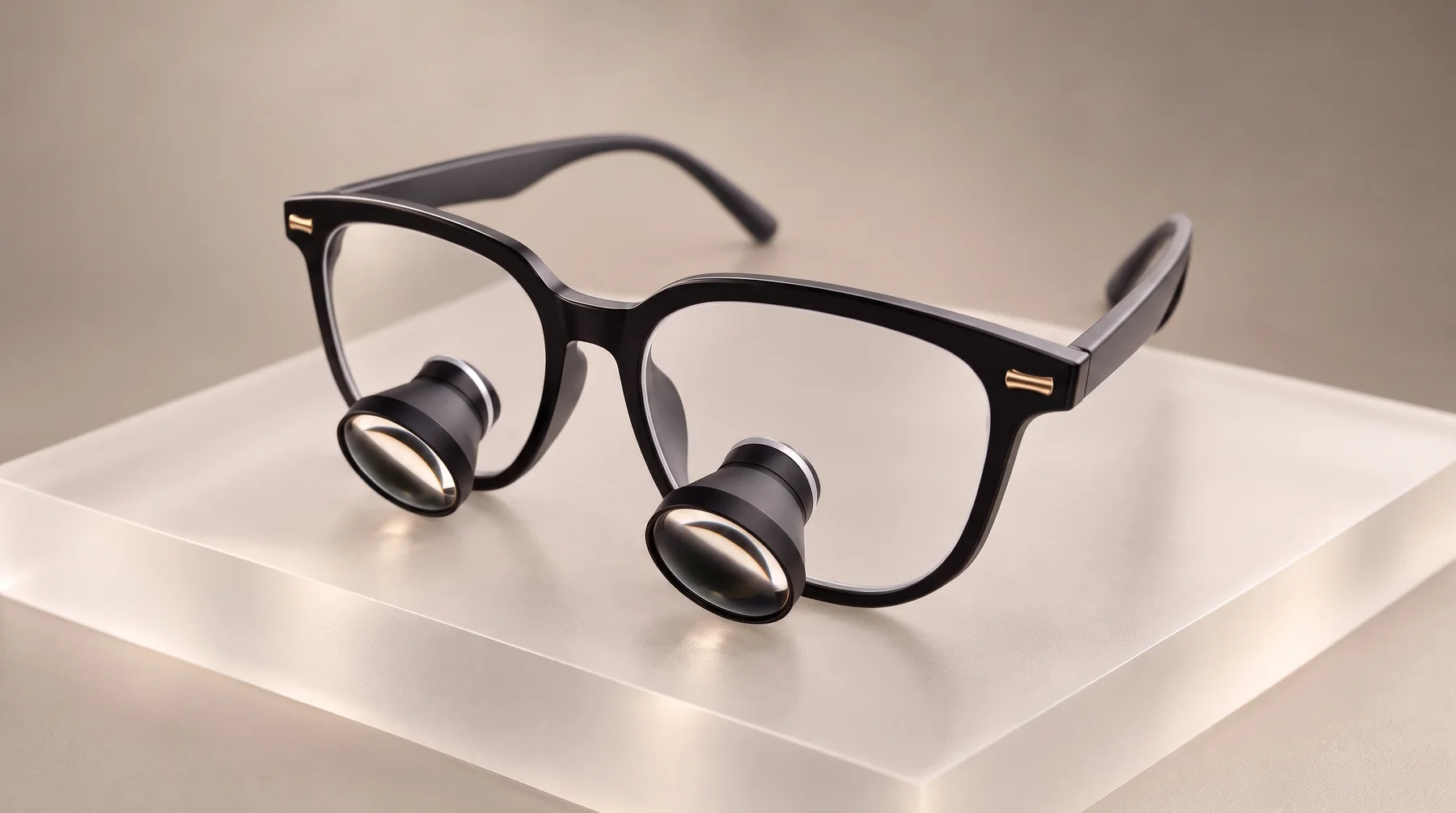
Galileo · From $795 USD
Common starting points. Choose for the work you do most often, then confirm the view at your own working distance.
| Procedure | Magnification | Working distance | HeliosX starting point |
|---|---|---|---|
| Routine and surgical extractions | 2.5x | Standing or seated | Galileo 2.5x, from $795 |
| Third molars and root tip retrieval | 2.5x–3.5x | Standing | Galileo 3.5x with a light |
| Bone grafting, membranes, sinus lifts | 3.5x | Seated or standing | Galileo 3.5x, or Apollo for long cases |
| Implant site preparation and placement | 3.0x–3.5x | Seated or standing | Galileo 3.5x, or Medusa for both positions |
| Biopsies and fine suturing | 3.5x–4.0x | Seated | Apollo 4.0x, from $1,695 |
Your HeliosX shortlist
Compare the optical design, then choose your magnification and frame on the product page.
Lightweight affordable surgical and dental loupes for students, residents, and everyday clinical use.
A lightweight Galilean option; not an ergonomic prismatic system.
Explore GalileoErgonomic prismatic loupes for clinicians who want posture-aware clarity and high-magnification options.
Working distance is fixed to your configuration; magnification is selected at purchase.
Explore ApolloErgonomic prismatic loupes with adjustable working distance for clinicians who change posture between seated and standing work.
Working distance adjusts from 300–600 mm. Magnification does not switch on the loupe.
Explore MedusaStarting prices in USD. Magnification and optional prescription lenses affect the total; shipping and taxes appear at checkout. See all five models.
Hospital maxillofacial surgery includes trauma, orthognathic and reconstructive cases in an operating room. Office oral surgery is extraction, grafting and implant work in a dental chair. The office day is shorter cases at a higher pace, often standing at the chair, with posterior access the main challenge. Choose loupes for that day.
Oral and maxillofacial surgeons report high rates of work-related pain. In a cross-sectional study of 153 oral and maxillofacial surgeons, 32% had pain attributable to their practice lasting longer than two weeks, most often in the neck and back. Standing to gain access to posterior teeth, and twisting to see past the patient’s cheek, are part of why.
Third molars and posterior grafts sit where the overhead light does not reach, and your own head blocks it. A loupe-mounted light sends light along your line of sight, straight into the socket. Plan it together with the loupe, because the mount is fitted to the frame.
Extraction work needs the whole field: the elevator, the tooth, the adjacent teeth and the soft tissue. 2.5x keeps that in view. Step up to 3.5x for the steps where detail decides the outcome: membrane placement, graft containment, implant osteotomy and suturing.
HeliosX builds every pair to your measured pupillary and working distance, reviews the numbers before production and publishes every price. Every model’s frame choices are included in the price.
2.5x–3.5x for most office oral surgery. 2.5x keeps the full field for extractions; 3.5x helps with grafting, membranes, implant placement and suturing.
For posterior work, usually yes. The overhead light rarely reaches into a third molar socket once your head is in the way. Plan the light with the loupe.
Yes. Verified residents, fellows and students get 15% off any HeliosX model.
Premium magnification. More accessible.
Tell us your specialty, typical procedures, current magnification, and budget. We can help you narrow the options before you order.
Email opens in your mail app: heliosxloupes@gmail.com · Limited lifetime warranty