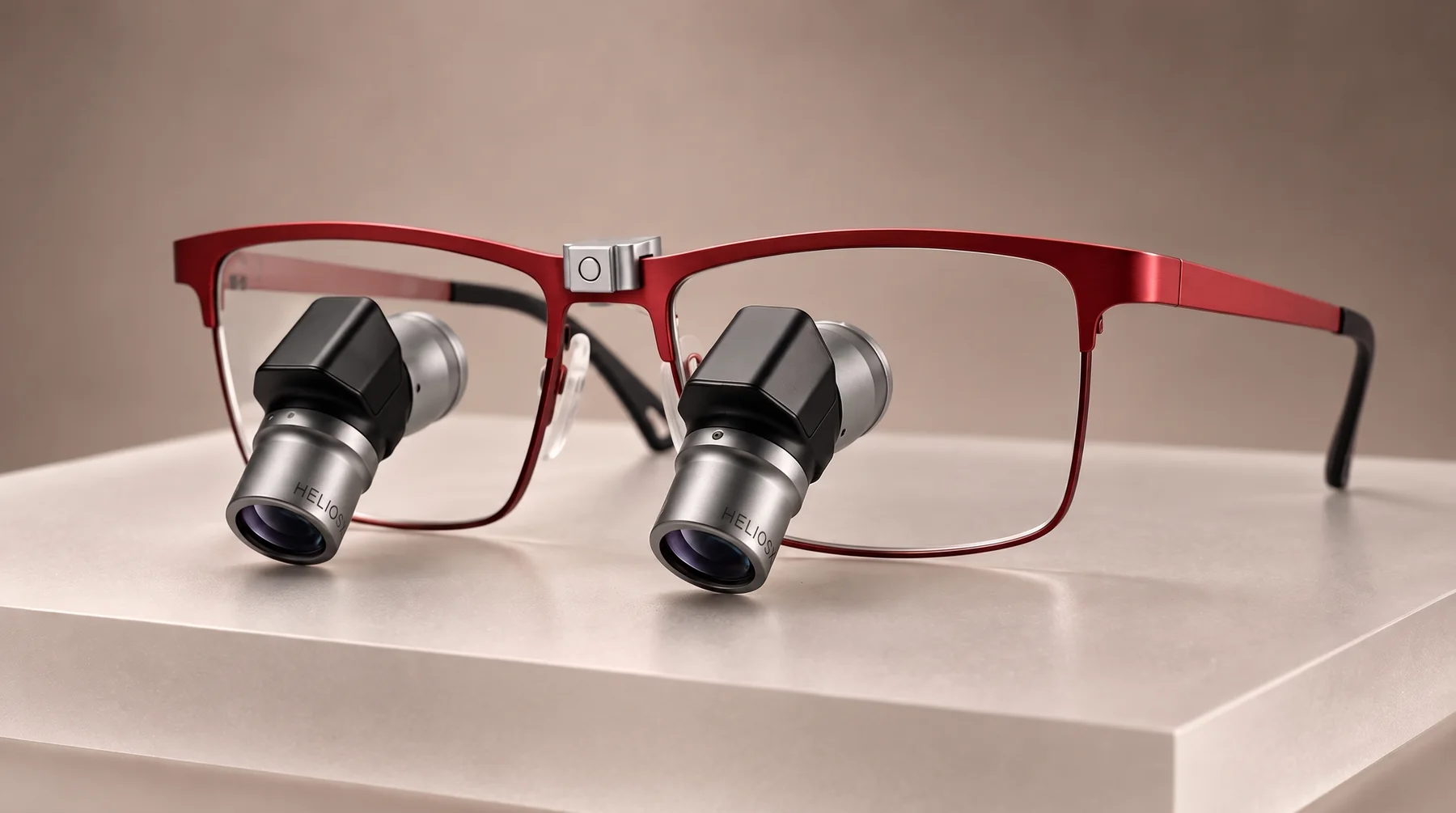
Galileo
From $795Lightweight affordable surgical and dental loupes for students, residents, and everyday clinical use.
A lightweight Galilean option; not an ergonomic prismatic system.
Explore GalileoDermatologic surgery
Short answer: Most dermatologic and Mohs surgeons do best with 2.5x–3.5x loupes set to a short, seated working distance, usually around 35–50 cm, with enough downward angle to keep the neck near neutral. Galilean loupes suit excisions and most closures; prismatic 4.0x helps with fine flap and graft work. HeliosX Galileo starts at $795 and ergonomic Apollo at $1,695, with a lifetime warranty and 30-day returns.
Dermatologic surgery happens close to the patient, often seated, in short repeated cases that add up to a long day. That makes it a different loupe decision from operating-room surgery. Magnification matters most for reconstruction and fine closure, and the working distance and head angle matter more than in almost any other specialty, because you repeat the same posture fifteen or twenty times a day.
We make and sell HeliosX loupes. This is our buying guidance, not an independent product test or paid ranking.
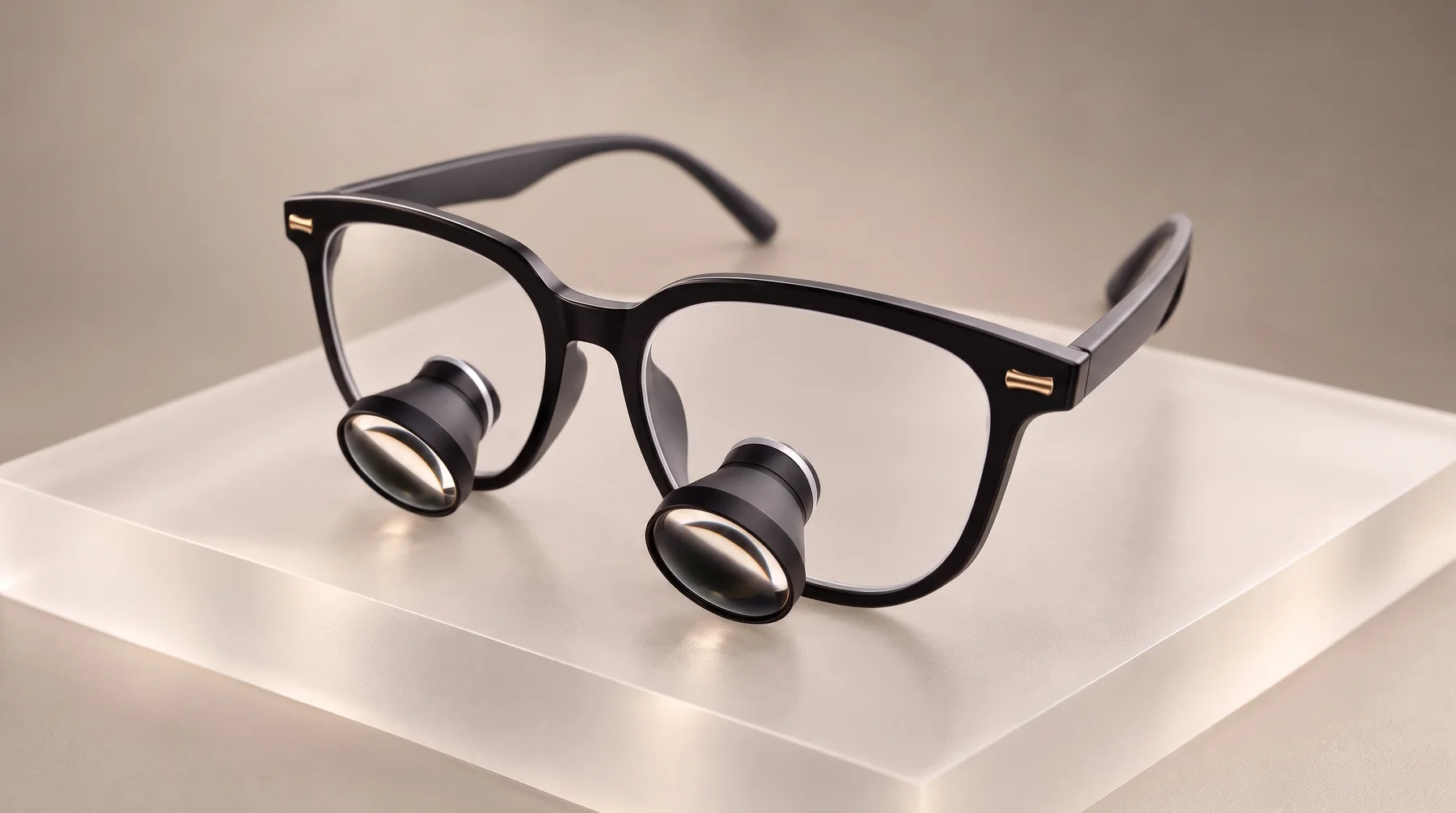
Galileo · From $795 USD
Common starting points. Choose for the work you do most often, then confirm the view at your own working distance.
| Procedure | Magnification | Working distance | HeliosX starting point |
|---|---|---|---|
| Mohs stages: excision and debulking | 2.5x | Short, seated (35–45 cm) | Galileo 2.5x, from $795 |
| Linear and layered closures | 2.5x–3.0x | Short, seated | Galileo 2.5x–3.0x |
| Local flaps on the face (nasal, periocular, lip) | 3.0x–3.5x | Short, seated or standing | Galileo 3.5x, or Apollo if posture is the problem |
| Full-thickness grafts, fine eyelid and ear work | 3.5x–4.0x | Short | Apollo 4.0x, from $1,695 |
| Reading frozen sections | Microscope | Not applicable | Loupes are not used for histology |
Your HeliosX shortlist
Compare the optical design, then choose your magnification and frame on the product page.
Lightweight affordable surgical and dental loupes for students, residents, and everyday clinical use.
A lightweight Galilean option; not an ergonomic prismatic system.
Explore GalileoErgonomic prismatic loupes for clinicians who want posture-aware clarity and high-magnification options.
Working distance is fixed to your configuration; magnification is selected at purchase.
Explore ApolloErgonomic prismatic loupes with adjustable working distance for clinicians who change posture between seated and standing work.
Working distance adjusts from 300–600 mm. Magnification does not switch on the loupe.
Explore MedusaStarting prices in USD. Magnification and optional prescription lenses affect the total; shipping and taxes appear at checkout. See all five models.
Most loupe advice is written for the operating room: standing, a longer working distance, and a few long cases. A dermatologic surgery day is the opposite. You sit close to the patient, often leaning toward the face or scalp, and you repeat the same short procedure many times. A loupe measured for an operating table is focused too far away, so you lean in to find focus, which is exactly the posture that causes the trouble.
Musculoskeletal pain is common in this specialty. A 2010 survey of American College of Mohs Surgery members found that a large majority reported musculoskeletal symptoms, most often in the neck, lower back and shoulders, and that most were not using ergonomic changes in their practice. An earlier Mayo Clinic study of 17 dermatologic surgeons found neck pain was the most common complaint, more often in surgeons who worked seated, while low back pain was more common in those who stood.
Skin surgery rarely needs the 4.0x–6.0x that vascular or hand surgeons use. A wide field matters more, because you judge tissue movement, tension lines and the whole defect at once while you plan a repair. Most dermatologic surgeons work comfortably between 2.5x and 3.5x, and step up only for fine periocular, ear or graft work.
Procedure room lights are usually enough for excisions, but your own head blocks them once you lean over a small facial defect. A loupe-mounted light keeps the field lit along your line of sight. It also adds weight to the frame, which you feel over a full day of stages.
Every HeliosX pair is built to the pupillary distance and working distance you measure, and we review the measurements before production. Prices are published, so you can price a complete order before you speak to anyone. Every model’s frame choices are included in the price.
Most Mohs and dermatologic surgeons work at 2.5x–3.5x. That range keeps the whole defect in view while you plan and close it. Fine periocular, ear and graft work can justify 4.0x. Frozen sections are read under a microscope, not loupes.
Measure it yourself, seated at your usual chair height and in the posture you hold during closure. Seated dermatologic surgery usually lands shorter than standing operating-room work, often around 35–50 cm. A loupe built for the wrong distance makes you lean in to find focus.
They can help posture when the working distance and declination angle are set to you, because your eyes look down instead of your neck bending. They are not a treatment. Surveys of Mohs surgeons show neck and back pain are common, and chair height, positioning and breaks matter too.
Most residents start with Galileo ($795–$825) at 2.5x–3.0x, and verified residents get 15% off. If neck strain is already a problem, compare ergonomic Apollo from $1,695.
Premium magnification. More accessible.
Tell us your specialty, typical procedures, current magnification, and budget. We can help you narrow the options before you order.
Email opens in your mail app: heliosxloupes@gmail.com · Limited lifetime warranty