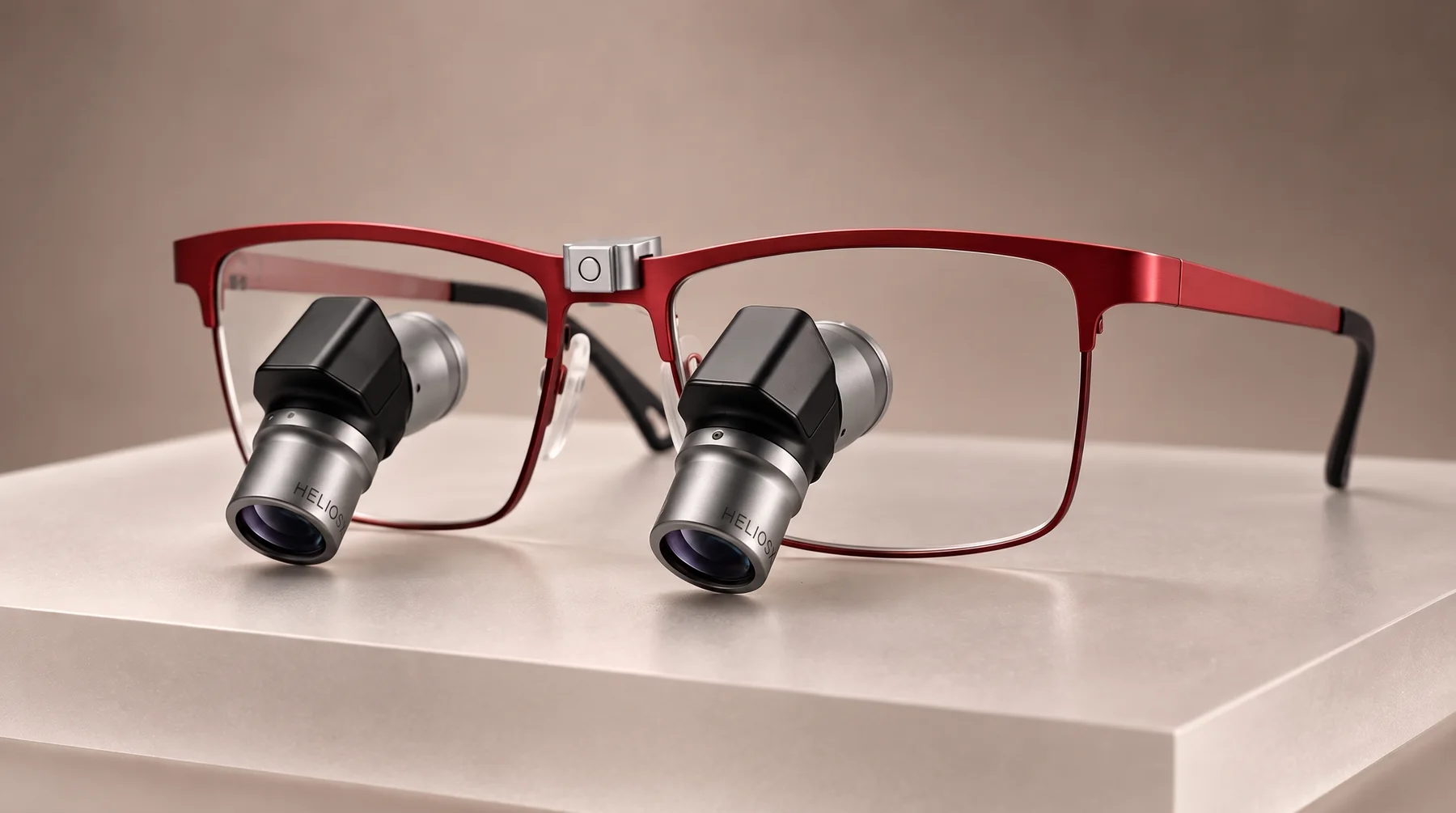
Galileo
From $795Lightweight affordable surgical and dental loupes for students, residents, and everyday clinical use.
A lightweight Galilean option; not an ergonomic prismatic system.
Explore GalileoColorectal surgery
Short answer: Colorectal surgeons mainly use loupes for anorectal and transanal work, at 2.5x–3.5x, with a loupe-mounted headlight, because the field is deep, narrow and hard to light from above. Laparoscopic and robotic cases need no loupes. Choose a working distance for your seated position at the perineum. HeliosX Galileo starts at $795; ergonomic Apollo starts at $1,695.
Colorectal surgeons do not wear loupes for most of their caseload. Laparoscopic and robotic resections are done on a screen, and open abdominal work is usually comfortable without magnification. Where loupes and a headlight do earn their place is anorectal and transanal surgery: a deep, narrow field, awkward positioning, and small structures such as fistula tracts and the sphincter complex.
We make and sell HeliosX loupes. This is our buying guidance, not an independent product test or paid ranking.
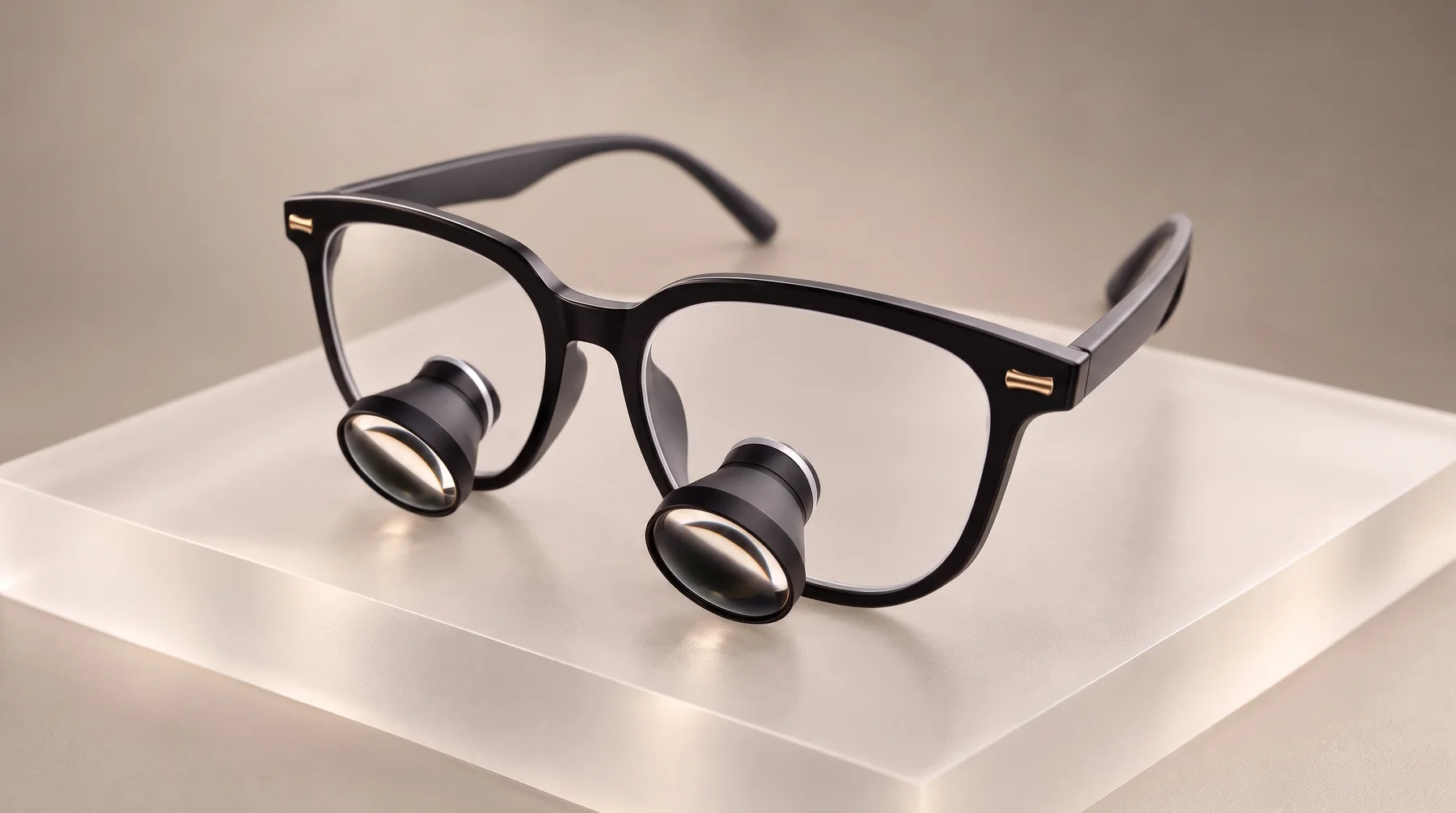
Galileo · From $795 USD
Common starting points. Choose for the work you do most often, then confirm the view at your own working distance.
| Procedure | Magnification | Working distance | HeliosX starting point |
|---|---|---|---|
| Fistula-in-ano, seton placement, LIFT | 2.5x–3.5x | Short, seated at the perineum | Galileo 3.5x with a headlight |
| Fissure, hemorrhoid and pilonidal surgery | 2.5x | Short, seated | Galileo 2.5x, from $795 |
| Sphincter repair, advancement flaps | 3.0x–3.5x | Short, seated | Galileo 3.5x or Apollo |
| Hand-sewn colorectal or coloanal anastomosis | 2.5x–3.5x | Standing or seated | Galileo, or Medusa for both positions |
| Laparoscopic and robotic resection | None | Not applicable | Loupes are not used on a screen |
Your HeliosX shortlist
Compare the optical design, then choose your magnification and frame on the product page.
Lightweight affordable surgical and dental loupes for students, residents, and everyday clinical use.
A lightweight Galilean option; not an ergonomic prismatic system.
Explore GalileoErgonomic prismatic loupes for clinicians who want posture-aware clarity and high-magnification options.
Working distance is fixed to your configuration; magnification is selected at purchase.
Explore ApolloErgonomic prismatic loupes with adjustable working distance for clinicians who change posture between seated and standing work.
Working distance adjusts from 300–600 mm. Magnification does not switch on the loupe.
Explore MedusaStarting prices in USD. Magnification and optional prescription lenses affect the total; shipping and taxes appear at checkout. See all five models.
Be honest about how often you will wear them. If your practice is mostly minimally invasive resection, loupes will spend a lot of time in the case. They matter for anorectal work, transanal procedures and the occasional hand-sewn anastomosis low in the pelvis, where you are working in a small, deep field and identifying fine structures such as an internal fistula opening or the edge of the sphincter.
In a deep anal canal the limiting factor is usually light, not magnification. Overhead theatre lights are blocked by your own head and the retractor, and they do not reach down a narrow canal. A headlight mounted on the loupe sends light along your line of sight, which is exactly where you are looking. If you buy loupes for anorectal work, plan the light at the same time.
You usually sit at the perineum with the patient in prone jackknife or lithotomy, so the working distance is short and fixed for the case. 2.5x gives the widest view of the canal; 3.5x helps you identify a fistula tract or place fine sutures in a flap. Going higher narrows the field in a space that is already narrow.
An anorectal list is many short cases, with a headlight on for most of them. The combined front weight is what you feel by the end of the list, so weigh the loupe and light together, not the frame alone. Galilean loupes are the lightest option at this magnification.
HeliosX builds every pair to your measured pupillary and working distance and reviews the measurements before production. HeliosX does not sell headlights, so choose a compatible light and confirm the mount before ordering. Every model’s frame choices are included in the price.
For anorectal and transanal surgery, and for some hand-sewn low anastomoses, many do. Most laparoscopic and robotic resections need no loupes, because the camera provides magnification.
Usually 2.5x–3.5x. 2.5x gives the widest view of the canal, and 3.5x helps with fistula tracts, flaps and fine suturing. A headlight matters at least as much as the magnification.
For anorectal surgery, usually yes. Overhead lights do not reach well into a deep, narrow canal, and your head blocks them. Plan the light with the loupe, because the mount is fitted to the frame.
Yes. Verified residents, fellows and students get 15% off any HeliosX model.
Premium magnification. More accessible.
Tell us your specialty, typical procedures, current magnification, and budget. We can help you narrow the options before you order.
Email opens in your mail app: heliosxloupes@gmail.com · Limited lifetime warranty